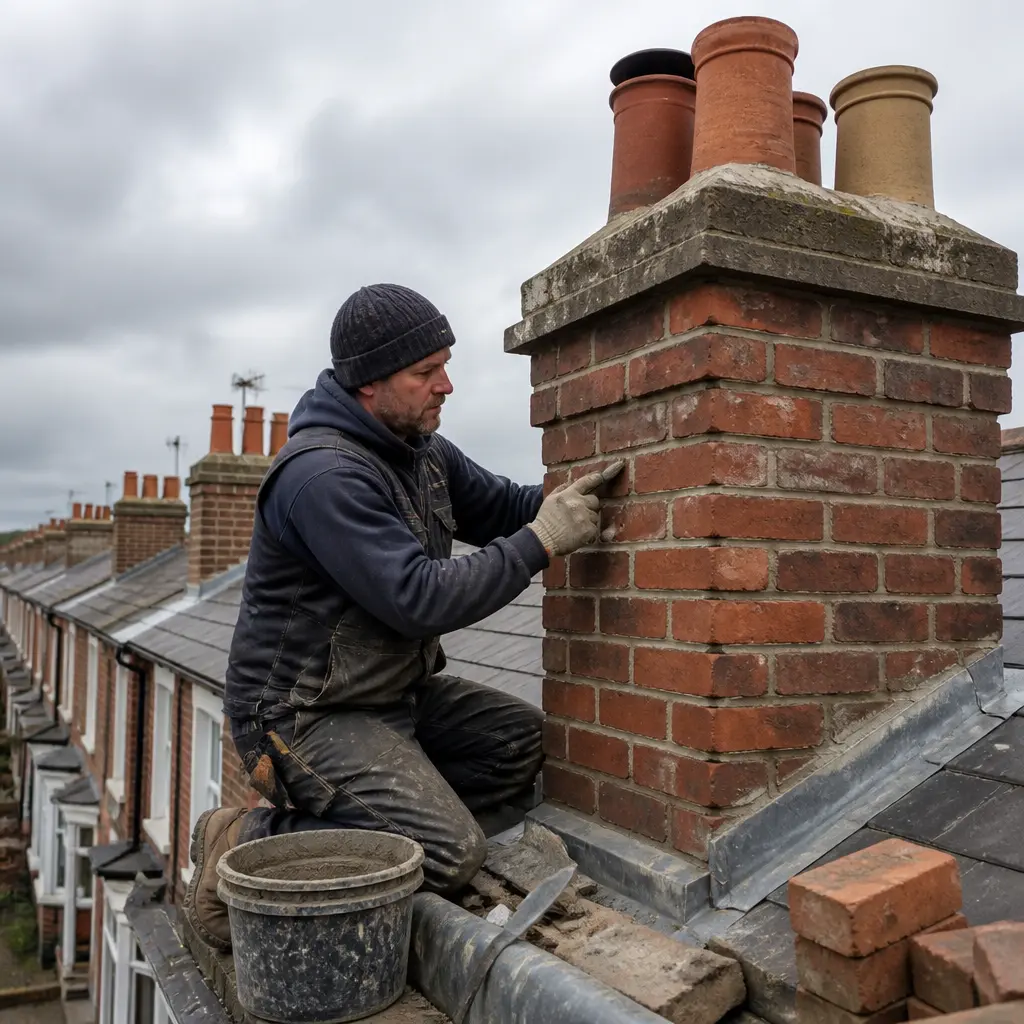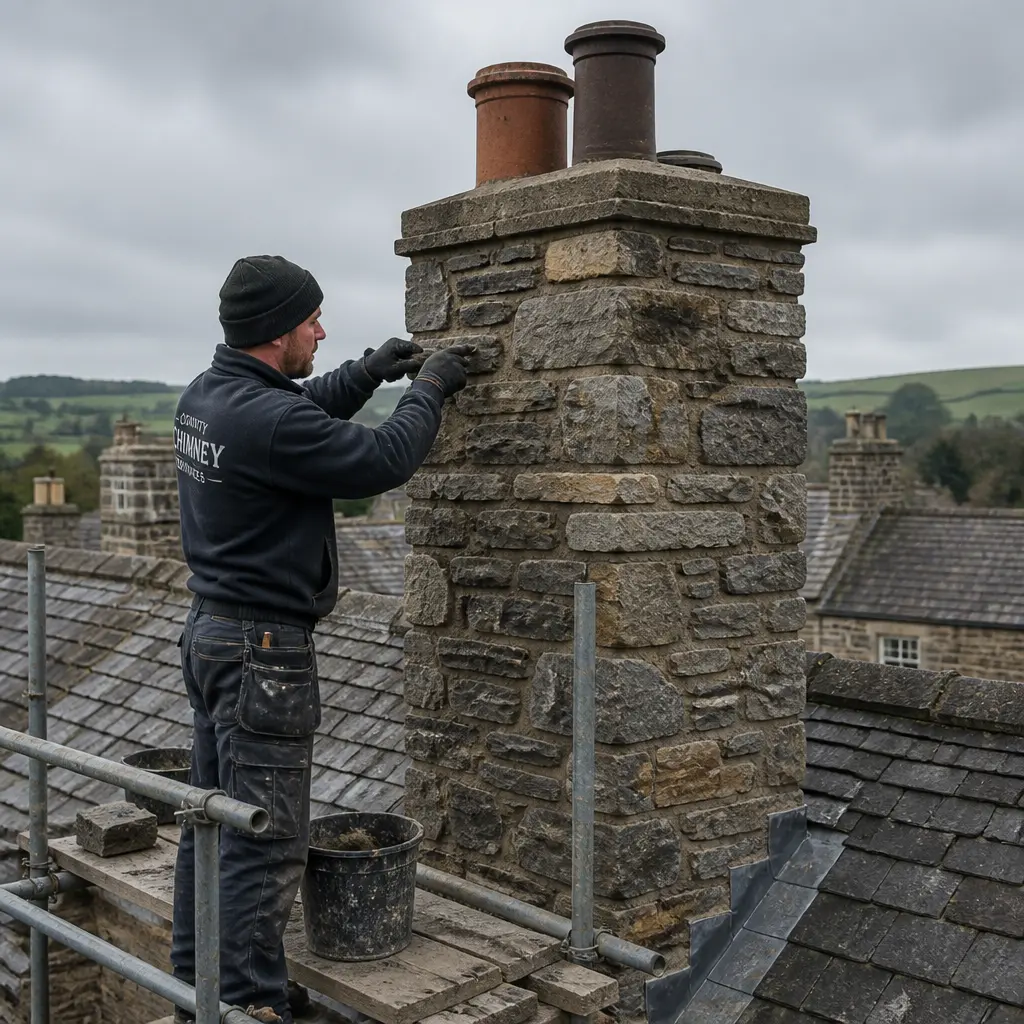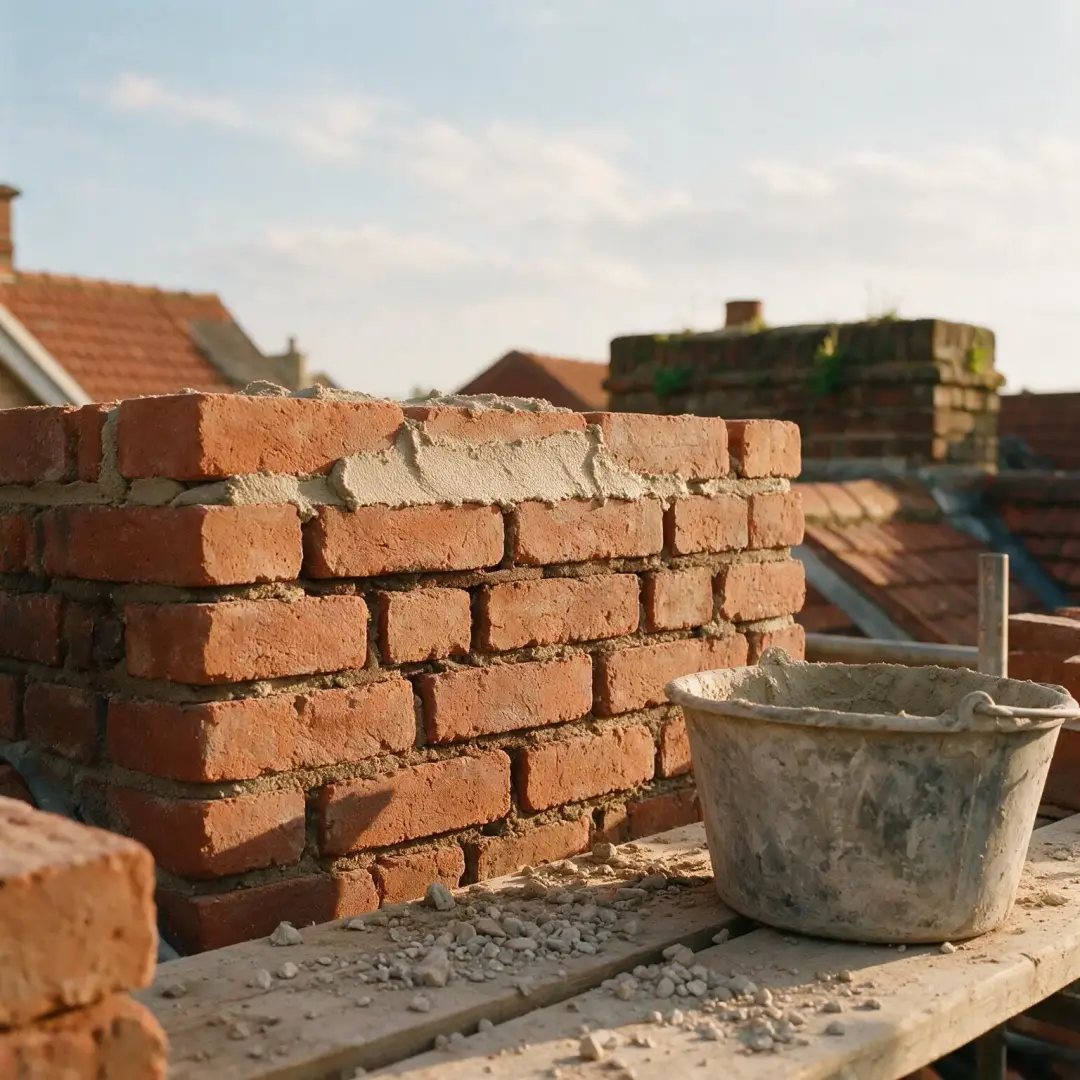
Water coming through a chimney is usually caused by damaged flashing, cracked mortar, worn brickwork, faulty flaunching or an uncovered chimney pot. Condensation and nearby roof faults can also create similar damp marks.
The source should be inspected promptly because a small leak can damage plaster, timber, insulation, the flue and the chimney structure. The correct repair depends on where the water enters and how far it has travelled.
Why Is Water Coming Through My Chimney?
Water may come through a chimney when rain enters the flue, passes through damaged brickwork or finds a gap where the chimney meets the roof. It may then appear around the fireplace, chimney breast, ceiling or nearby wall.
The visible damp patch is not always directly below the opening. Water can run along roof timbers, underlay, brickwork or the outside of a flue liner before entering a room.
A chimney is exposed to rain, wind, frost and changing temperatures throughout the year. Mortar can crack, bricks can become porous and metal flashing can lift or split. Small faults may allow a surprising amount of water into the property during heavy or wind-driven rain.
Some moisture does not come from outside. Condensation can form inside a cold or poorly ventilated flue, particularly when a chimney is no longer used or when warm, moist air reaches cold masonry.
An inspection should consider the chimney stack, pots, flaunching, flashing, roof covering and internal flue rather than treating the first visible crack as the only cause.
- Damaged or poorly fitted chimney flashing is a common cause of leaks
- An open chimney pot can allow rain to fall directly into the flue
- Cracked flaunching can let water collect around the chimney pots
- Worn mortar joints and porous bricks can absorb wind-driven rain
- Broken roof tiles or damaged underlay may create damp near the chimney
- Condensation can affect disused, cold or poorly ventilated flues
- Fire and rescue services attended 2,019 chimney fires in England in the year ending March 2025
- Repair and maintenance construction output grew by 2.1% in the three months to May 2026
A chimney leak should not be diagnosed from the damp mark alone. Several faults can cause similar signs, and more than one part of the chimney may have failed. A close roof-level inspection is usually needed before a lasting repair can be recommended.
| Possible cause | Common signs | Likely repair |
|---|---|---|
| Damaged flashing | Damp where the chimney meets the roof or ceiling | Repair or replace the flashing |
| Open chimney pot | Water or staining inside the fireplace after rain | Fit a suitable cowl or rain guard |
| Cracked flaunching | Loose mortar around chimney pots and water entering from above | Renew the flaunching and secure the pots |
| Failed mortar joints | Damp patches, loose mortar and visible gaps | Repoint the chimney with suitable mortar |
| Damaged bricks | Flaking faces, cracks or damp after prolonged rain | Replace badly damaged bricks and repair the joints |
| Roof covering fault | Damp beside the chimney rather than inside the flue | Repair tiles, slates, underlay or roof timber |
| Condensation | Moisture, staining or smells during cold weather | Improve ventilation and check the flue |
Can Rain Enter Through an Open Chimney Pot?
Rain can fall directly into a chimney pot when no suitable cowl, cap or rain guard is fitted. A small amount of rain may evaporate or drain away without becoming visible, but repeated heavy rain can leave damp marks inside the fireplace or chimney breast.
Wind can push rain into the pot at an angle, which means even a tall chimney may be affected. The problem may be more noticeable during storms or when the rain comes from one direction.
A suitable cowl can reduce direct rain entry while allowing smoke, gases and moisture to escape. The correct product depends on whether the flue is active, the appliance connected to it and the fuel being used.
A chimney pot should not be sealed completely without suitable ventilation. Closing a flue without airflow may trap moisture and increase condensation.
The pot, cowl and surrounding mortar should all be checked. Fitting a cover will not solve the leak when cracked flaunching or damaged masonry is also allowing water into the stack.
Could Damaged Chimney Flashing Be Leaking?
Flashing forms a weatherproof joint between the chimney and the roof. It is commonly made from lead or another suitable waterproof material.
Water can enter when the flashing becomes split, loose, poorly fitted or pulled away from the mortar joint. Earlier repairs made with sealant or surface coatings may also fail after exposure to sunlight and changing temperatures.
A flashing leak often causes damp around the side of the chimney breast, in the loft or on the ceiling below the roof. The leak may be worse during wind-driven rain.
The surrounding tiles, slates and underlay should be examined at the same time. A broken tile beside the chimney can produce signs that appear almost identical to failed flashing.
A small section of sound flashing may be repaired, but badly worn or poorly fitted material will normally need replacement. The new flashing must be correctly formed and fitted into suitable joints rather than being held in place by sealant alone.
Internal plaster should be allowed to dry after the outside fault has been repaired. Decorating too quickly may trap moisture or allow staining to return.
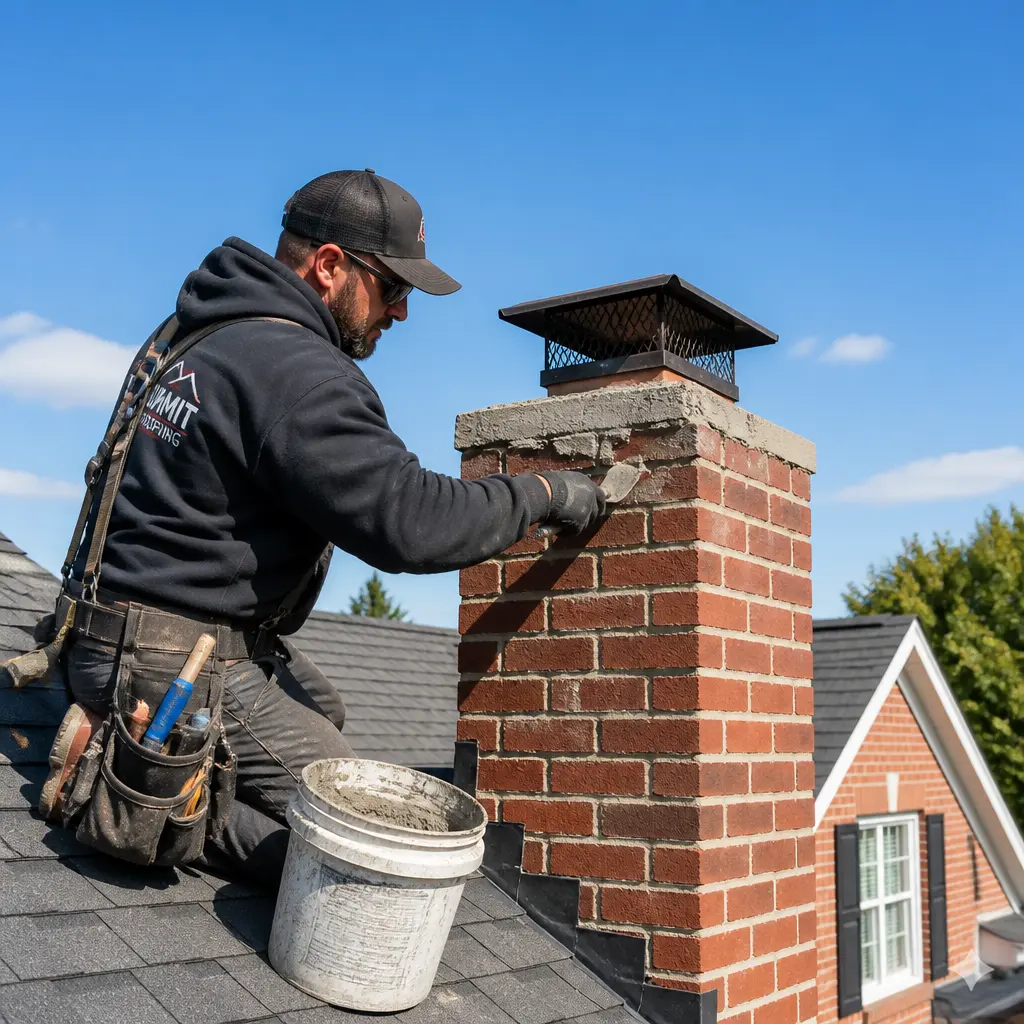
What Is Chimney Flaunching and Why Does It Leak?
Flaunching is the sloping mortar placed around the base of the chimney pots. It holds the pots in position and directs rainwater away from the openings at the top of the stack.
Over time, flaunching can crack, shrink or separate from the pots and brickwork. Water may settle inside the cracks, enter the chimney and make the damage worse during freezing weather.
Failed flaunching may not be easy to see from ground level. Common signs include loose chimney pots, pieces of mortar on the roof or ground, and damp that becomes worse after heavy rain.
Small cracks may indicate wider failure beneath the surface. Covering the existing mortar with a thin layer may trap loose material and provide only a temporary improvement.
A lasting repair normally involves removing failed material, checking that the pots are secure and applying new mortar with a suitable slope. Any damaged pots should be replaced at the same time.
The contractor should also inspect the flue openings. New flaunching will not stop water that is falling through an uncovered pot or entering through failed brickwork.
Can Cracked Mortar Let Water Through a Chimney?
Mortar joints protect the gaps between chimney bricks. They can wear away because of age, rain, frost, heat and repeated expansion and contraction.
When the joints become cracked or recessed, water can enter the outer face of the stack. It may pass through the masonry or become trapped inside the chimney.
Repointing involves removing loose mortar to a suitable depth, cleaning the joints and filling them with compatible new mortar. Applying a thin surface coating over weak joints is less likely to last.
The mortar should suit the age and type of brickwork. A hard mortar used on softer, older bricks can prevent moisture from escaping through the joints. This may force water through the brick faces and increase frost damage.
Failed mortar may also make the chimney less stable. Loose joints around chimney pots, flaunching and upper brick courses require prompt attention.
Repointing should be completed in suitable weather. Heavy rain can wash fresh mortar from the joints, while frost can damage it before it has set. Very hot weather may cause it to dry too quickly.
Can Chimney Bricks Absorb Water?
Bricks naturally absorb some moisture, but sound brickwork should usually release it as conditions become dry. Problems arise when bricks are cracked, badly weathered or constantly exposed to water.
Damaged brick faces may flake or break away. This is sometimes called spalling. It can happen when absorbed water freezes and expands inside the brick.
Once the outer face has failed, the softer material inside the brick is exposed to further rain. The damage can then spread more quickly.
Water-repellent coatings are sometimes promoted as a simple answer to damp brickwork. However, an unsuitable coating may trap moisture inside the stack or hide failed joints. It should not be used instead of repairing damaged bricks, mortar, flashing or flaunching.
Badly damaged bricks should normally be removed and replaced with suitable matching units. The surrounding joints should also be checked and repaired.
A contractor should identify why the masonry remains wet. Replacing bricks without dealing with faulty flashing, poor flaunching or an uncovered pot may allow the same problem to return.
Could the Leak Be Coming From the Roof?
Water near a chimney does not always enter through the chimney itself. Broken tiles, slipped slates, torn underlay and blocked roof drainage can all produce damp around a chimney breast.
Rainwater can move sideways along the roof structure before dripping into the property. The damp patch may therefore appear some distance from the damaged roof covering.
Roof valleys, ridges and gutters close to the stack should be checked. Debris can hold water against roof joints or cause it to flow towards the chimney.
Internal inspection of the loft may reveal wet timber, staining, damaged insulation or daylight through the roof covering. The area should only be entered when it is safe to do so.
A complete inspection should examine the roof and chimney together. Repairing the chimney will not stop a leak caused by a broken slate, and replacing a tile will not correct failed flashing.
Wet roof timber or insulation may take time to dry after the opening has been repaired. Rotten or weakened material may also need replacement.
Could the Moisture Be Condensation?
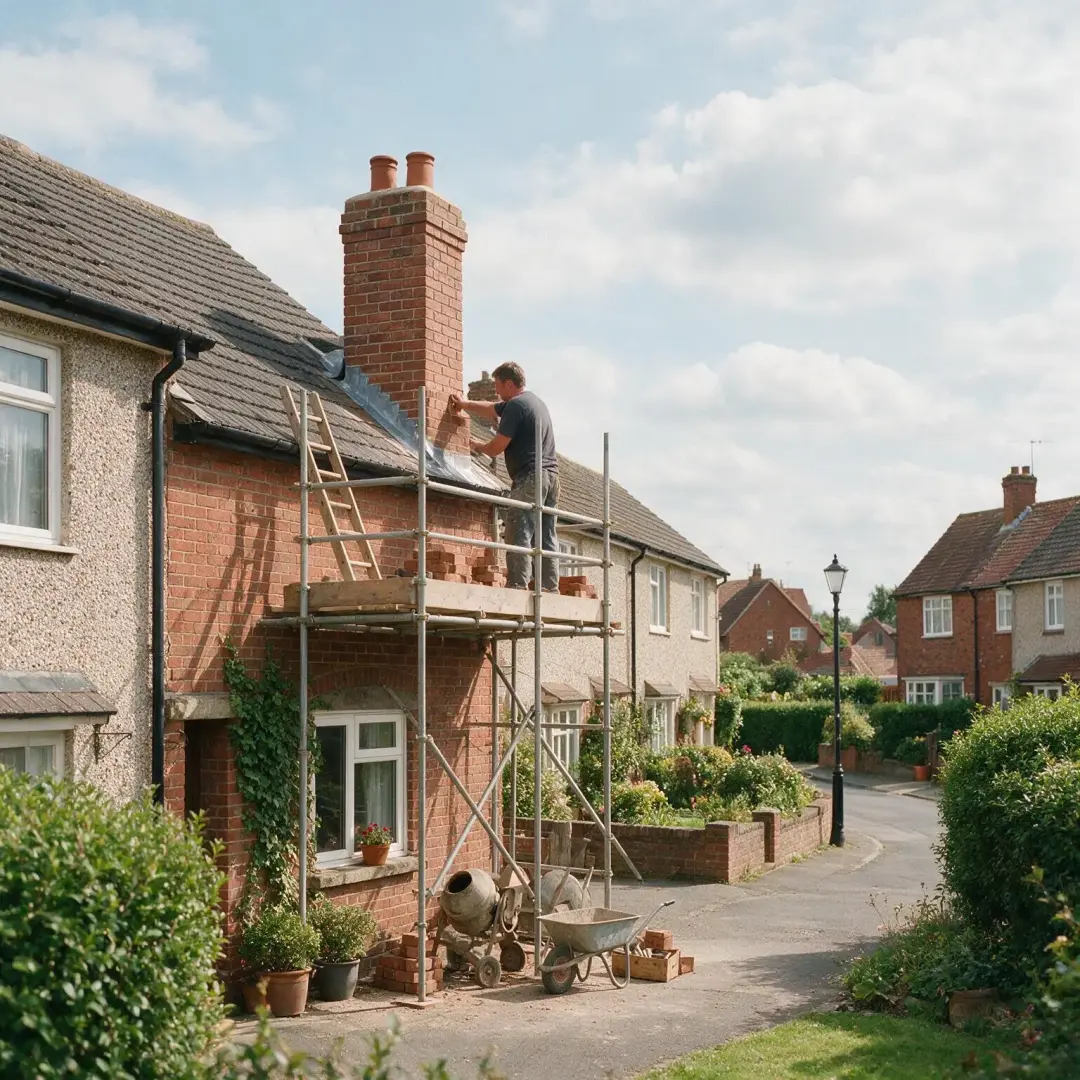
Condensation occurs when warm, moist air meets a cold surface. Inside a chimney, this can create water droplets, staining and unpleasant smells that may be mistaken for a rain leak.
Disused chimneys are often affected because there is little airflow to remove moisture. Blocking both the fireplace opening and the top of the chimney can make the problem worse.
Condensation may also occur when water vapour from an appliance cools inside an unsuitable or unlined flue. Combustion gases can contain moisture and other substances that may damage old masonry.
Signs of condensation may be more noticeable during cold weather, even when there has been little rain. The damp may appear slowly rather than immediately after a storm.
A disused flue may need suitable ventilation at both low and high levels. An active chimney may require inspection of the liner, appliance, ventilation and terminal.
Do not assume that every winter damp patch is condensation. A leaking stack may remain wet for a long time after rain. The timing, location and condition of the chimney should all be considered before repairs are chosen.
| Sign | What it may indicate | Recommended action |
|---|---|---|
| Damp appears during heavy rain | External leak through the stack, flashing or roof | Arrange a roof-level inspection |
| Water drips into the fireplace | Open pot, damaged cowl or internal flue fault | Check the pot, terminal and flue |
| Damp forms mainly in cold weather | Possible condensation or slow-drying masonry | Check ventilation and external defects |
| Brown or yellow staining | Water moving through soot, tar or old materials | Inspect the flue and repair the water source |
| Loose plaster or peeling paint | Repeated or long-term moisture | Repair the source before redecorating |
| Musty or smoky smell | A damp, dirty or poorly ventilated flue | Arrange sweeping and inspection |
Why Are There Brown Stains Around the Chimney Breast?
Brown or yellow marks can appear when water passes through soot, tar, salts or old building materials. These substances may be carried through the plaster as the wall becomes wet.
The stain can remain visible after the wall has dried. Painting over it before the leak is repaired may provide only a brief improvement.
Hygroscopic salts can also attract moisture from the air. This means a chimney breast may continue to feel damp even after the original water opening has been closed.
The chimney should be allowed to dry naturally after the external repair. Drying time will depend on the thickness of the masonry, ventilation, temperature and length of time that the leak was present.
Damaged or contaminated plaster may need to be removed and replaced. A suitable stain-blocking product may be required before final decoration, but only after the wall is dry enough.
Persistent dark tar marks may indicate a flue problem rather than a simple roof leak. The flue should be swept and inspected, particularly when a fire or stove is connected to it.
Is Water Coming Through a Chimney Dangerous?
A small damp patch may not create an immediate emergency, but repeated water entry can lead to serious damage.
Moisture can weaken mortar, damage bricks, loosen plaster and cause timber to rot. It can also reduce the performance of insulation and affect nearby electrical fittings.
Water inside a working flue may combine with soot and combustion deposits. This can create acidic material that damages masonry or a flue liner.
A wet or damaged chimney may not carry smoke and gases safely. Stop using the connected fire or stove when water is entering the flue, pieces of masonry have fallen, smoke is entering the room or the chimney appears unstable.
Carbon monoxide cannot be seen or smelled. A working carbon monoxide alarm should be installed where required, but an alarm does not replace correct appliance and chimney maintenance.
Urgent professional advice is needed when water is close to electrical fittings, the ceiling is bulging, bricks are falling or the chimney stack is leaning. Keep people away from the affected area until it has been checked.
What Should You Do When Water Comes Through a Chimney?
Move furniture, electrical items and other belongings away from the wet area. Use a container to catch dripping water when it is safe to do so.
Do not climb onto the roof during rain or strong winds. Chimneys are difficult to reach, and wet roof coverings create a serious fall risk.
Stop using any connected fire, stove or appliance until the flue has been checked. Water, fallen mortar or damaged lining may prevent gases from leaving safely.
Photograph the damp and note when it appears. Information about wind direction, rainfall and the position of the staining can help the contractor locate the opening.
Check the loft from a safe position for wet timber, damaged insulation or signs that water is travelling from the surrounding roof. Do not touch wet electrical wiring or unstable materials.
Arrange an inspection by a contractor with suitable chimney and roofing experience. The inspection should cover the outside stack, roof junction, chimney pots, flaunching and internal flue where relevant.
- Protect the room: Move belongings and collect dripping water where safe
- Stop appliance use: Do not use a fire or stove connected to the affected flue
- Record the signs: Take photographs and note when the damp becomes worse
- Check safely: Look for visible loft damage without climbing onto the roof
- Arrange an inspection: Ask for both the chimney and surrounding roof to be checked
- Repair the cause: Do not rely on decorating or surface sealant alone
- Allow drying time: Wait for the chimney breast to dry before redecorating
- Test before reuse: Confirm that an active flue is clear and safe
How Is a Leaking Chimney Inspected?
The contractor will normally begin by asking when the leak appears and where the damp can be seen. A leak that starts during wind-driven rain may have a different cause from moisture that forms during cold, dry weather.
The visible chimney stack should be checked for cracked bricks, open joints, loose pots and damaged flaunching. The flashing and nearby roof covering should also be examined closely.
Inside the property, the contractor may inspect the loft, chimney breast, fireplace and connected appliance. A moisture meter may help identify the spread of damp, although readings should be considered alongside the condition of the building.
A camera survey can reveal damage, blockages or fallen material inside the flue. A smoke test may also be used where appropriate.
Water testing may help locate some external leaks, but it must be completed carefully. Applying too much water to several areas at once may make the result difficult to understand.
The final report should explain the likely entry point, any related damage and the work needed to prevent the leak from returning.
How Is a Chimney Leak Repaired?
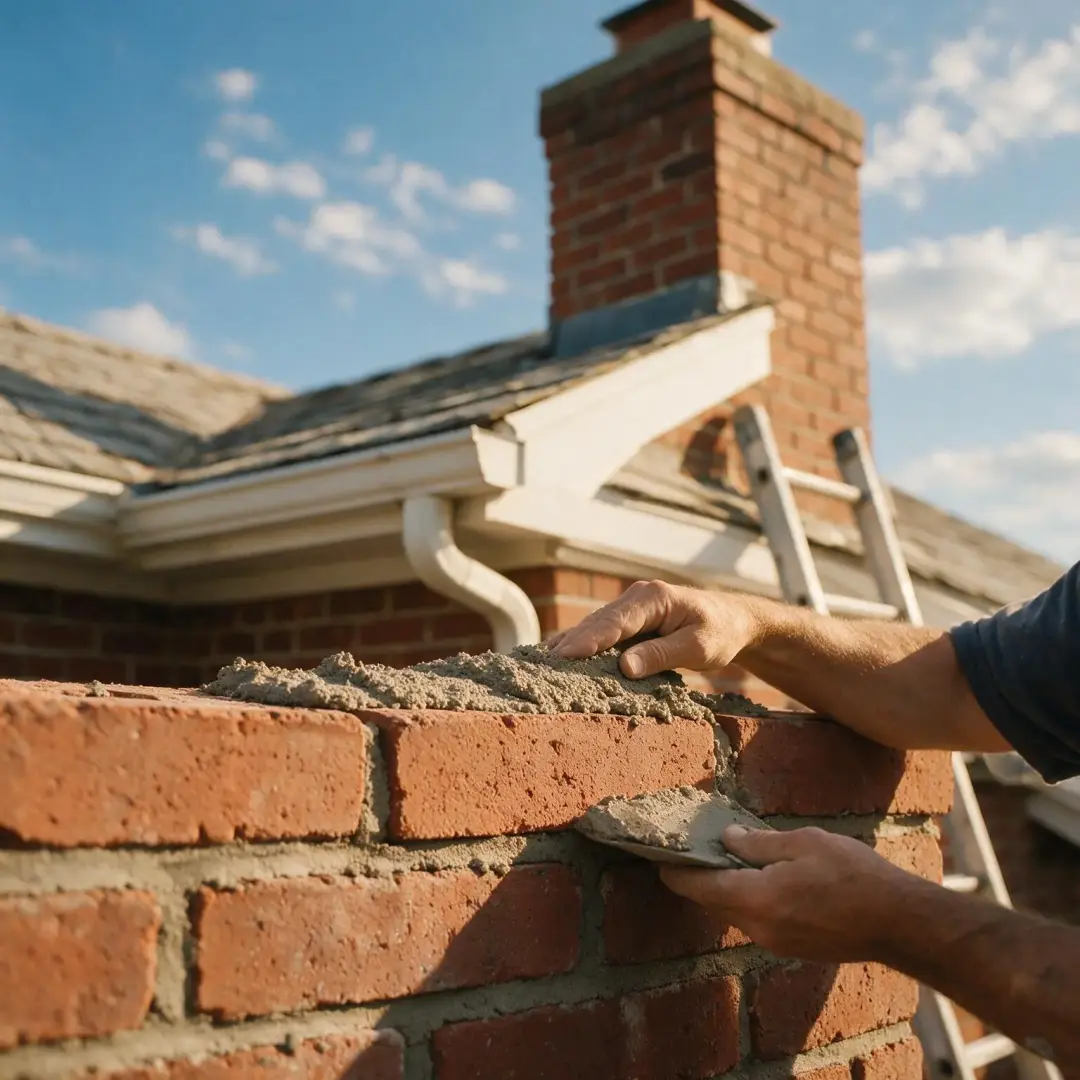
The correct repair depends on the source of the water. Damaged flashing may need to be renewed, while failed mortar joints may require repointing.
Cracked flaunching should be removed and replaced. Loose or broken chimney pots may also need resetting or replacement.
Badly damaged bricks should be replaced rather than covered. Nearby tiles, slates, underlay and roof timber should be repaired when they form part of the leak.
An open chimney pot may need a suitable cowl. A disused chimney may need improved ventilation rather than complete sealing.
Damage inside the flue may require sweeping, removal of fallen material or replacement of the liner. The chimney should be tested before a connected appliance is used again.
Internal plaster repair and decoration should normally take place after the outside fault has been corrected and the masonry has had enough time to dry.
A quotation should explain which parts will be repaired, the materials that will be used and whether scaffolding, testing and waste removal are included.
How Long Does a Chimney Leak Repair Take?
A minor flashing, cowl or mortar repair may be completed within several hours or one working day. Larger repairs commonly take between one and three days.
More time may be needed when scaffolding must be installed, several bricks need replacing or the flaunching and chimney pots must be renewed.
A partial chimney rebuild can take between three and seven working days. A complete rebuild above roof level may take one to two weeks or longer.
Rain, frost and strong winds can delay the work. Mortar and other materials also need suitable conditions to set correctly.
The chimney breast may remain damp after the opening has been repaired. Thick masonry can take several weeks or longer to dry, especially when water has been entering for a long period.
The contractor should separate the active repair time from the overall project period. The full schedule may include inspection, scaffolding, material delivery, drying, testing and final decoration.
Current Chimney and Property Repair Statistics
Fire and rescue services in England attended 2,019 chimney fires in the year ending March 2025. This was 5.5% lower than the 2,136 incidents recorded in the previous year.
The figure was also 61% below the 5,190 chimney fires recorded ten years earlier. These statistics relate to fires contained within chimney structures rather than water leaks, but they show why an active chimney should be kept clear, sound and properly maintained.
Fire and rescue services attended 142,494 fires of all types during the same year. This was an increase of 2.5% compared with the previous year.
Office for National Statistics figures show that repair and maintenance construction output in Great Britain grew by 2.1% in the three months to May 2026. Total construction output grew by 1.6% during the same period.
These figures provide wider context and do not measure the number or cost of domestic chimney leaks.
Can You Repair a Leaking Chimney Yourself?
Most chimney leak repairs are not suitable for household maintenance. Working at roof level creates a serious risk of falling, and damaged brickwork or chimney pots may move without warning.
Sealant applied from the roof may briefly hide a gap, but it may not form a lasting joint. It can also make a later repair more difficult.
Painting over damp inside the property will not stop water entry. The stain is likely to return, and trapped moisture may continue to damage the plaster and masonry.
Property owners can take photographs from ground level, check the loft from a safe position and clear belongings from the affected room. They should not climb onto the roof or light a fire to test the chimney.
The work may require a roofer, chimney specialist, builder, chimney sweep or heating installer. Structural movement may need assessment by a suitably qualified professional.
Using a contractor with relevant experience can help ensure that the opening is located, the correct materials are used and the active flue is safe before it is returned to service.
Frequently Asked Questions
```Why Does My Chimney Leak Only During Heavy Rain?
Heavy or wind-driven rain can enter small gaps in flashing, mortar, flaunching or roof coverings. The fault may not admit enough water to become visible during light rain.
Will a Chimney Cowl Stop Water Coming In?
A suitable cowl can reduce rain entering through an open pot. It will not repair cracked flaunching, damaged flashing or porous brickwork.
Why Is My Chimney Breast Damp but There Is No Rain?
The masonry may still be drying after earlier rain, or condensation may be forming inside a cold flue. Salts in old plaster can also attract moisture.
Can Water Damage a Chimney Liner?
Yes. Water and combustion deposits can create harmful material that damages some liners and surrounding masonry. The flue should be inspected before further use.
Should I Use My Fire When the Chimney Is Leaking?
No. Stop using the connected appliance until the chimney and flue have been checked and confirmed as safe.
How Long Will a Wet Chimney Breast Take to Dry?
Drying may take several weeks or longer. The period depends on the amount of water, wall thickness, ventilation, temperature and materials.
Can I Paint Over a Chimney Damp Patch?
Wait until the source has been repaired and the wall is dry. Damaged plaster and persistent stains may require further treatment before decoration.
Who Should Inspect a Leaking Chimney?
Use a contractor with suitable chimney and roofing experience. An active flue may also need inspection by a chimney sweep or heating professional.
How Can You Prevent Water Coming Through a Chimney?
Regular visual checks can identify loose mortar, damaged bricks and leaning chimney pots before a major leak develops. The roof and chimney should be inspected after severe storms or when new damp appears.
Keep roof drainage clear so that rainwater does not collect near the stack. Replace slipped tiles and damaged slates promptly.
Maintain the flashing and flaunching rather than waiting for large sections to fail. Repoint worn joints with mortar that is suitable for the brickwork.
Fit a suitable cowl where direct rain entry is a problem. Make sure the product is appropriate for the flue, appliance and fuel.
Disused chimneys should have suitable ventilation. Completely sealing a cold flue can trap moisture and create condensation.
Working chimneys should be swept and inspected at suitable intervals. Any sign of smoke leakage, fallen debris, water entry or damage should be checked before the appliance is used again.
Early repair is usually simpler than dealing with damaged plaster, rotten timber or an unstable chimney stack later.
Is water coming through your chimney? Colmore Roofing Contractors can inspect the stack, flashing, pots, flaunching and surrounding roof before recommending a suitable repair. Contact the team to arrange a professional chimney repair service for Birmingham, Dudley and Wolverhampton.