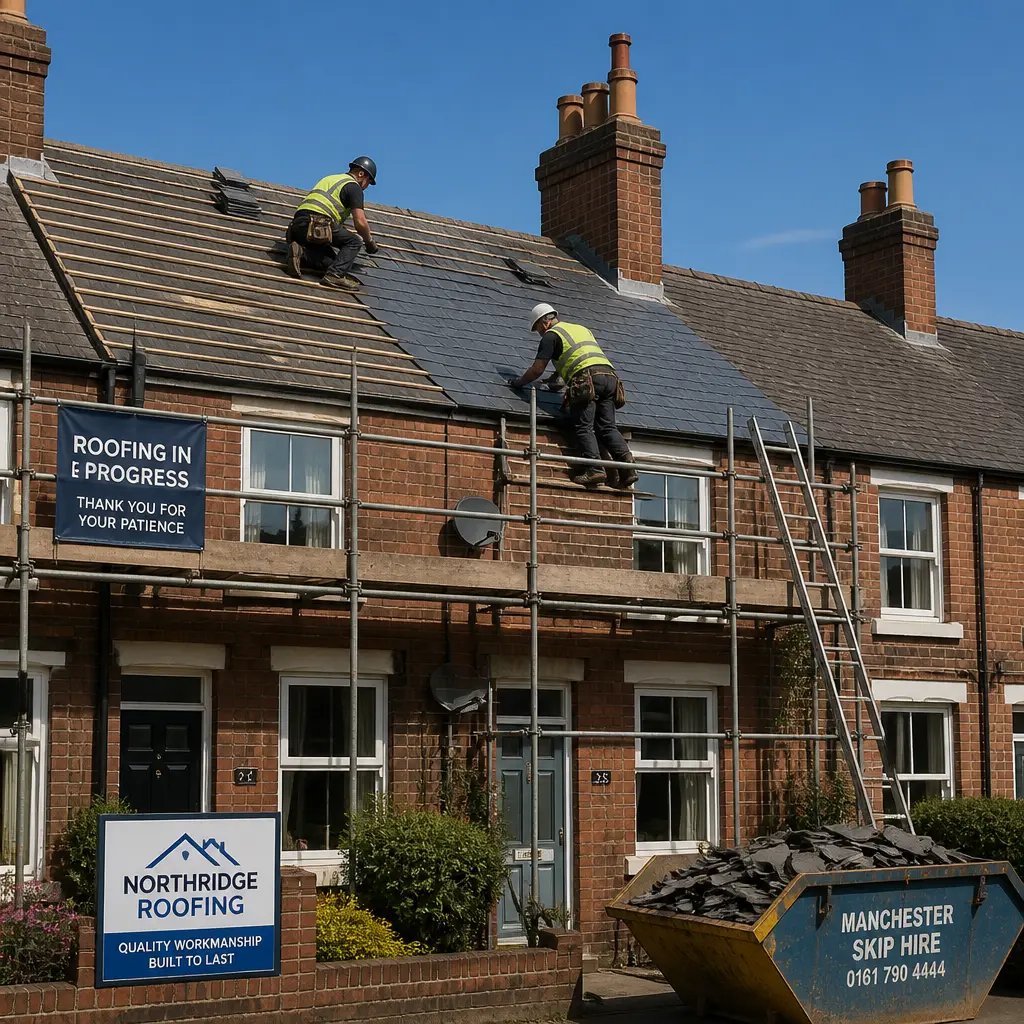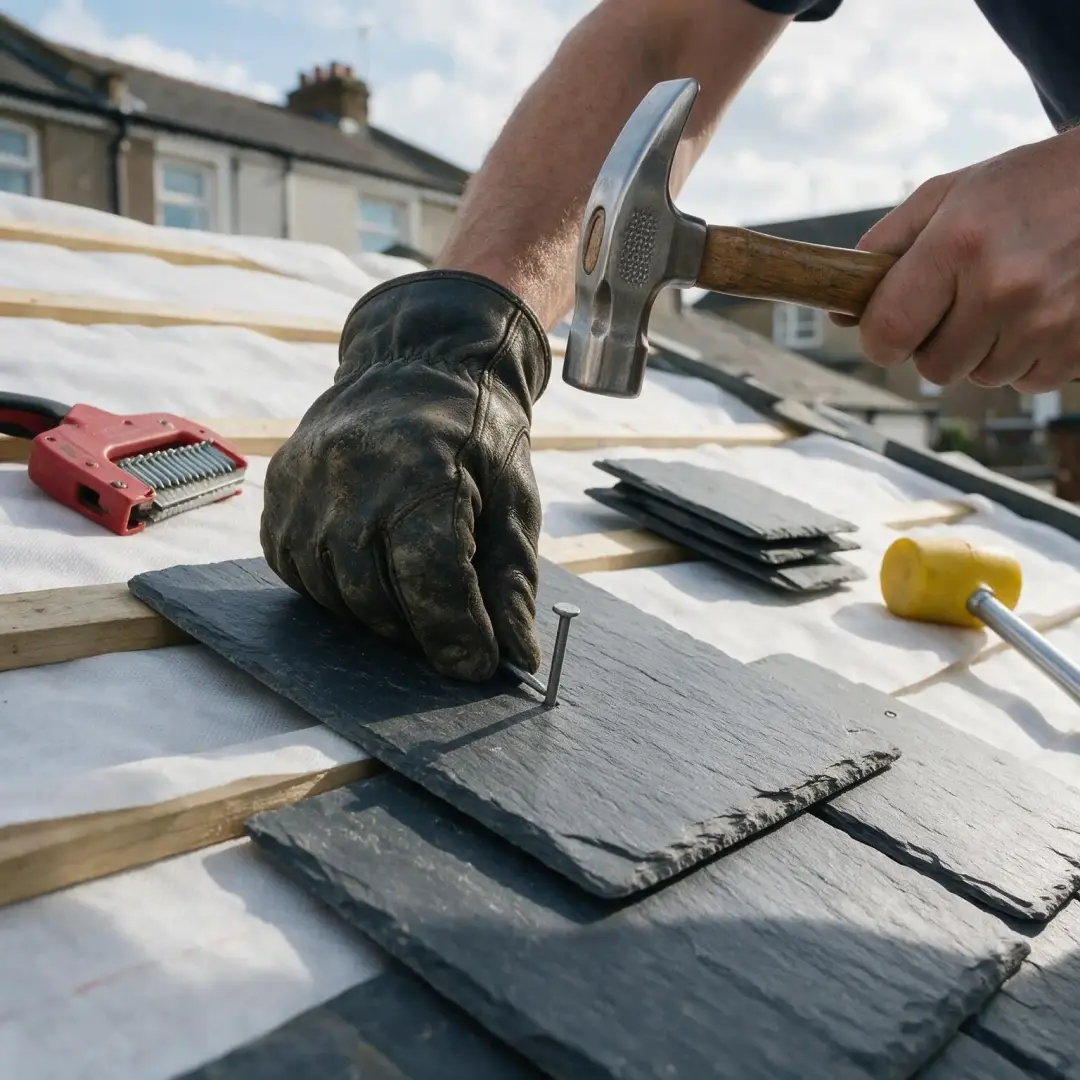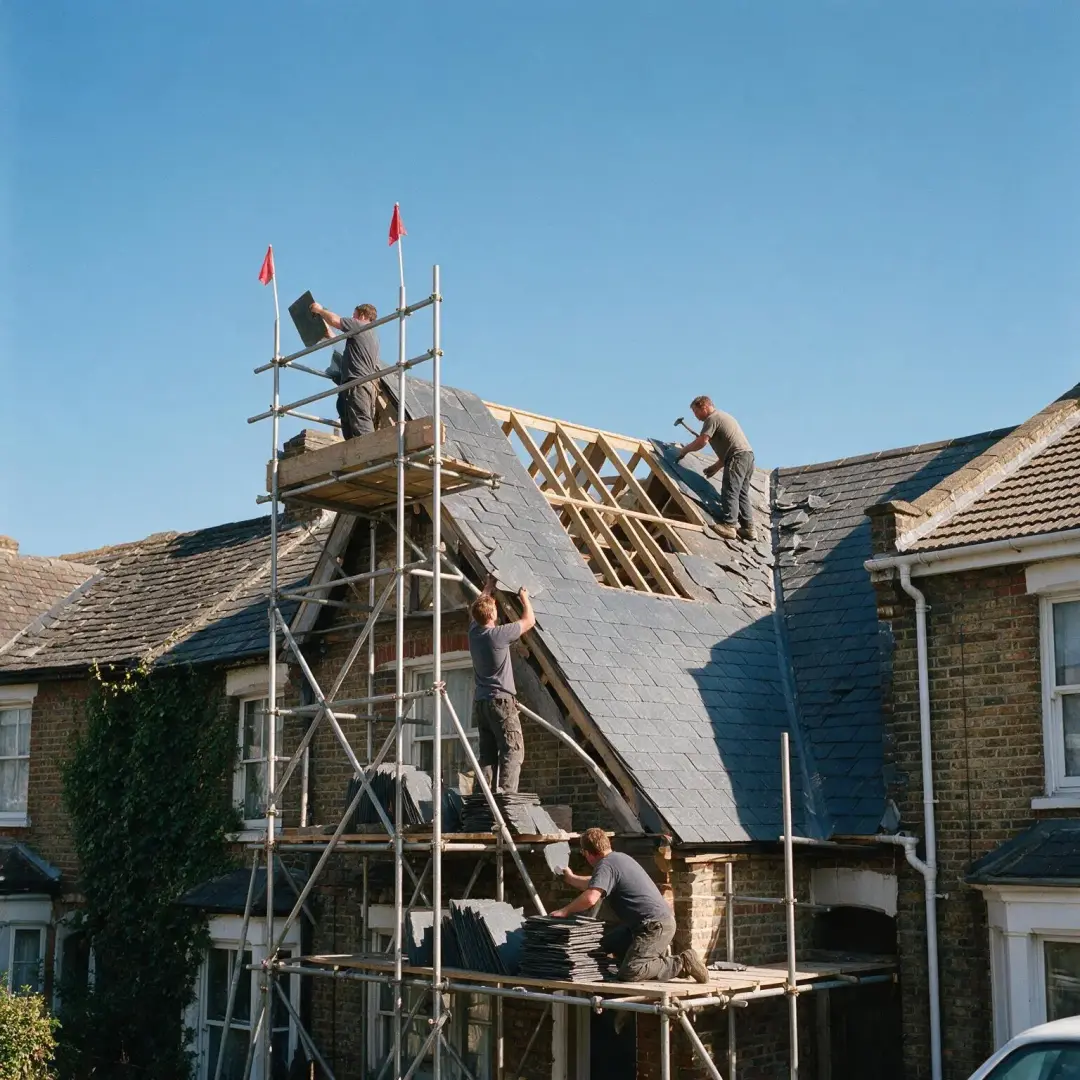
Are you asking: What happens during a roof replacement? The project normally begins with an inspection, written quotation and preparation of the property. The contractor will then install access equipment, remove the old covering, inspect the materials underneath and fit the new roofing system.
A roof replacement can involve noise, dust, deliveries and temporary changes to access around your home. Understanding each stage can help you prepare, protect your belongings and recognise whether the work is progressing as expected.
What Does a Roof Replacement Involve?
A roof replacement involves removing some or all of the existing roof covering and installing a new roofing system. Depending on the property, this may include new tiles, slates, underlay, battens, flashing, ventilation and insulation.
The work should begin with a detailed inspection. The contractor will assess the visible covering, roof space, flashing, gutters and any signs of water entry. This information is used to decide the scope of the work and prepare a written quotation.
Once the project starts, the contractor will normally remove the old materials in sections. This allows the roof to remain protected while hidden parts, such as the battens, underlay and structural timber, are inspected.
Damaged materials should be repaired or replaced before the new covering is fitted. The finished roof must form a complete system rather than simply providing a new surface.
The exact process will vary according to the roof design, materials, property access and weather. A clear schedule should explain the main stages and how the building will be protected throughout the project.
- The contractor should inspect the roof and provide a written scope of work
- Scaffolding or another safe access system will normally be installed
- Roofing materials and waste containers may arrive before work begins
- The old tiles, slates or flat-roof covering will be removed in sections
- Underlay, battens, insulation and roof timbers will be checked
- Hidden damage may increase the amount of work required
- The new roof covering, flashing and ventilation will be installed
- Gutters, working areas and access routes should be cleared at the end
- In 2024, around 1.4 million homes in England had a surveyor-recorded damp problem
- Homes with roof disrepair were more than twice as likely to report storm-related moisture damage
Before agreeing to the work, ask the contractor to explain what is included and what may be charged separately. The quotation should cover access equipment, materials, labour, waste removal and finishing work. It should also explain how unexpected damage will be recorded, priced and approved before extra work is completed.
| Stage | What normally happens | What you may notice |
|---|---|---|
| Inspection and quotation | The roof, loft and surrounding areas are assessed | Photographs, measurements and questions about previous leaks |
| Site preparation | Scaffolding, protection and waste containers are installed | Restricted access, deliveries and activity around the property |
| Removal | The existing covering, battens and underlay are removed as required | Noise, vibration, dust and falling debris within controlled areas |
| Hidden inspection | Timbers, insulation, decking and other concealed materials are checked | Possible changes to the price or working period if damage is found |
| Installation | New underlay, battens, covering, ventilation and flashing are fitted | Regular deliveries and continued activity above the rooms |
| Completion | The roof is checked, waste is removed and documents are provided | Final inspection, cleaning and removal of access equipment |
What Happens Before the Work Starts?
Before work begins, the contractor should confirm the roofing materials, expected start date, estimated working period and payment schedule.
They should also explain where scaffolding, materials and waste containers will be placed. Access may be needed through a driveway, garden, side passage or neighbouring land.
Check whether vehicles need to be moved before deliveries arrive. Roofing materials can be heavy, and the delivery vehicle may need enough room to unload safely.
The contractor should identify items that need protection, including windows, paths, conservatories, garden furniture and plants. Suitable boards or sheets may be used to reduce the risk of damage from dust and falling debris.
You should receive information about working hours, site contacts and arrangements for bad weather. Ask how the roof will be covered if rain begins after the old materials have been removed.
Any building control requirements, parking restrictions or access agreements should be dealt with before the project starts.
How Should You Prepare Your Home?
Roof work can cause vibration through ceilings and walls. Remove fragile items, pictures and loose decorations from rooms directly below the roof.
Items stored in the loft should be removed or covered with strong protective sheets. Dust and small pieces of material may enter the roof space while the old covering is being taken off.
Keep children and pets away from the working area. Gates may need to remain closed, and normal garden or driveway access may be restricted.
Move vehicles away from scaffolding and waste containers. This reduces the risk of dust, falling debris or accidental damage during deliveries.
Tell the contractor about alarm cables, satellite equipment, solar panels, roof windows and external wiring. These items may need temporary removal or protection.
Neighbours may also appreciate advance notice, particularly if scaffolding, parking or noise could affect them.

Why Is Scaffolding Normally Required?
Scaffolding provides a stable working platform and safe access to the roof. It also gives contractors space to handle materials and complete detailed work around roof edges, chimneys and gutters.
The scaffold may be installed several days before roofing work begins. Boards, rails, ladders and protective sheeting may be added according to the building and surrounding area.
Some projects require a temporary roof or weather covering. This may be useful during complex work, although it will increase the cost and preparation time.
Scaffolding can reduce light through windows and restrict the use of doors, paths or parts of the garden. The contractor should explain any access limits in advance.
Do not climb or alter the scaffold. Children should not be allowed to play near it, and windows should be kept closed when work is taking place directly outside.
The scaffolding will normally remain until the contractor has completed the final inspection and any small corrections.
What Happens When the Old Roof Is Removed?
The contractor will usually remove tiles, slates or other covering materials in controlled sections. Reusable materials may be separated from damaged materials and waste.
The old battens and underlay may also be removed, depending on their condition and the agreed scope of work. This exposes the supporting structure and allows a closer inspection.
This is often the noisiest part of the project. You may hear movement, scraping and materials being placed into a waste container. Small amounts of dust may enter the loft.
The contractor should avoid exposing more of the roof than can be protected safely. If rain is expected, temporary sheets or coverings should be available.
Waste should be lowered or moved in a controlled way. It should not be thrown into areas that are accessible to occupants, neighbours or members of the public.
At the end of each day, the roof and working area should be left secure.
What Hidden Problems Could Be Found?
Some damage cannot be seen until the old covering and underlay have been removed. Common discoveries include rotten battens, wet insulation, damaged decking and decayed roof timbers.
Water may also have affected the areas around chimneys, valleys, roof windows and wall connections. Previous repairs may have hidden problems rather than correcting them.
In 2024, around 1.4 million homes in England had a damp problem recorded by a surveyor. During 2024 to 2025, 4.3 million households reported new moisture damage following intense rain or a storm.
Roof condition was closely linked to this damage. Around 38% of homes with roof disrepair experienced storm-related moisture damage, compared with 17% of homes without roof disrepair.
The quotation should explain how unexpected work will be handled. The contractor should provide photographs and a price before completing additional repairs, except where immediate action is needed to make the property safe or weatherproof.
How Is the New Roofing System Installed?
Once the supporting structure is sound, the contractor will install the new roofing system in the correct order.
For many pitched roofs, this begins with a suitable underlay. New battens are then fixed at the spacing required for the chosen tiles or slates.
The roof covering is normally installed from the lower edge upwards. Tiles or slates are fixed in accordance with the product requirements and the roof’s exposure to wind.
Details around chimneys, valleys, walls, roof windows and ventilation points require particular care. Flashing and weatherproof joints should direct water away from vulnerable areas.
Ridge and hip materials are fitted as the main covering nears completion. Dry-fix systems or mortar may be used, depending on the design and specification.
Gutters and rainwater outlets should be checked before completion. Water must be able to leave the roof without collecting against the covering or overflowing onto walls.
How Much Noise and Disruption Should You Expect?
A roof replacement is likely to create regular noise during working hours. Removing old materials and fixing new battens can cause vibration in the rooms below.
People who work from home may wish to use another location during the loudest stages. Young children, pets and people who are sensitive to noise may also be more comfortable away from the property.
Access to driveways, gardens and side passages may be limited. Deliveries and waste collections can also create short periods of additional activity outside the home.
The property should normally remain habitable, but this depends on the scale of the work and the condition found after removal begins. Structural repairs or major water damage could cause greater disruption.
Ask the contractor which stages are expected to be the loudest and whether any rooms should not be used at certain times.
Good communication is important. You should know who to contact if you have concerns about access, weather protection or damage.
What Happens If It Rains?
Roofing work depends on suitable weather. Strong winds, heavy rain, frost or extreme heat may make some stages unsafe or prevent materials from being installed correctly.
A responsible contractor should monitor the forecast and plan removal work carefully. They should avoid exposing large areas when rain is likely.
Temporary sheets or coverings may be used to protect open sections. These must be fixed securely and checked regularly, particularly during windy conditions.
Weather delays do not necessarily indicate poor planning. Continuing in unsafe conditions could place workers, occupants and the building at risk.
The contractor should explain whether delayed days will change the completion date. Payment should relate to the agreed terms rather than pressure to continue during unsuitable weather.
If water enters the property during the work, tell the contractor immediately. Photographs can help record the location and extent of the problem so that the cause can be investigated.
Can Insulation and Ventilation Be Improved?
A roof replacement provides an opportunity to inspect the insulation and ventilation within the roof space.
In 2024, 56% of homes in England were within energy-efficiency bands A to C, compared with 26% in 2014. However, only 42% of homes had at least 200 millimetres of loft insulation.
More than 2.7 million households were living in homes with less than 100 millimetres of loft insulation during 2024 to 2025.
Adding insulation may reduce heat loss, but it must suit the roof design. Insulation should not block ventilation at the eaves or create areas where moisture can collect.
Ventilation may be provided through eaves, ridges, tiles or other suitable openings. The contractor should consider the full roof system rather than adding separate products without checking how they work together.
Ask whether insulation and ventilation improvements are included in the quotation.

Will Building Regulations Approval Be Needed?
Replacement coverings on pitched and flat roofs may be covered by building regulations in England.
Approval will normally need to be considered when more than 50% of the roof is affected. It may also be required when structural alterations are made, when the new covering increases the roof’s weight significantly or when its fire performance differs from the existing material.
Building regulations and planning permission are separate. Planning controls may apply when the work changes the roof’s shape or height, or when the property is listed or within a conservation area.
The contractor should explain who will notify building control and who will provide the completion documents. Some registered contractors can self-certify qualifying work through an authorised scheme.
Keep all certificates, invoices, guarantees, photographs and product details. These records may be needed during a future sale or insurance claim.
Rules differ across England, Wales, Scotland and Northern Ireland. This article provides general guidance for homeowners in England, so local requirements should be checked before work begins.
| Question to ask | Why it matters |
|---|---|
| How will the property be protected from rain? | The contractor should have suitable temporary coverings available |
| What happens if hidden damage is found? | Extra work should be photographed, explained and priced clearly |
| Are scaffolding and waste removal included? | These items can make a significant difference to the final cost |
| Will insulation and ventilation be checked? | Poor airflow or unsuitable insulation can contribute to condensation |
| Who will arrange building control approval? | You need to know who is responsible for notification and certificates |
| What guarantee will be provided? | The terms should explain what is covered and for how long |
How Will Waste and Old Materials Be Removed?
A roof replacement can produce a large amount of waste, including tiles, slates, underlay, timber, packaging and metal.
The quotation should state whether a skip or another waste container is included. It should also explain where the container will be placed and how long it will remain at the property.
A permit may be required if a skip is placed on a public road. Parking restrictions or temporary suspension arrangements may also need to be considered.
Materials that can be reused or recycled should be separated where practical. Reclaimed slates or tiles may have value, so ownership should be agreed before removal.
The contractor should clear paths, gutters and surrounding areas before completion. A careful check should be made for nails, sharp fragments and small pieces of roofing material.
Ask who is responsible for any waste left after the main container has been collected. Waste should be handled by a suitable registered service rather than left for the homeowner to arrange unexpectedly.
What Should Happen During the Final Inspection?
The contractor should inspect the completed covering, ridge, hips, valleys, flashing, roof edges and rainwater system.
Tiles or slates should appear secure and consistent. Flashing should sit neatly against walls, chimneys and roof windows without open joints or loose edges.
Gutters should be clear, correctly supported and connected to the downpipes. Any debris that entered them during the work should be removed.
The loft should also be checked where access is available. Look for daylight through unexpected gaps, damaged insulation or signs that water has entered during the project.
Ask the contractor to explain any features that may look different from the old roof, such as new vents, dry ridge systems or changes to flashing.
Take photographs after completion and keep them with the quotation, invoices and product information. Report missing, cracked or loose materials before the scaffolding is removed, as access will be easier at this stage.
- Prepare inside: Remove fragile items and protect belongings stored in the loft
- Clear access: Move vehicles, furniture and plant pots away from working areas
- Expect noise: Removal and fixing work can cause regular vibration
- Plan for weather: Ask how open sections will be protected from rain
- Check hidden damage: Request photographs and prices before additional work begins
- Review insulation: Replacement is a useful time to assess insulation and ventilation
- Keep documents: Store invoices, guarantees, certificates and completion photographs
- Inspect the finish: Raise concerns before scaffolding and access equipment are removed
What Documents Should You Receive?
At completion, you should receive a final invoice showing the work completed and any agreed changes to the original quotation.
The contractor should also provide the guarantee terms. Check whether the guarantee covers workmanship, materials or both, and whether conditions apply to maintenance or inspection.
Product information may be provided for tiles, slates, membranes, insulation and ventilation systems. Keep these records in case repairs or matching materials are needed later.
Where building regulations apply, retain the completion or compliance certificate. Missing documents may cause delays or questions during a future property sale.
Photographs of hidden work can also be valuable. They may show new battens, underlay, timber repairs and insulation before these parts were covered.
Store all records together and note the completion date. This will make future maintenance, insurance discussions and property enquiries easier to manage.
Frequently Asked Questions
```Can You Stay at Home During a Roof Replacement?
Most people can remain at home during a standard roof replacement. However, the work can be noisy, and access to some outdoor areas may be restricted. Major structural repairs or serious water damage could make temporary alternative accommodation necessary.
How Long Does a Roof Replacement Take?
The working period depends on the size, design, materials, access and condition of the roof. Weather and hidden damage can also affect the completion date. The contractor should provide an estimated schedule before work begins.
Will a Roof Replacement Be Noisy?
Yes. Removing old materials and fixing battens, tiles or slates can create regular noise and vibration. The removal stage is often the loudest part of the project.
What Happens If Rotten Timber Is Found?
Damaged timber should be assessed before the new covering is installed. The contractor should provide photographs, explain the required repair and confirm the additional cost unless it was already included in the quotation.
Will the Roof Be Left Open Overnight?
The contractor should not leave the property without suitable protection. Open areas should be covered or the work should be completed in sections that can be made weatherproof before the end of the day.
Can a Roof Be Replaced During Winter?
Roof replacement can take place during winter when conditions are suitable. Rain, frost, snow and strong winds may cause delays or prevent certain materials from being installed safely.
Will My Gutters Be Replaced?
Not automatically. The quotation should state whether gutters, downpipes, fascias and soffits are being retained, repaired or replaced.
Should Solar Panels Be Removed?
Solar panels may need to be removed before the roofing work begins and refitted after completion. This should be arranged with a suitable installer and included within the project schedule.
When Should the Final Payment Be Made?
Payments should follow the written agreement. Before making the final payment, check that the agreed work is complete, waste has been removed and the required guarantees and certificates have been provided.
What Should You Expect From a Roof Replacement?
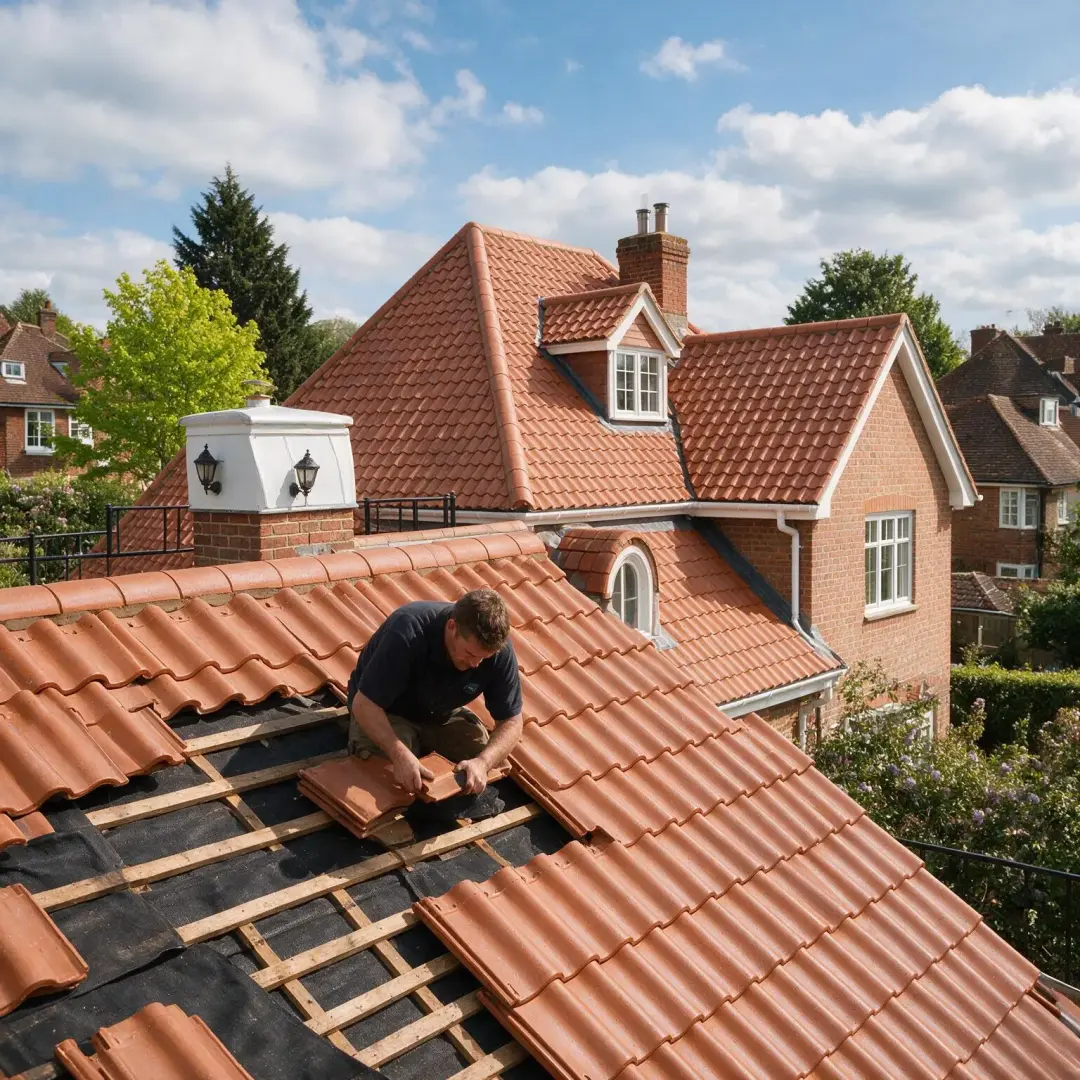
A roof replacement normally involves preparation, safe access, removal of the old covering, inspection of hidden materials and installation of the new roofing system.
You should expect noise, dust, deliveries and some limits on access around the property. Weather or hidden damage may also affect the planned completion date.
A detailed quotation and regular communication can reduce uncertainty. The contractor should explain how the property will be protected, what happens if extra repairs are needed and which documents will be provided.
Before work begins, protect fragile items, clear outside access routes and move vehicles away from the working area. During the project, raise concerns promptly and keep a record of agreed changes.
At completion, inspect the roof before the scaffolding is removed. Keep invoices, photographs, guarantees and building control certificates safely.
A well-managed replacement should leave the property weatherproof, secure and easier to maintain for years to come.
We hope you found this article useful: What to Expect During a Roof Replacement. Are you considering roof replacement services in Birmingham, Dudley or Wolverhampton? Colmore Roofing Contractors can inspect your roof, explain each stage of the work and provide a clear written quotation. Contact the team to arrange a professional roofing assessment.