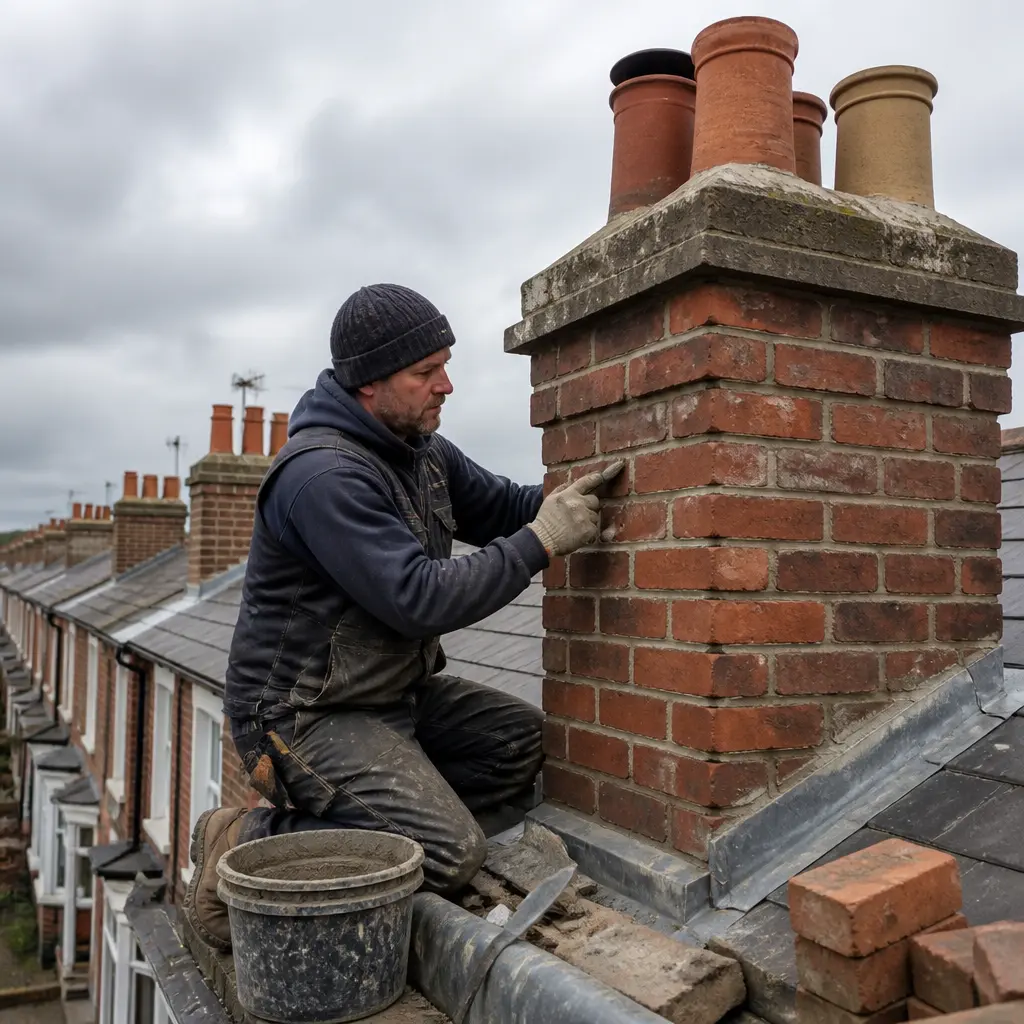
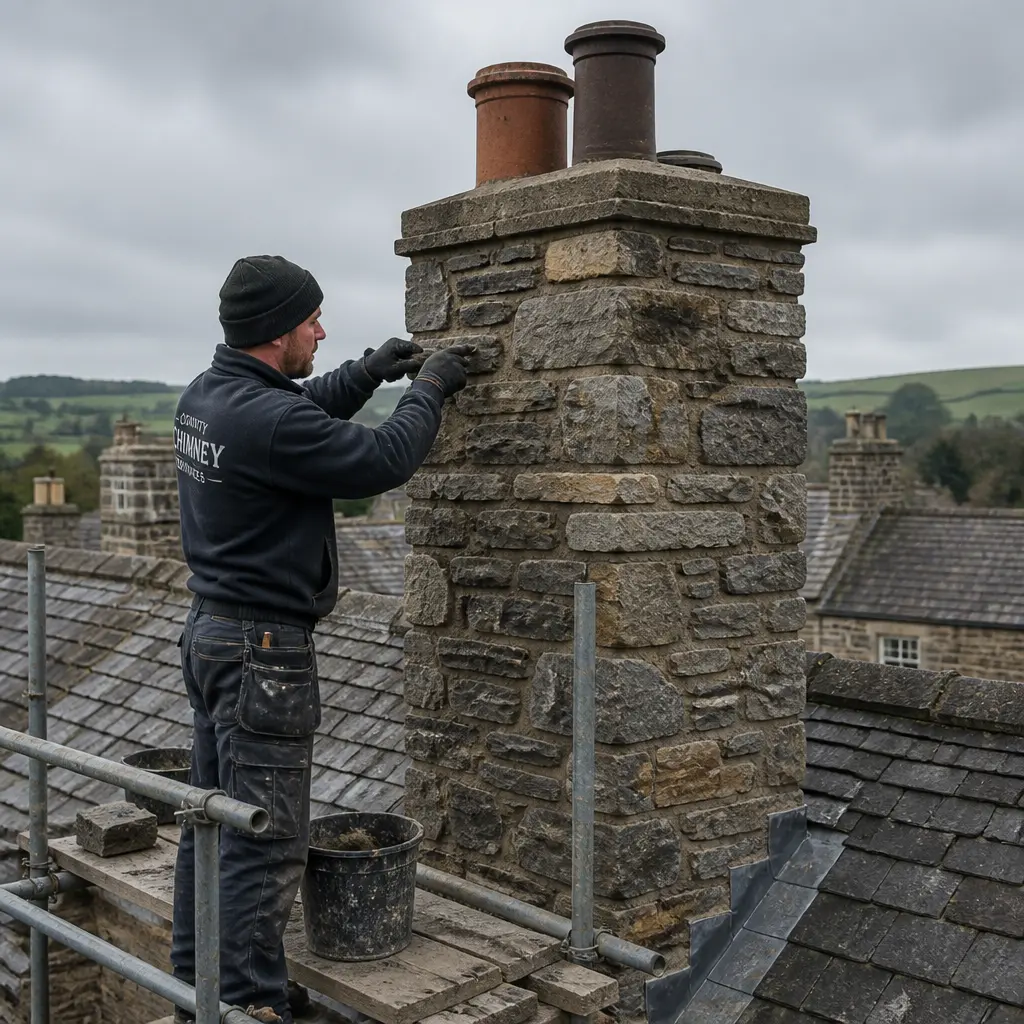
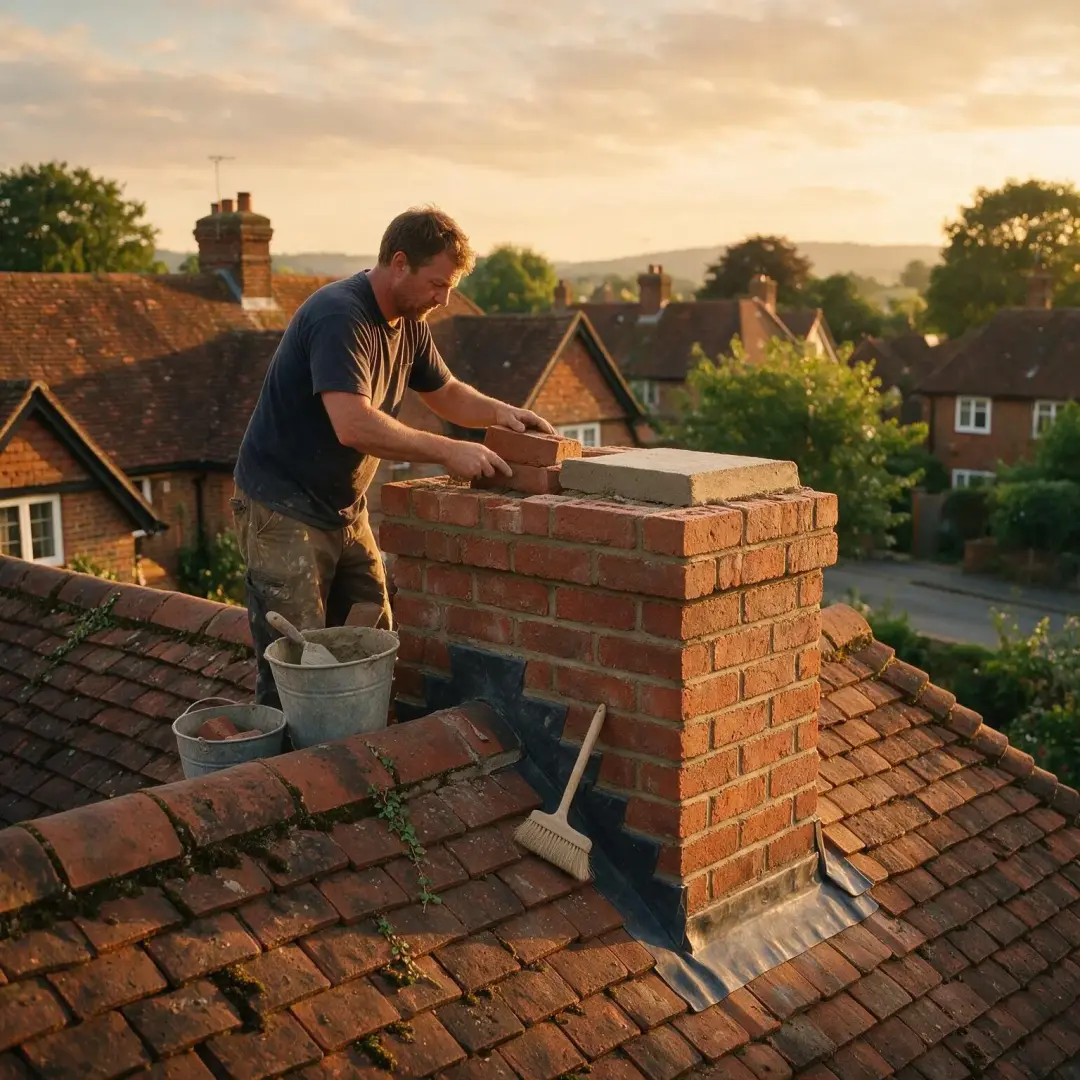
Chimney repointing is the process of removing damaged mortar from the joints between chimney bricks and replacing it with fresh mortar. It helps keep the chimney stable and reduces the risk of rainwater entering the brickwork.
Repointing may be needed when mortar becomes cracked, loose, powdery or missing. Completing the work at the right time can prevent more serious damage and reduce the need for a partial or complete chimney rebuild.
What Is Chimney Repointing?
Chimney repointing is a repair method used to renew the mortar joints between bricks. The contractor removes the old and damaged mortar to a suitable depth, cleans the open joints and fills them with fresh mortar.
Mortar holds the individual bricks together and helps the chimney stack resist wind, rain and changes in temperature. When mortar begins to fail, water can enter the joints and reach the surrounding brickwork.
Repointing does not normally involve replacing every brick. Sound bricks are left in place, while the joints around them are renewed. Individual damaged bricks may also be replaced as part of the same job.
The aim is to create strong, weather-resistant joints without trapping moisture inside the chimney. The new mortar should suit the age, condition and type of brickwork.
- Chimney repointing replaces cracked, loose or missing mortar
- A typical domestic chimney stack may take between one and three working days to repoint
- The old mortar should be removed before fresh mortar is added
- Damaged bricks may need to be replaced during the work
- The correct mortar should suit the age and type of the building
- Rain, frost, high temperatures and strong winds can delay repointing
- Fire and rescue services attended 2,019 chimney fires in England in the year ending March 2025
- Repair and maintenance construction output grew by 2.1% in the three months to May 2026
Repointing should be based on a close inspection rather than the appearance of the chimney from ground level alone. A contractor may find loose bricks, failed flaunching, worn flashing or other faults after safe access has been installed.
| Condition | What it may mean | Possible action |
|---|---|---|
| Small surface cracks | Early weathering or movement | Arrange an inspection and monitor the joints |
| Loose or powdery mortar | The mortar has lost strength | Remove the failed material and repoint the joints |
| Deep or missing joints | Water can enter the stack more easily | Complete local or full chimney repointing |
| Cracked or flaking bricks | The brick faces may have been damaged by moisture and frost | Replace damaged bricks before or during repointing |
| Leaning or unstable stack | There may be serious movement or structural damage | Arrange an urgent professional assessment |
| Damp beside the chimney breast | Water may be entering through mortar, flashing or the chimney top | Inspect the complete stack and nearby roof area |
Why Does Chimney Mortar Fail?
Chimneys are exposed to rain, frost, wind, heat and changing temperatures throughout the year. These conditions can slowly weaken mortar and create gaps between the bricks.
Water is a common cause of damage. It can enter small cracks and remain inside the joints. When the temperature falls below freezing, the water can expand and place pressure on the surrounding mortar and bricks.
The chimney may also become warmer and cooler as the fireplace or appliance is used. Repeated temperature changes can contribute to movement and cracking.
In some cases, earlier repairs have been completed with mortar that is too hard for the existing bricks. This can prevent moisture from leaving through the joints and may cause the softer brick faces to break down instead.
Age, poor earlier workmanship, building movement and a damaged chimney top can also shorten the life of the mortar.
What Are the Signs That a Chimney Needs Repointing?
Visible gaps between the bricks are one of the clearest signs that repointing may be needed. Mortar may also look cracked, loose, powdery or deeply worn.
Small pieces of mortar may fall onto the roof, into gutters or onto the ground below. This suggests that the joints are losing strength and should be inspected.
Damp marks near a chimney breast can also be linked to failed pointing. However, similar damp may be caused by defective flashing, cracked flaunching, damaged bricks or condensation inside an unused flue.
White marks on the brickwork can appear when moisture carries salts to the surface. These marks do not always mean that repointing is required, but they can show that water is moving through the masonry.
A leaning stack, wide cracks or loose bricks require urgent attention because repointing alone may not be enough.
What Happens During Chimney Repointing?
The first stage is an inspection of the chimney stack and nearby roof area. The contractor checks the mortar, bricks, chimney pots, flaunching and flashing before deciding how much repointing is required.
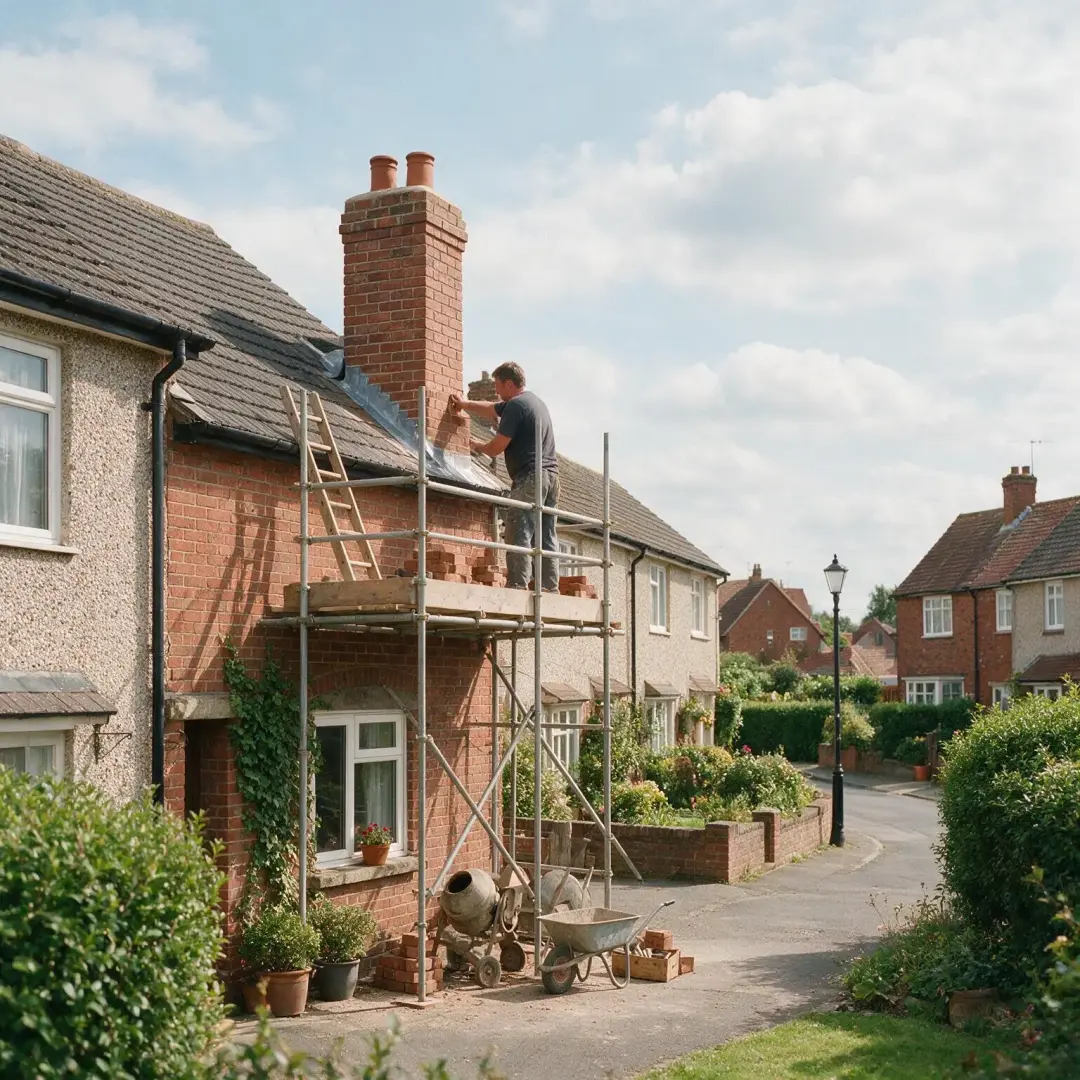
Safe access is then arranged. Scaffolding is commonly used because it gives the contractor a stable platform and provides space for tools and materials.
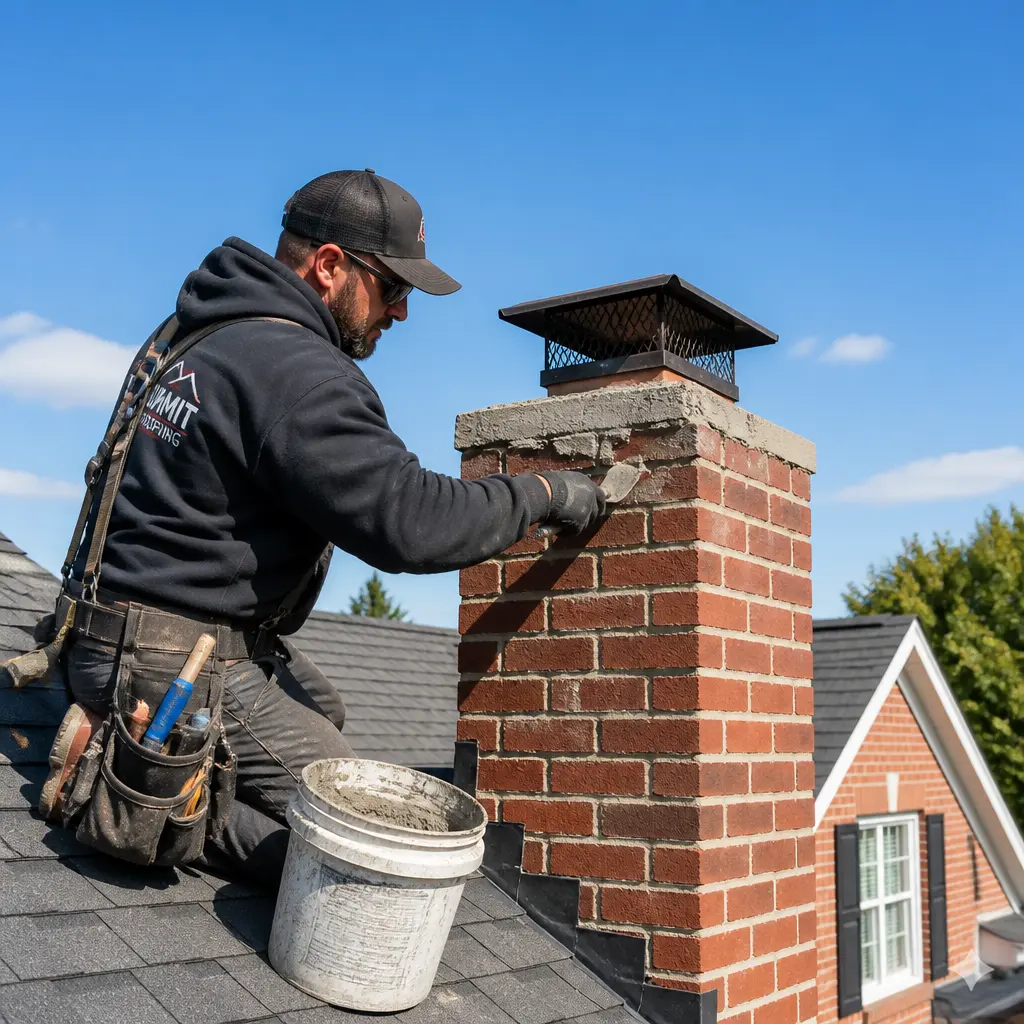
The failed mortar is carefully removed from the joints. This process is sometimes called raking out. Enough mortar must be removed to create space for a secure new joint.
Dust and loose material are cleared away before the joints are prepared. The brickwork may be lightly dampened so that dry bricks do not remove water from the fresh mortar too quickly.
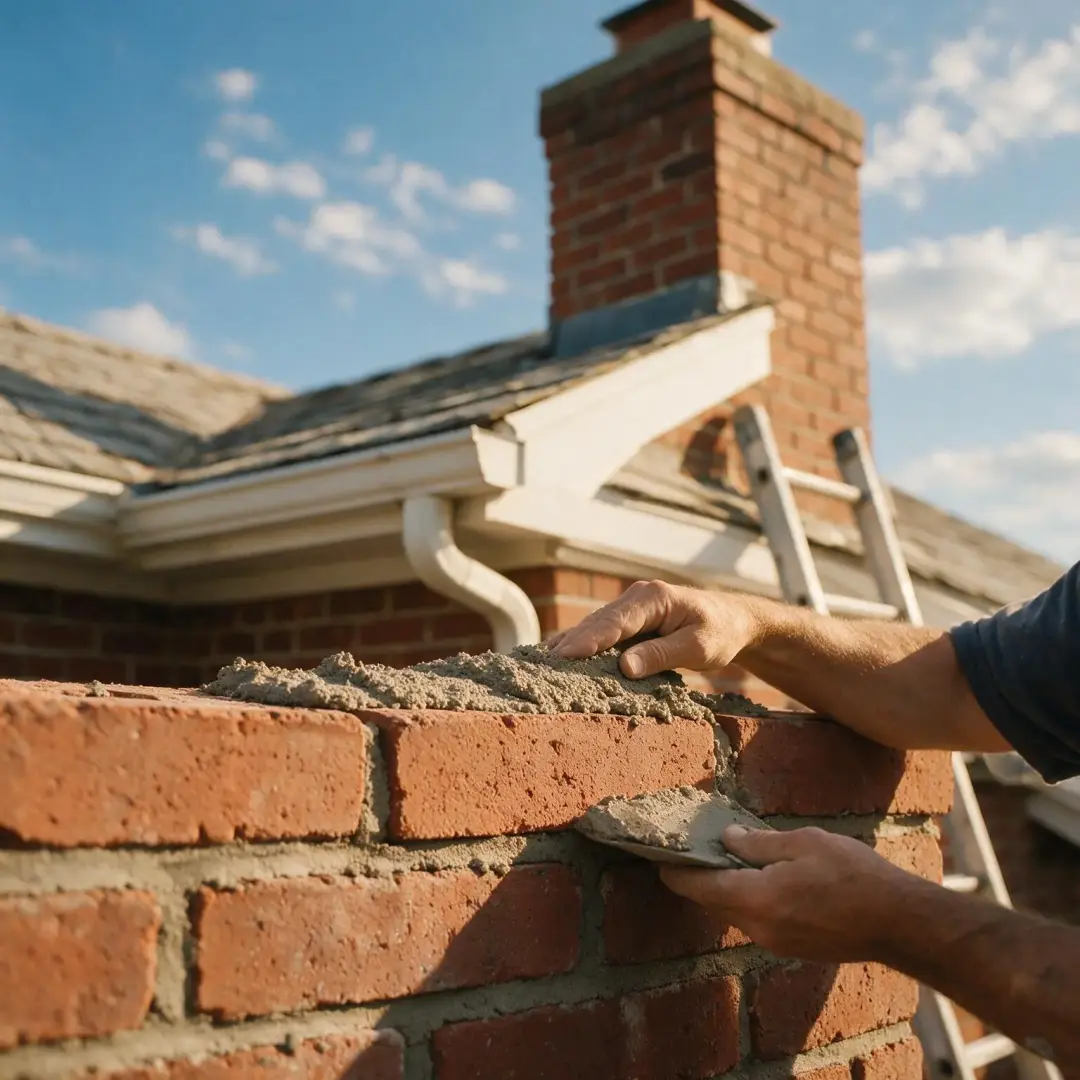
New mortar is pressed into the open joints and finished to a suitable shape. The contractor then cleans the surrounding brick faces and protects the work while it begins to set.
| Stage | What happens | Why it matters |
|---|---|---|
| Inspection | The stack and nearby roof parts are checked | It identifies the extent and cause of the damage |
| Safe access | Scaffolding or another suitable platform is installed | It allows controlled work at roof level |
| Raking out | Loose and damaged mortar is removed | New mortar should not be placed over weak material |
| Joint cleaning | Dust and loose particles are cleared | Clean joints help the fresh mortar form a secure bond |
| Mortar application | Fresh mortar is firmly placed into the joints | It restores support and weather protection |
| Finishing | The joints are shaped and the brick faces are cleaned | A suitable finish helps shed rainwater |
| Protection | Fresh work is covered when needed | It reduces damage from rain, frost or fast drying |
Is Repointing the Same as Covering the Old Mortar?
No. Proper repointing involves removing damaged mortar before the joints are refilled. Applying a thin layer of new mortar over the existing surface is not a complete repointing repair.
A surface coating may look tidy for a short period, but the weak material remains behind it. The new layer may crack, loosen or fall away because it does not have enough depth to form a lasting bond.
Covering the surface can also hide the true condition of the joints. Water may continue to enter behind the repair, allowing the bricks and deeper mortar to become more damaged.
The contractor should explain how deeply the joints will be cleared and how loose material will be removed. Care is needed to avoid damaging the edges of the bricks during this stage.
A lasting repair depends on suitable preparation as well as the quality of the fresh mortar.
What Type of Mortar Should Be Used?
The mortar should be suitable for the bricks and the age of the property. It should be strong enough to support the chimney while allowing normal moisture movement through the joints.
Many older buildings were constructed with lime-based mortar. This type of mortar is generally more flexible and breathable than a strong modern cement mixture.
Using mortar that is much harder than the surrounding bricks can create problems. Moisture may be forced to leave through the brick faces rather than the joints, which can increase flaking and surface damage.
The colour and texture of the mortar should also be considered, especially when only part of a chimney is being repointed. A poor match may leave the stack with a patchy appearance.
A contractor should assess the existing materials before selecting a mixture. Listed buildings and properties in protected areas may have additional requirements.
How Long Does Chimney Repointing Take?
Repointing a typical domestic chimney stack will often take between one and three working days once safe access is available.
A small area of failed mortar may be repaired within half a day. A large stack with deeply worn joints, several chimney pots or damaged bricks will usually take longer.
The full project period may include extra time for scaffolding, inspections, material delivery and suitable weather. The number of active working days may therefore be shorter than the total time from the first visit to final completion.
Mortar continues to strengthen after it has been applied. The contractor may protect the joints or delay another stage of the work while the material begins to set.
Repointing should not be rushed. Removing the old mortar and preparing the joints properly are important parts of the repair.
Does a Chimney Need Scaffolding for Repointing?
Scaffolding is commonly required for chimney repointing because most chimney stacks are high above the ground and surrounded by sloping roof surfaces.
A stable working platform allows the contractor to reach each side of the stack, remove mortar in a controlled way and apply fresh material evenly. It also provides space for tools, mortar and replacement bricks.
The access method will depend on the chimney height, roof shape, ground conditions and amount of work. A tower or another system may be suitable for some lower and simpler properties.
Property owners should ask whether the quotation includes the installation and removal of access equipment. A permit may be needed when scaffolding will stand on a pavement or public road.
Scaffolding may remain in place until the work has been checked and the mortar has had enough time to begin setting.
How Does the Weather Affect Repointing?
Fresh mortar needs suitable weather conditions while it begins to set. Heavy rain, frost, strong winds and very hot weather can all affect chimney repointing.
Rain can wash new mortar out of the joints before it has hardened. Frost can damage moisture inside the material, while strong winds can make roof-level work unsafe.
Hot, dry or windy conditions may cause mortar to lose water too quickly. This can affect the way it sets and reduce the quality of the finished joint.
A contractor may use protective sheets or damp coverings when conditions are changeable. However, covers cannot make every form of roof work safe during severe weather.
Postponing work during unsuitable conditions can help prevent an early failure. The contractor should explain how the forecast may affect the planned start date and completion period.
| Weather condition | Possible effect | Likely response |
|---|---|---|
| Heavy rain | Fresh mortar may wash out or become weak | Delay the work or install suitable protection |
| Frost | Freezing moisture may damage the new joints | Wait for a suitable temperature |
| Strong wind | Roof access and handling materials may become unsafe | Stop work until conditions improve |
| Very hot weather | Mortar may dry too quickly | Dampen and protect the fresh work |
| Mild and dry conditions | The mortar can set more evenly | Continue with normal protection and checks |
Can Repointing Stop a Chimney Leak?
Repointing can help stop water entry when failed mortar joints are the cause of the leak. Filling the joints reduces the gaps through which rain can enter the chimney stack.
However, not every chimney leak is caused by mortar. Water can also enter through cracked flaunching, damaged chimney pots, worn flashing or broken roof tiles.
The damp may appear some distance from the opening because water can travel along roof materials, rafters or the chimney breast before it becomes visible inside the property.
A contractor should inspect the full stack and nearby roof covering instead of assuming that all damp requires repointing. Completing the wrong repair may improve the appearance of the chimney without stopping the leak.
Internal damp can also be linked to condensation in a blocked or poorly ventilated flue. This may require a different form of work.
When Is Repointing Not Enough?
Repointing is suitable when the main problem is failed mortar and the chimney remains reasonably stable. It cannot correct every type of chimney damage.
A stack with widespread broken bricks may require brick replacement as well as new mortar. If large sections of masonry are loose, the affected part may need to be taken down and rebuilt.
A leaning chimney, wide stepped cracks or movement away from the building can suggest a structural problem. These signs should be assessed before cosmetic repairs are completed.
The chimney top may also need attention. Cracked flaunching or loose pots can allow water to enter even after the sides of the stack have been repointed.
The quotation should clearly state whether the work includes bricks, flashing, pots and flaunching. It should also explain what will happen if further damage is uncovered after the old mortar is removed.
Can You Repoint a Chimney Yourself?
Chimney repointing should not normally be treated as a simple household task. Working at roof level creates a serious risk of falling, while loose bricks and chimney pots can move without warning.
The repair also requires more than applying fresh mortar. The damaged joints must be cleared without cutting into the bricks, and the replacement mortar must be suitable for the existing materials.
A poor repair can trap moisture, damage brick faces or hide deeper movement. Falling mortar and tools may also place people below the chimney at risk.
Property owners can look for gaps, cracks and falling mortar from a safe position at ground level. Binoculars or photographs taken from an upper window may help, provided the inspection does not require climbing onto the roof.
A contractor with suitable chimney and masonry experience should complete a close inspection before work begins.
Current Chimney Fire and Construction Statistics
Official figures show that fire and rescue services in England attended 2,019 chimney fires in the year ending March 2025.
This was 5.5% lower than the 2,136 chimney fires recorded in the previous year. It was also 61% below the 5,190 incidents recorded ten years earlier.
These figures cover fires where the flame was contained within a chimney structure. They do not measure the number of properties with damaged mortar or the number of repointing projects completed.
Office for National Statistics figures show that repair and maintenance construction output in Great Britain grew by 2.1% in the three months to May 2026. Total construction output grew by 1.6% during the same period.
These construction figures cover a wide range of repair work rather than chimney services alone, but they provide current context for activity across the repair and maintenance sector.
How Often Should Chimney Pointing Be Checked?
There is no single inspection period that suits every chimney. The condition of the mortar will depend on the building’s age, local weather, earlier repairs and the level of exposure.
A chimney on an open or elevated property may experience stronger winds and more driving rain than a sheltered stack. It may therefore show signs of wear sooner.
The chimney should be checked when pieces of mortar appear on the roof or ground, damp develops near the chimney breast or visible joints begin to open.
An inspection is also sensible before buying an older property or when other roof work is being planned. Combining access arrangements may reduce disruption, although each repair should still be quoted clearly.
Regular checks can identify local faults before the damage spreads. Repointing a limited area is usually less involved than rebuilding a loose or badly weathered stack.
What Should a Chimney Repointing Quotation Include?
A written quotation should describe the area of the chimney that will be repointed and the preparation included in the price.
It should explain how the old mortar will be removed, what type of replacement mortar will be used and how the finished joints will look.
The quotation should also state whether scaffolding, waste removal and replacement bricks are included. Ask whether the contractor will inspect the flashing, flaunching and chimney pots while access is available.
There should be a clear process for approving further work if loose bricks or deeper cracks are found after the joints have been opened.
The expected working period, weather arrangements and any setting time should be included. Property owners should also ask how the roof and surrounding areas will be protected from falling dust and mortar.
- Inspection: The checks completed before the repair method is agreed
- Access: The scaffolding or other working platform included in the price
- Preparation: The depth and method used to remove failed mortar
- Mortar: The mixture selected for the existing bricks and building age
- Brick replacement: The number of damaged bricks included, if known
- Other repairs: Any work to pots, flaunching, flashing or roof coverings
- Weather protection: The method used to protect fresh mortar
- Completion: Cleaning, photographs, waste removal and final checks
How Long Does Chimney Repointing Last?
The life of a repointing repair depends on the quality of the preparation, the mortar used and the level of weather exposure.
Correctly completed work can remain effective for many years. However, no contractor can give the same fixed lifespan for every chimney because properties face different levels of wind, rain, frost and heat.
The repair may fail early if fresh mortar is spread over loose material, the mixture is unsuitable or the joints are not protected while setting.
Water entering from another part of the stack can also shorten the life of the pointing. Damaged flaunching, pots or flashing should therefore be repaired where needed.
Keeping gutters clear and arranging checks after severe weather can help reveal new faults. Small cracks should be assessed before they grow into deep gaps or allow wider brick damage.
Frequently Asked Questions
```What Does Repointing a Chimney Mean?
It means removing weak or damaged mortar from between the chimney bricks and replacing it with fresh mortar.
How Do I Know If My Chimney Needs Repointing?
Common signs include cracked joints, missing mortar, loose material, damp near the chimney breast and pieces of mortar falling onto the roof or ground.
Can You Repoint Over Existing Mortar?
Fresh mortar should not simply cover weak material. Damaged mortar normally needs to be removed to a suitable depth before the joints are refilled.
How Long Does Repointing a Chimney Take?
A typical domestic chimney may take between one and three working days once safe access is available. Larger stacks and damaged bricks can add time.
Does Chimney Repointing Stop Damp?
It can stop damp caused by failed mortar joints. Damp caused by flashing, flaunching, roof damage or condensation will need a different repair.
Can Chimney Repointing Be Done in Rain?
Heavy rain can wash out or weaken fresh mortar. Work may need to be delayed or protected during light and changeable conditions.
Should Lime Mortar Be Used on an Old Chimney?
Many older chimneys were built with lime-based mortar. The correct mixture should be selected after the existing bricks and mortar have been assessed.
Can a Badly Damaged Chimney Be Repointed?
Repointing may not be enough when bricks are loose, the stack is leaning or major cracks are present. Part of the chimney may need rebuilding.
Do I Need to Leave My Home During Repointing?
Most external repointing does not require property owners to leave. The contractor may need access to the loft or fireplace and may ask that the appliance remains unused.
When Should You Arrange Chimney Repointing?
Arrange an inspection when mortar joints are cracked, loose, deeply worn or missing. Falling pieces of mortar, damaged bricks and damp near the chimney breast should also be investigated.
Early repointing can protect the bricks and reduce water entry before the stack becomes unstable. Delaying the work may allow moisture and frost to damage a wider area.
The complete chimney should be checked because mortar failure may not be the only problem. Pots, flaunching, flashing and nearby roof coverings can all affect how water enters and leaves the structure.
A clear quotation should explain the preparation, mortar type, access arrangements and any related repairs. It should also describe how unexpected brick damage will be handled.
Suitable materials, safe access and careful protection during setting can help produce a stronger and longer-lasting repair.
Are the mortar joints on your chimney cracked, loose or missing? Colmore Roofing Contractors can inspect the stack, identify related faults and provide a clear quotation for chimney repointing in Birmingham, Dudley and Wolverhampton.