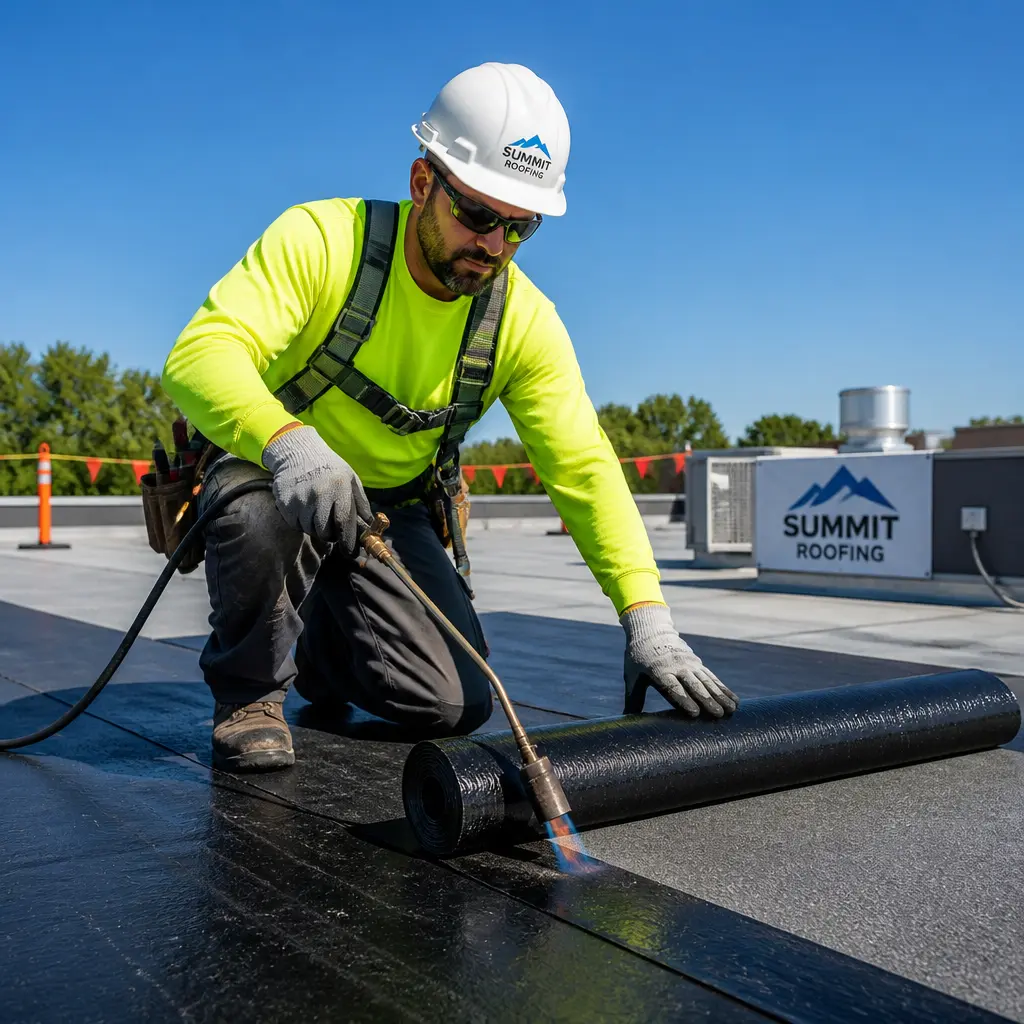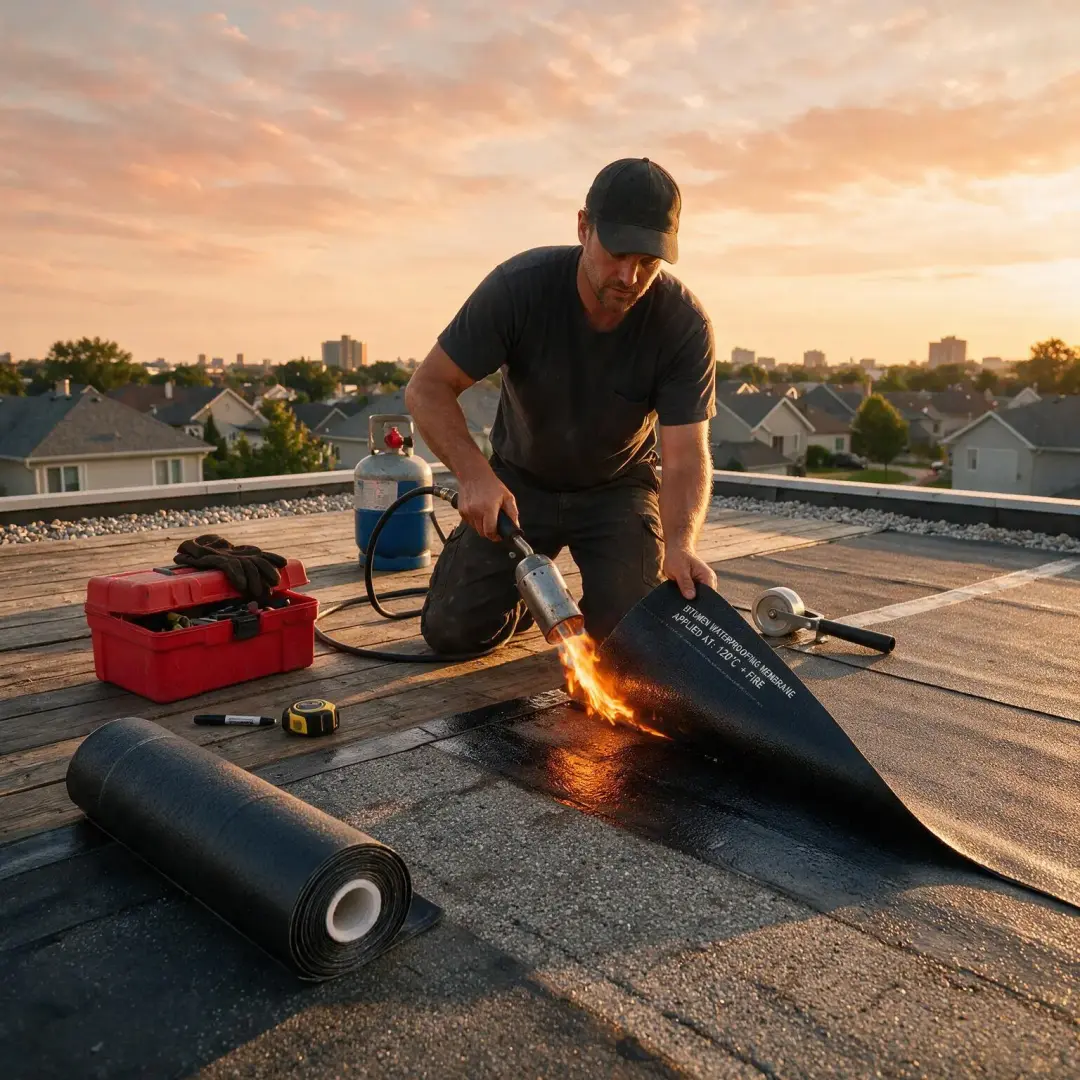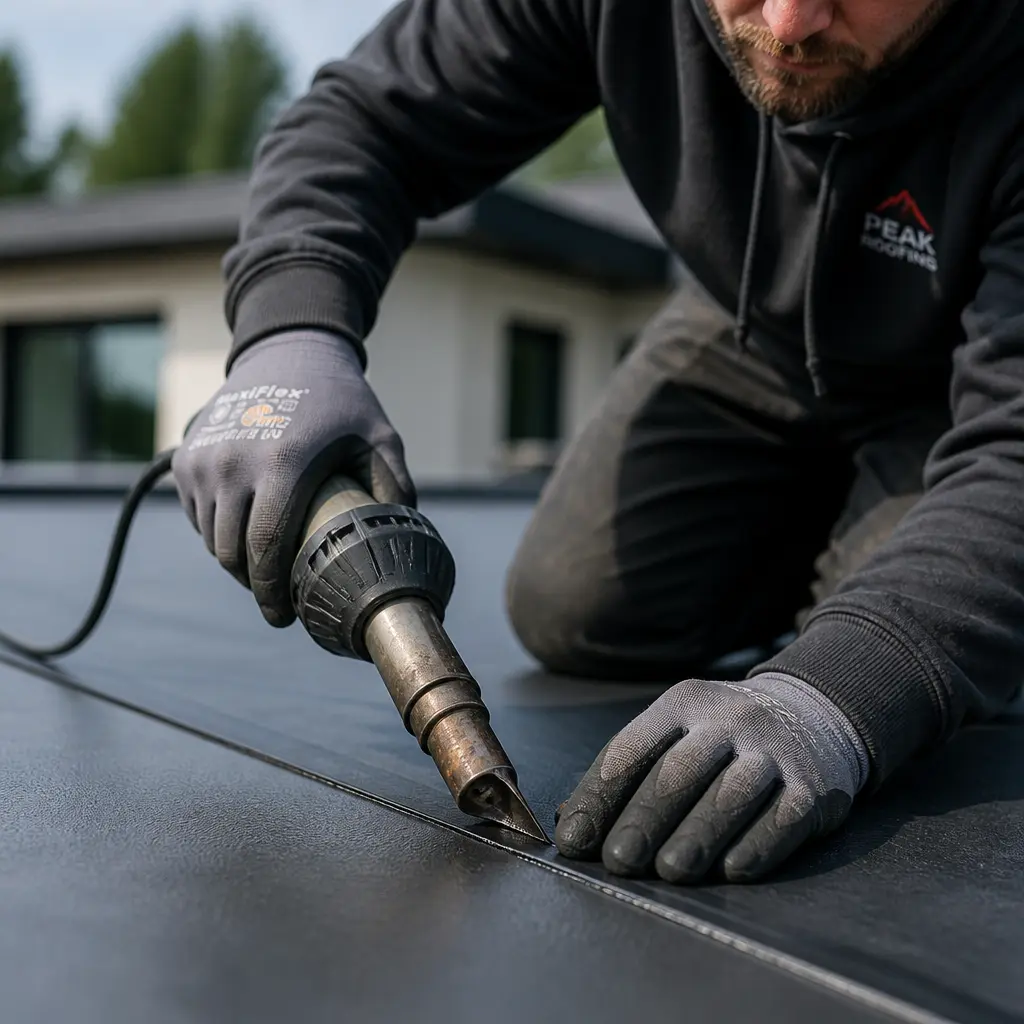
Flat roof leaks are commonly caused by damaged coverings, poor drainage, failed joints, movement, blocked outlets or incorrect installation. Water may enter through a small defect before travelling beneath the covering and appearing inside the building some distance away.
Finding the true cause is important. Sealing the visible area without checking the roof deck, drainage and surrounding details may provide only a temporary result.
Why Do Flat Roofs Leak?
Flat roofs are designed with a slight slope, known as a fall, which moves rainwater towards an outlet, gutter or drain. When the covering and drainage system are working correctly, water should leave the roof without entering the building.
A leak can develop when part of this system fails. The problem may be a split membrane, an open joint, a damaged edge or an outlet that cannot remove water quickly enough. Damage beneath the surface, including wet insulation or rotten decking, can make the problem more serious.
Flat roof leaks are not always easy to trace. Water can move sideways along the deck, insulation, fixings or supporting timbers before it becomes visible on a ceiling or wall.
- Damaged or ageing waterproof coverings
- Standing water caused by poor drainage
- Blocked gutters, outlets and downpipes
- Failed joints, edges and wall connections
- Cracks, punctures and surface blisters
- Poor installation or unsuitable repair materials
- Movement in the roof structure
- Condensation that is mistaken for a roof leak
Some leaks develop slowly through age and weather exposure. Others appear suddenly after a storm, building work or damage caused by people walking on the roof. A full inspection is normally needed to separate the visible symptoms from the original cause.
Ageing and Worn Roofing Materials
Every flat roofing system has a limited service life. Sunlight, temperature changes, rain, frost and general wear can gradually make the waterproof layer less flexible and more likely to crack.
Older felt may become brittle, split or lose its protective mineral surface. Rubber membranes can shrink, pull away from edges or develop damage around joints. Fibreglass surfaces may crack where the deck moves or where the system was installed incorrectly.
Age alone does not prove that a roof must be replaced. A well-installed roof may remain sound for many years with suitable maintenance. However, widespread cracking, repeated leaks and several previous repairs can show that the covering is approaching the end of its useful life.
A local patch may not provide good value when the surrounding material is also weak.
Standing Water and Poor Drainage
Although they are called flat roofs, they should not be completely level. The surface should have enough fall to direct water towards the drainage points.
Standing water, sometimes called ponding, can develop when the roof has poor falls, low areas or blocked outlets. It may also appear when the roof deck has moved or weakened.
Water that remains on the roof places continuing pressure on joints and small defects. Dirt and plant growth can collect in the same areas, while repeated freezing and thawing may increase existing damage.
A small amount of water shortly after rainfall does not always mean the roof has failed. However, water that remains for long periods should be investigated. Simply adding a surface patch will not correct a drainage fault or a sunken deck.
Why Do Flat Roof Outlets Become Blocked?
Leaves, moss, litter, silt and loose roofing material can collect around outlets and gutters. A blockage may prevent rainwater from leaving the roof quickly enough during heavy rainfall.
Water can then rise above upstands, edge details or joints that were not designed to remain underwater. In severe cases, the extra weight may also place stress on the roof structure.
Outlets should be checked and cleaned as part of routine maintenance. Safe access is essential, especially where a roof has no guard rail or protected walkway.
Repeated blockages may show that an outlet is too small, badly positioned or poorly protected. The full drainage arrangement should then be reviewed rather than repeatedly clearing the same problem.
Cracks, Splits and Punctures
A split or puncture creates a direct route through the waterproof covering. Damage may be caused by dropped tools, sharp objects, ladders, building materials or people walking on areas that are not designed for regular access.
Temperature changes can also make materials expand and contract. Over time, this movement may create stress around joints, corners and fixed details.
Small punctures can be difficult to see, particularly when the surface is dirty or covered by standing water. The visible opening may also be smaller than the damaged area beneath it.
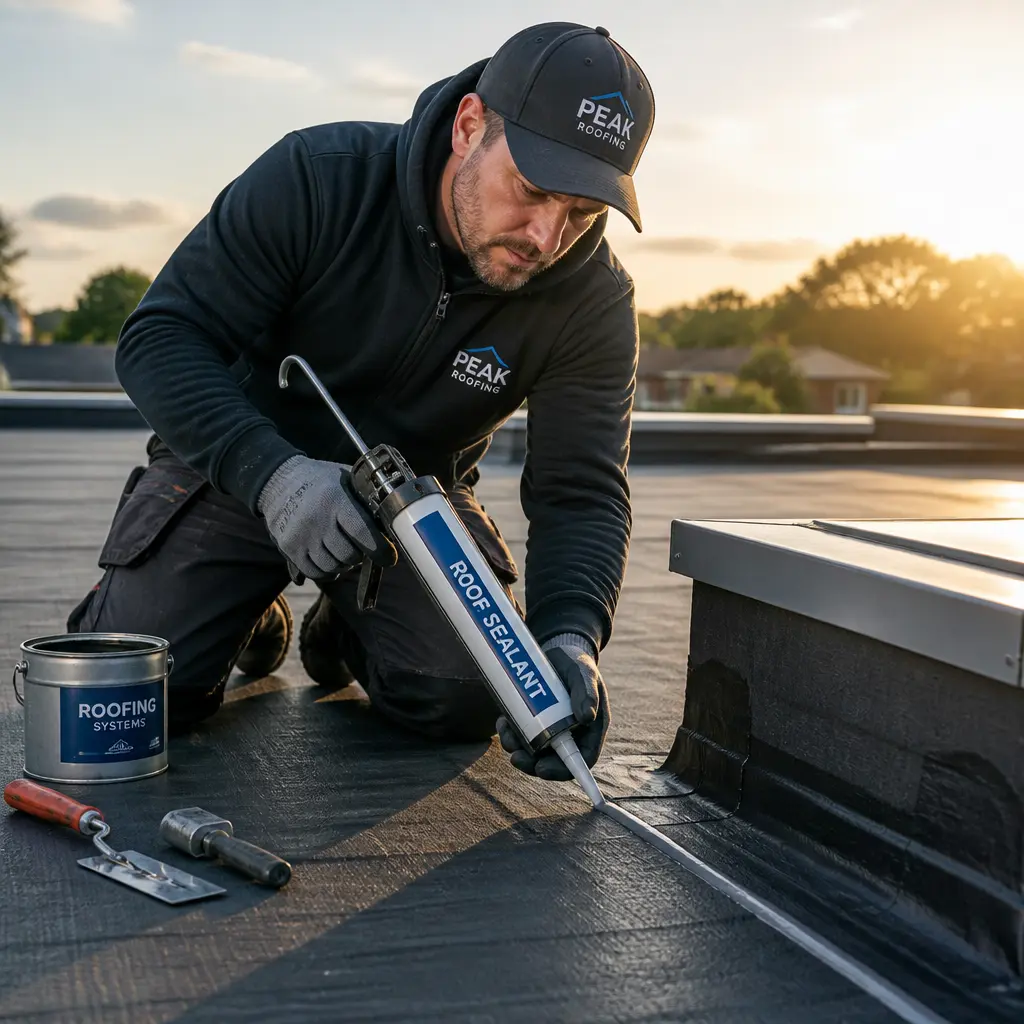
A suitable repair must be compatible with the existing roofing system. General sealant or an unsuitable coating may not bond correctly and could make a later professional repair more difficult.
Failed Seams and Joints
Many flat roofing systems contain seams or joints where separate pieces of material meet. These areas must remain fully sealed while allowing for normal roof movement.
Joints can fail when they were not prepared correctly, when adhesive coverage is poor or when the materials have moved apart. Dirt, moisture or low temperatures during installation may also affect the quality of the bond.
Water can enter through a very narrow opening and spread beneath the membrane. The seam may look secure from one direction but lift when examined more closely.
Repairs should normally extend beyond the failed section onto sound, dry material. Where many seams are failing, a wider problem with the installation or age of the system may be present.
Leaks Around Roof Edges and Wall Joints
Edges and wall connections are among the most detailed parts of a flat roof. The waterproof layer must continue up or around these areas to prevent water from reaching the deck.
Leaks can develop when edge trims become loose, mortar cracks, coverings pull away or the waterproof upstand is too low. Wind-driven rain may enter an opening that does not leak during calm weather.
Problems are also common where a flat roof meets a pitched roof, parapet wall or neighbouring structure. Different parts of the building may move at different rates and place stress on the joint.
Applying sealant to the surface may hide the opening without correcting the full detail. A lasting repair may require the edge, flashing or upstand to be rebuilt.
Leaks Around Roof Windows, Pipes and Vents
Any object that passes through a flat roof creates an area that needs careful waterproofing. Common examples include roof windows, ventilation pipes, cables, flues and soil pipes.
Leaks may occur when seals become brittle, trims move or the surrounding covering cracks. Water can also collect behind a poorly positioned detail and place extra pressure on the joint.
Roof windows need suitable kerbs or upstands to lift them above the main roof surface. Low or badly formed upstands can allow standing water to reach seals and corners.
New cables or pipes should not be pushed through an existing roof without a suitable weatherproof detail. Unplanned holes and general-purpose sealants can lead to early failure.
Blisters and Bubbles in the Roof Covering
A blister is a raised area in a roof covering. It can form when air or moisture becomes trapped between layers and expands as the surface becomes warm.
Some blisters remain closed and do not leak immediately. However, foot traffic, frost or continued movement can split the raised surface and allow water to enter.
The source of trapped moisture should be considered before a repair is completed. Cutting open a blister without using the correct repair method can create a direct opening through the waterproof layer.
Several blisters across a roof may point to wet materials, poor bonding or unsuitable installation conditions. In these cases, isolated repairs may not correct the wider problem.
Poor Flat Roof Installation
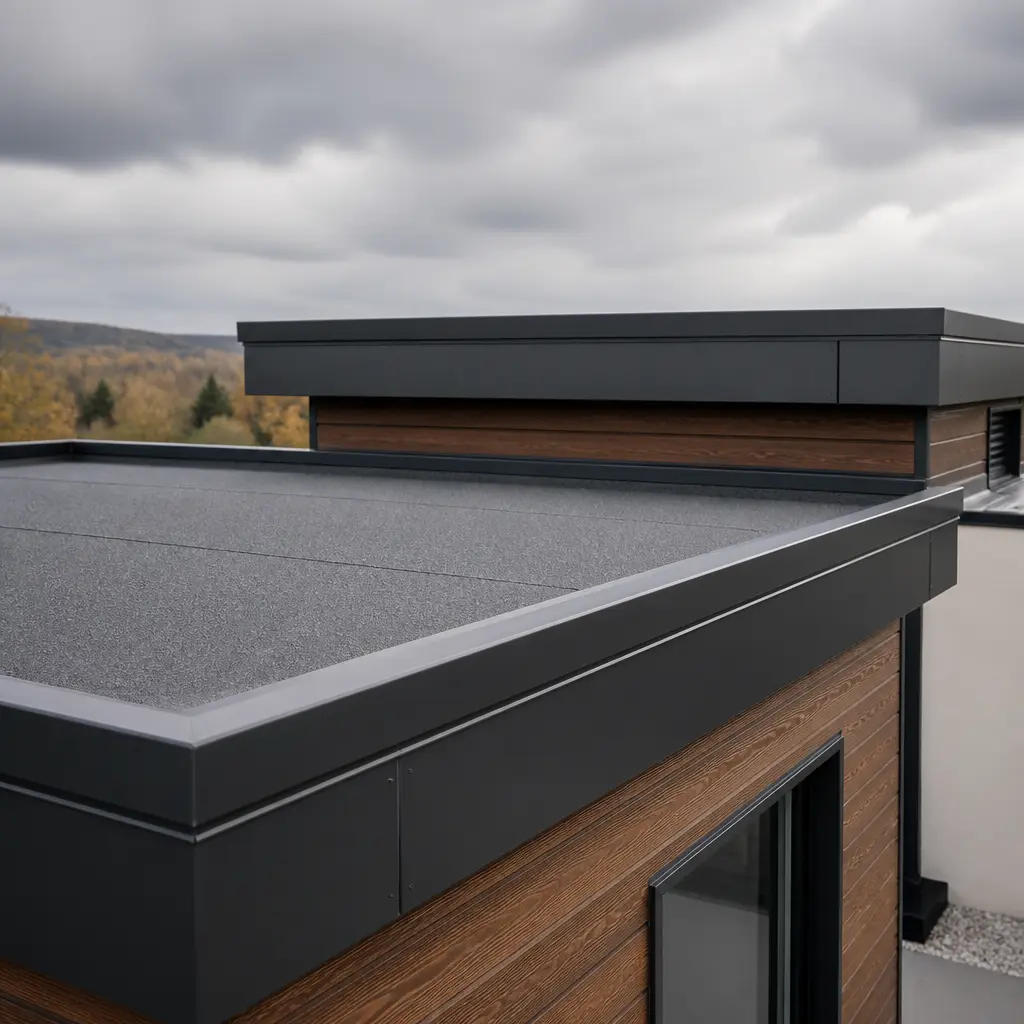
A new roof can leak when the materials or details have not been installed correctly. Common faults include poor bonding, weak seams, inadequate falls and incorrect work around outlets, walls and edges.
The roof deck must usually be clean, dry, stable and suitable for the chosen system. Installing a covering over wet, rotten or uneven boards can lead to movement and early failure.
Weather conditions can also affect installation. Some adhesives, resins and coatings cannot be applied correctly during rain, very low temperatures or excessive heat.
Each roofing system should be installed according to its product instructions. Mixing materials from different systems without checking their compatibility can weaken the finished roof.
Installation records, product details and photographs may help when a fault is being investigated.
Can Roof Movement Cause Leaks?
Roof structures move slightly as temperatures change and as the building responds to wind, moisture and normal use. A correctly designed waterproof system should allow for expected movement.
Leaks may develop when movement is greater than the covering can accept. This can happen near joints, corners, changes in roof level or connections between old and new parts of a building.
Weak or damaged decking may bend under weight. Timber can also swell when wet and shrink as it dries, placing further stress on the surface covering.
Repeated cracking in the same position may therefore be a sign of movement beneath the membrane. Covering the crack again without correcting the underlying cause can result in another failure.
How Can Storms Damage a Flat Roof?
Strong wind can lift loose edges, trims or sections of membrane. It may also blow branches and other objects onto the roof, causing punctures or impact damage.
Heavy rainfall can expose blocked or undersized drainage. Water may collect faster than the outlets can remove it and rise above weak details.
Hail can damage older or brittle surfaces, while frost may increase existing cracks. Snow can add weight and hide outlets, although the level of risk depends on the roof design and local conditions.
A roof should be inspected after severe weather when it is safe to do so. Loose material, overflowing outlets, damaged trims and new internal marks should be investigated promptly.
Storm damage may affect more than the visible surface, so the deck and insulation may also need checking.
Can Condensation Look Like a Flat Roof Leak?
Moisture on a ceiling does not always mean rainwater is entering through the roof. Warm, moist air can form condensation when it reaches a cold part of the roof construction.
Condensation may be linked to poor ventilation, missing insulation, gaps in the air and moisture control layers or an unsuitable roof design. It may be worse during cold weather or when rooms below produce a large amount of moisture.
Unlike a rainwater leak, condensation may appear even when there has been no recent rainfall. However, both problems can exist at the same time.
The source must be identified before repair work begins. Adding a waterproof patch to the outside will not solve moisture that is forming within the roof construction.
| Sign | Possible cause | Recommended check |
|---|---|---|
| Leak after heavy rain | Blocked drainage, open seam or failed edge | Inspect outlets, joints and upstands |
| Water remains on the roof | Poor falls, blocked outlet or sunken deck | Check drainage and roof levels |
| Repeated crack in one place | Movement or weak decking | Inspect the structure beneath the covering |
| Moisture during cold, dry weather | Condensation | Review insulation, ventilation and moisture control |
| Raised bubbles or blisters | Trapped air or moisture | Check the bond and condition beneath the surface |
These signs provide general guidance only. Several faults can produce similar symptoms, so the roof should be inspected before a repair method is selected.
Why Is the Internal Leak Away From the Roof Damage?
Water does not always fall directly from the point where it enters. It may travel along the underside of the membrane, through insulation or across the roof deck.
Joists, pipes, fixings and changes in level can redirect the water before it reaches the ceiling. The visible stain may therefore be several metres away from the original defect.
This is one reason why applying a patch directly above an internal mark may fail. The entire surrounding roof area, including higher points and nearby details, should be checked.
Moisture meters, controlled water testing and careful opening of selected areas may help with difficult cases. Testing should be planned to avoid causing further water damage.
Does Foot Traffic Cause Flat Roof Leaks?
Some flat roofs are designed to support regular access, while others should only be entered for inspection and maintenance. Walking directly on an unsuitable surface can crush insulation, weaken joints or puncture the covering.
Damage is more likely when people wear unsuitable footwear or place ladders, tools and heavy materials directly on the roof.
Where regular access is needed, suitable walkways or protective surfaces may be required. Solar equipment, air-conditioning units and other services should also have properly designed supports.
Anyone arranging work near a flat roof should make sure that contractors understand which areas can be accessed. Damage caused during unrelated building work may not become visible until the next period of heavy rain.
How Does Poor Maintenance Lead to Leaks?
Minor faults can become more serious when they are not found early. A loose trim, small puncture or blocked outlet may be easier to correct before water reaches the insulation and deck.
Routine checks can identify leaves, moss, loose materials, surface damage and early signs of movement. Gutters, outlets and downpipes should remain clear so water can leave the roof.
Maintenance should not involve applying general coatings or sealants without understanding the roofing system. An unsuitable product may trap moisture or react badly with the existing material.
Inspections should also be completed after storms and after other contractors have worked on or close to the roof.
Safe access must always be considered. Roof edges, fragile areas and wet surfaces can create a serious fall risk.
What Are the Signs of a Flat Roof Leak?
A water stain on the ceiling is one of the most common signs, but it is not the only warning. Paint may bubble, plaster may soften or a musty smell may develop in the room below.
External signs can include standing water, open seams, loose edges, blisters, cracks and plant growth. Dark or soft areas of decking may show that water has been present for some time.
Repeated mould growth can be linked to water entry, although condensation and ventilation should also be considered.
Electrical fittings near a leak must be treated carefully. Water close to lights, wiring or a consumer unit may create an immediate safety concern.
The absence of a visible internal mark does not prove that the roof is dry. Insulation can hold moisture before a leak reaches the occupied area.
How Is a Flat Roof Leak Found?
An inspection normally begins with the internal damage and the roof area above it. The contractor may look for splits, open joints, blocked outlets, weak surfaces and failed details.
The roof should be checked as a complete system rather than focusing only on one visible mark. Nearby walls, pitched roofs, windows and drainage may also allow water into the building.
Moisture readings can help identify wet areas beneath the surface. Controlled water testing may be used when visual inspection does not reveal the cause.
In some cases, a small section of the covering must be opened to inspect the insulation and deck. Any opening should be repaired using a method that matches the existing system.
Should a Leaking Flat Roof Be Repaired or Replaced?
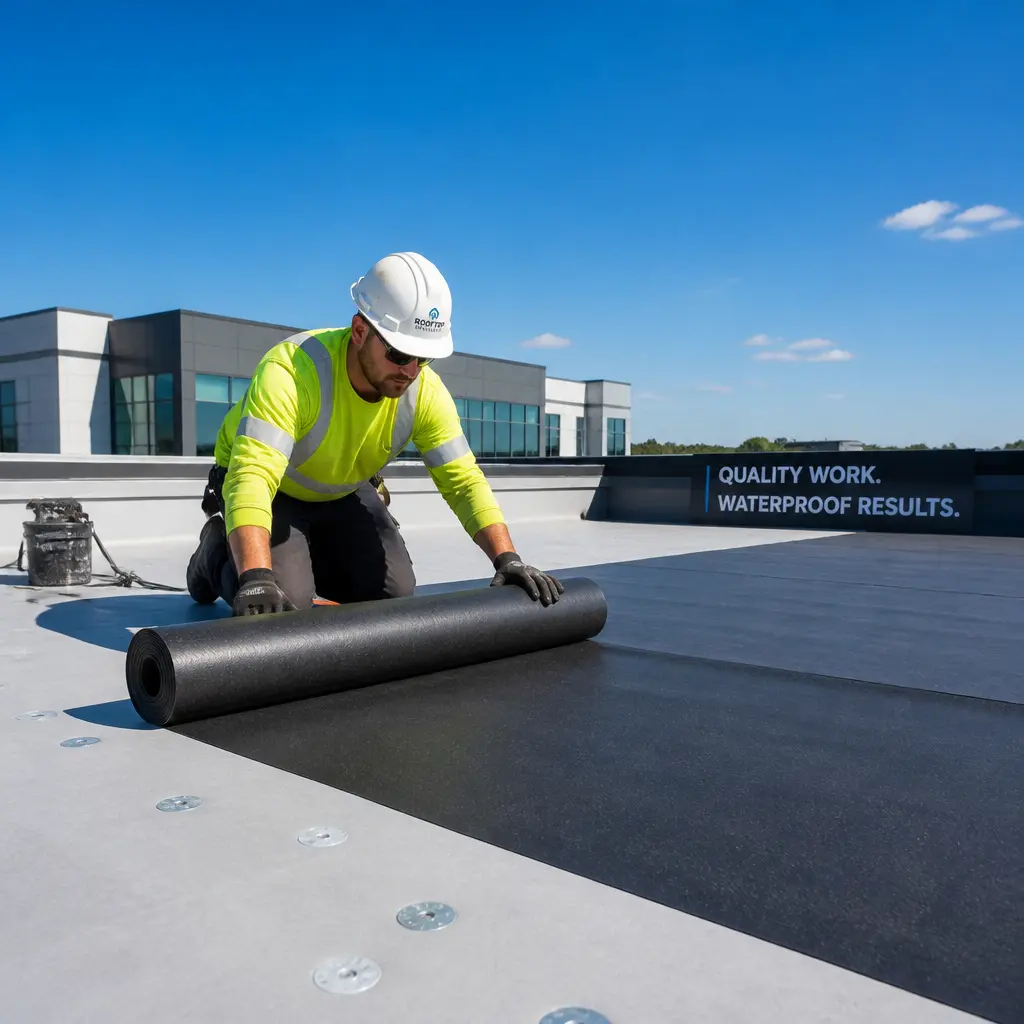
A repair may be suitable when the defect is limited and the surrounding roof remains in sound condition. Examples include a single puncture, a loose edge or a small failed joint.
Replacement may be more suitable when there are several leaks, widespread cracking, wet insulation, rotten decking or repeated failures across different parts of the roof.
The age of the covering should also be considered. Spending money on repeated patches may provide poor value when the full system is close to the end of its expected service life.
A contractor should explain the cause of the leak, the condition beneath the surface and the expected life of the proposed repair. They should also make clear whether the work is temporary or intended as a longer-term solution.
Can a Flat Roof Leak Be Repaired From Inside?
Work from inside the building may help to control dripping water or remove damaged ceiling material, but it does not normally waterproof the external roof surface.
The entry point must usually be repaired from above. Water should not be sealed inside the roof construction because trapped moisture can damage insulation, timber and internal finishes.
Internal access may still be useful when checking the underside of the deck or tracing the route taken by water. Wet insulation and rotten timber may need to be removed as part of the full repair.
Any temporary container or covering used indoors should be kept away from electrical fittings. A serious or active leak should be assessed promptly rather than left until the weather improves.
Current UK Housing and Repair Statistics
The English Housing Survey reported that 1.4 million dwellings, equal to 5% of homes in England, had a problem with damp in 2024. The survey includes penetrating damp, rising damp and serious condensation or mould, so this figure is not a direct count of flat roof leaks.
Damp was recorded in 10% of private rented dwellings, compared with 7% of social rented dwellings and 4% of owner-occupied dwellings.
Office for National Statistics figures show that repair and maintenance construction output in Great Britain grew by 2.1% in the three months to May 2026. Non-housing repair and maintenance grew by 3.0% during the same period.
These wider figures show the continuing importance of property maintenance, but they do not measure the number of leaking flat roofs.
How Can Flat Roof Leaks Be Prevented?
Regular inspection is one of the most effective ways to reduce the risk of avoidable leaks. Small defects should be corrected before water spreads into the insulation or structure.
Outlets, gutters and downpipes should be kept clear. Standing water, loose trims, open seams and damaged surfaces should be investigated rather than ignored.
Only compatible repair materials should be used. The roof should also be protected when other trades install cables, vents, solar panels or other equipment.
Where people need regular access, suitable walkways can reduce damage to the main waterproof covering.
Maintenance cannot prevent every leak, particularly where a roof is old or badly installed. However, it can help to find developing faults earlier and limit the amount of hidden water damage.
A sensible flat roof maintenance plan should normally include:
- Routine inspections: Check the roof at suitable intervals and after severe weather
- Drainage cleaning: Remove leaves, moss and other material from outlets and gutters
- Surface checks: Look for cracks, punctures, blisters and loose seams
- Detail checks: Inspect edges, walls, roof windows, pipes and vents
- Access control: Prevent unnecessary foot traffic and provide protection where access is required
- Repair records: Keep photographs, invoices and product information for future inspections
- Prompt action: Investigate new stains, smells or areas of standing water without delay
What Should You Do When a Flat Roof Starts Leaking?
Move belongings away from the affected area and place a suitable container beneath active drips where it is safe to do so. Do not touch wet electrical fittings or wiring.
Record the location of the internal damage and take photographs. It can also be helpful to note the weather conditions and when the leak first appeared.
Do not climb onto a wet or unprotected roof. Flat roofs can be slippery, and damaged sections may not safely support a person's weight.
Arrange an inspection that covers the roof surface, drainage, details and structure. The contractor should identify the likely cause rather than providing only a surface patch.
Any emergency covering should be treated as temporary until a suitable permanent repair has been completed.
Frequently Asked Questions
```What Is the Most Common Cause of a Flat Roof Leak?
Common causes include damaged coverings, failed joints and poor drainage. The exact cause varies according to the roofing material, age, design and standard of installation.
Why Does My Flat Roof Leak Only During Heavy Rain?
Heavy rain can overwhelm blocked or unsuitable drainage. Wind-driven water may also reach open edges, wall joints or other defects that remain dry during lighter rain.
Is Standing Water Normal on a Flat Roof?
A small amount of water may remain briefly after rain, but water that stays for long periods can indicate poor falls, blocked drainage or movement in the deck.
Can a Small Flat Roof Leak Cause Major Damage?
Yes. A small opening can allow water to spread through insulation and timber before the problem becomes visible inside the building.
Can I Use Sealant on a Leaking Flat Roof?
A general sealant may not be compatible with the existing roof and may provide only a temporary repair. The cause and roofing system should be identified first.
How Often Should a Flat Roof Be Inspected?
The correct schedule depends on the roof, building and access conditions. Checks are also sensible after severe weather and after other work has taken place near the roof.
What Causes Flat Roof Leaks?
Flat roof leaks have many possible causes, including worn materials, standing water, blocked outlets, failed seams, damaged edges and poor installation. Movement, foot traffic and storm damage can also create openings in the waterproof covering.
The visible stain inside the building may not show where the water entered. A proper inspection should therefore cover the wider roof surface, drainage points, wall joints and all pipes or roof windows.
Early action can limit damage to the deck, insulation and rooms below. However, repeated surface repairs should not replace a full assessment when the roof has widespread defects.
The most suitable solution will depend on the cause, age and condition of the complete roofing system.
Have you found water stains, standing water or damage on a flat roof? Colmore Roofing Contractors can inspect the covering, joints, drainage, deck and surrounding details before recommending a suitable repair. Contact the team to discuss domestic and commercial flat roofing in Birmingham, Dudley or Wolverhampton.