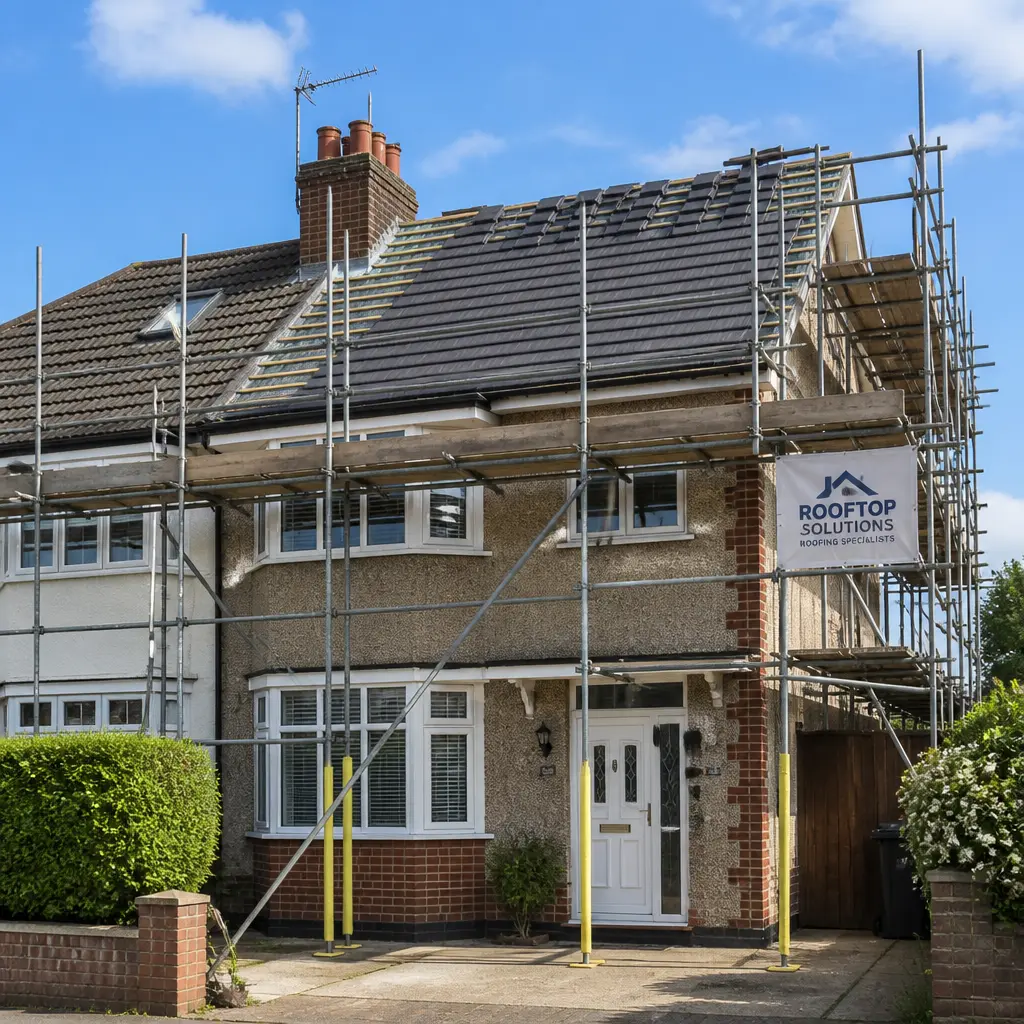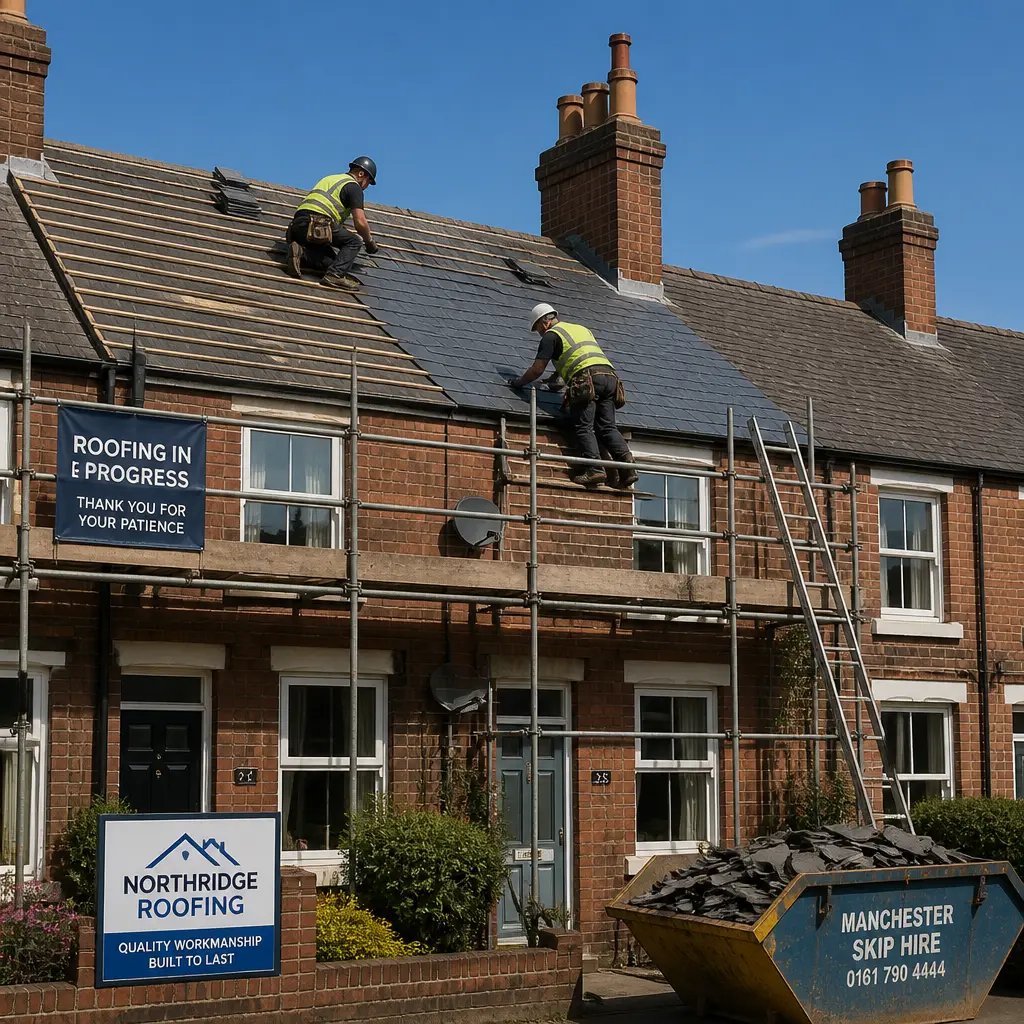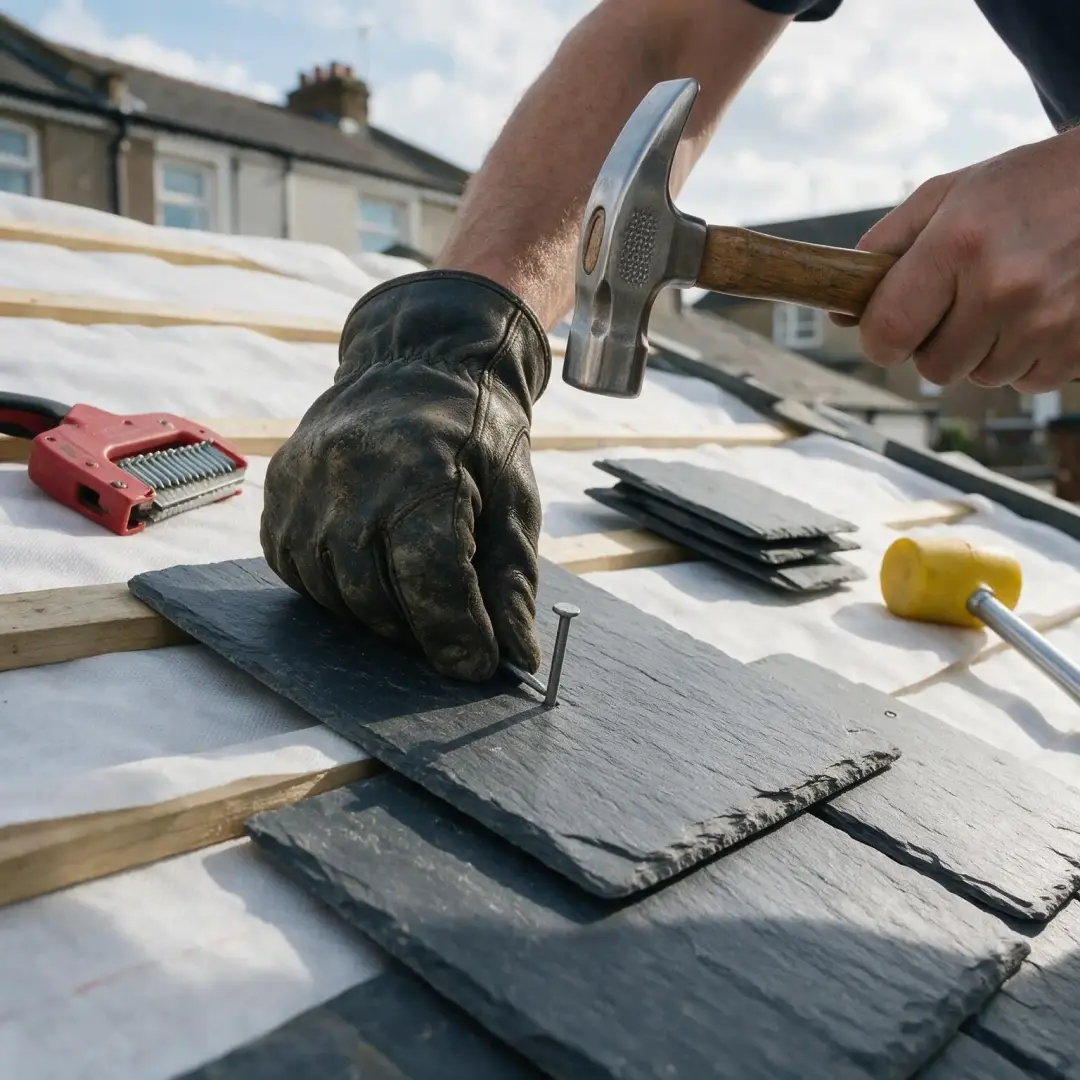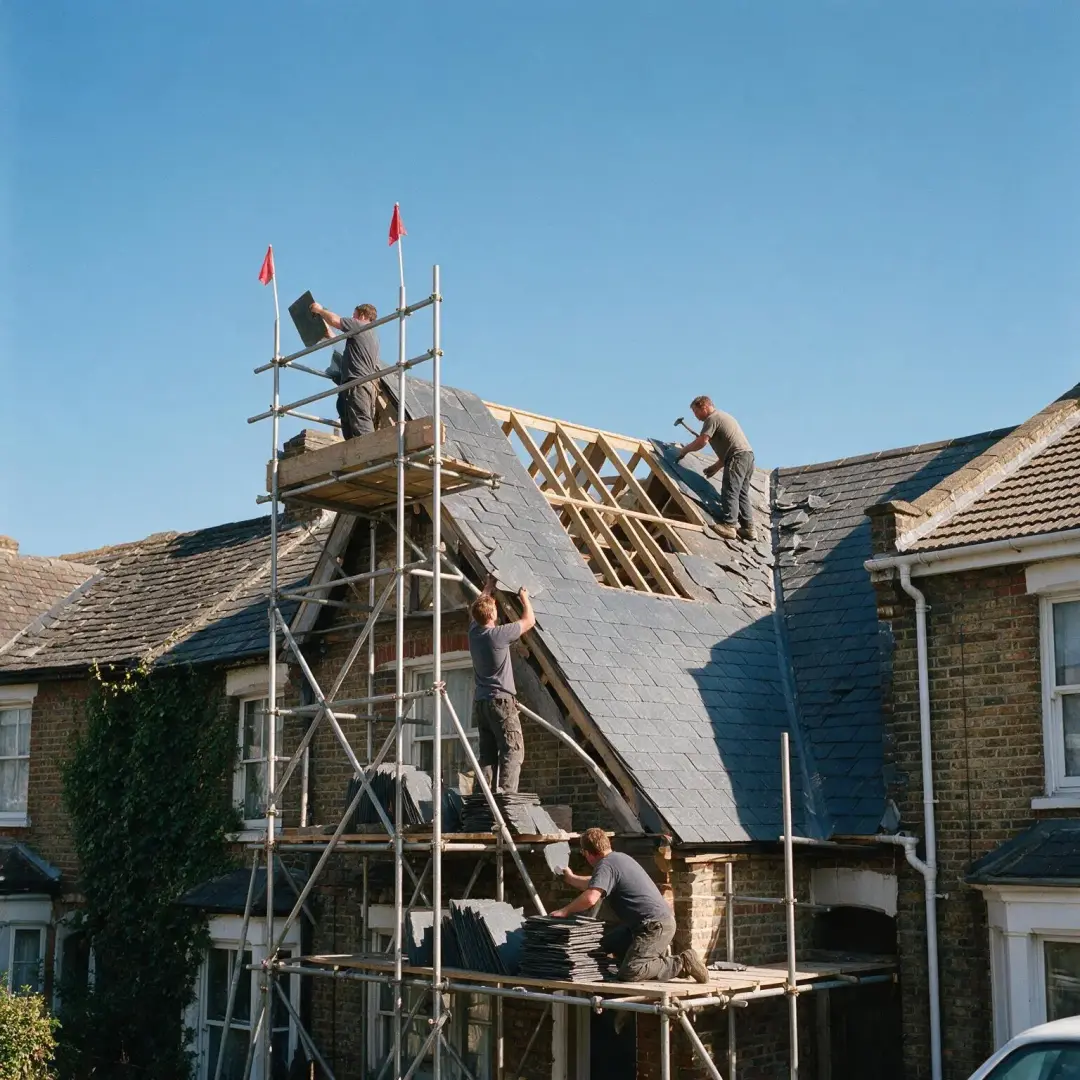
Are you asking: Can weather delay or affect a roof replacement? Rain, wind, frost, snow and very high temperatures can all change how safely and effectively roofing work can be completed. Some conditions may cause a short delay, while severe weather may require the work to stop completely.
A suitable roofing plan should consider the forecast, the roof design, the materials being installed and how the property will remain protected. Careful planning helps reduce water entry, unsafe working conditions and problems with the finished roof.
How Can Weather Affect a Roof Replacement?
Weather can affect the timing, safety and quality of a roof replacement. Roofing contractors work at height and often remove large areas of the existing covering, so sudden changes in the weather can create serious risks.
Rain can wet exposed underlay, insulation, decking and roof timbers. Strong winds can make materials difficult to control and may affect the balance of people working on the roof. Frost, ice and snow can make surfaces slippery, while very high temperatures can affect workers and some roofing products.
A weather delay does not always mean that a project has been planned poorly. A responsible contractor should stop or change the work when conditions are unsafe or when continuing could damage the property.
The contractor should explain how weather risks have been considered before work starts. This may include checking forecasts, replacing the roof in sections, using temporary covers and keeping enough materials available to make the building watertight.
- Rain may allow water to reach exposed roof timbers, insulation or ceilings
- Strong winds can make access equipment, loose materials and roof coverings unsafe
- Ice, frost and snow may create slippery working surfaces
- Cold temperatures can affect some adhesives, sealants and roofing systems
- High temperatures may soften certain materials and increase the risk of heat illness
- Changing conditions may extend the expected working period
- The roof should be left protected at the end of each working day
- Weather delays should be allowed for in the project plan and written quotation
Before agreeing to the work, ask the roofing contractor what will happen if the weather changes. The quotation or contract should explain whether weather delays may affect the schedule, access costs or payment dates. It should also describe how exposed areas will be covered and who will respond if temporary protection is damaged outside normal working hours.
| Weather condition | Possible effect on the work | Common response |
|---|---|---|
| Light rain | Surfaces and materials may become wet | Pause exposed work and cover open sections |
| Heavy or lasting rain | Greater risk of water entering the property | Delay removal work and secure temporary protection |
| Strong or gusting wind | Unsafe movement and difficulty controlling materials | Stop roof-level work and secure loose items |
| Frost or ice | Slippery surfaces and poor product performance | Wait for safe, dry conditions and suitable temperatures |
| Snow | Hidden hazards, added weight and wet surfaces | Delay work until the roof can be inspected safely |
| Very high temperatures | Heat risks and possible changes to roofing materials | Change working hours and follow product instructions |
Can a Roof Be Replaced When It Is Raining?
A full roof replacement should not normally continue in rain when the work would expose the inside of the building or create unsafe surfaces.
Even light rain can make tiles, battens, membranes, boards and access equipment slippery. Water may also become trapped within the new roof system if materials are installed while wet.
Some preparation may still be possible away from exposed roof areas. Contractors may organise materials, complete protected ground-level tasks or inspect temporary coverings, but this will depend on the site and the conditions.
The roof should usually be replaced in controlled sections rather than removing the entire covering at once. This allows each section to be protected or made watertight before the contractor moves to the next area.
A brief shower may only cause a short pause. Lasting or heavy rain may delay the project for a full day or longer. The contractor should make decisions based on safety and the risk to the building rather than attempting to meet the original timetable at any cost.
How Do Strong Winds Affect Roofing Work?
Strong winds can make roof replacement unsafe even when the weather is dry. Gusts may affect a worker's balance and can lift underlay, insulation, tiles, sheets and temporary covers.
Health and Safety Executive guidance warns against going onto a roof during strong or gusting winds. It also states that winds above 23 miles per hour can affect a person's balance.
This figure should not be treated as a safe working limit. Roof height, pitch, exposure, wind direction and sudden gusts can create dangerous conditions at lower recorded speeds.
Large or lightweight materials can be particularly difficult to handle. A board, membrane or metal sheet can act like a sail when caught by a gust.
Before leaving the site, the contractor should secure loose materials, waste, tools, ladders, sheeting and temporary coverings. Work may need to stop before forecast winds arrive so there is enough time to make the site safe.
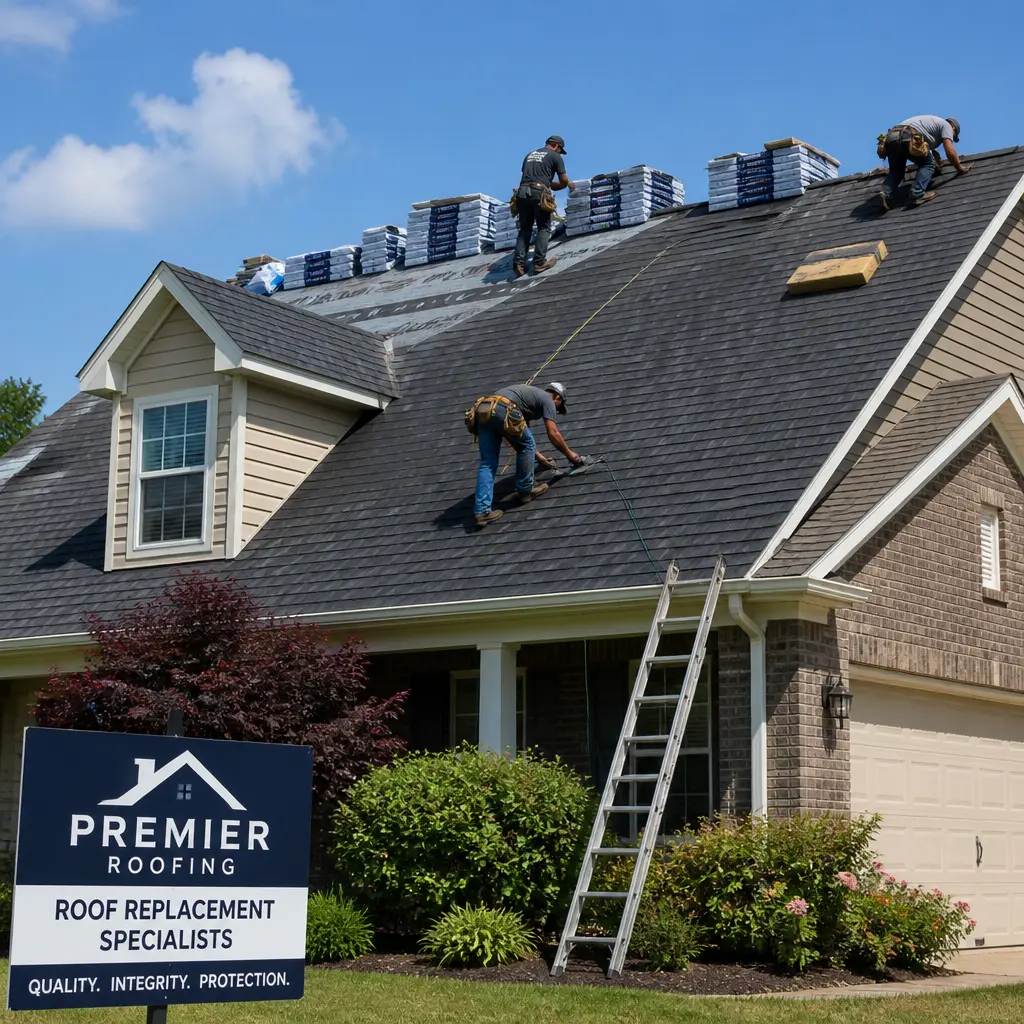
Can Cold Weather Delay a Roof Replacement?
Cold weather can delay a roof replacement when it causes frost, ice, snow or unsuitable installation temperatures.
Frost and ice can be difficult to see, particularly on shaded roof slopes, scaffolding boards and ladders. Work should not continue until access routes and working surfaces are safe.
Some roofing products have minimum installation temperatures. Adhesives may not bond correctly, sealants may become difficult to apply and self-adhesive membranes may not stick to cold or damp surfaces.
Bitumen-based materials can also become less flexible in low temperatures. Bending or applying them without following the manufacturer's instructions may cause cracks or poor joints.
Cold weather does not automatically prevent every type of roof replacement. Dry, calm winter days may provide suitable conditions for some work. The contractor should check the instructions for each product rather than relying on one temperature rule for every material.
Shorter daylight hours should also be considered. Less working time may mean that smaller sections of the old roof can be removed and completed each day.
How Do Snow and Ice Affect Roof Work?
Snow can cover fragile materials, roof openings, changes in level and other hazards. It can also add weight to the roof and turn into water as it melts.
Removing snow does not necessarily make the roof safe. A thin layer of ice may remain underneath, while meltwater may refreeze on colder surfaces.
Snow may also make it difficult to inspect the condition of tiles, slates, flashing and roof timbers. Starting removal work before the roof can be checked properly may lead to unexpected damage or unsafe loading.
Materials stored outside should be kept raised from the ground and protected from snow and moisture. Packaging alone may not provide enough protection during prolonged bad weather.
If snow falls after temporary coverings have been fitted, the contractor may need to inspect the fixings and check whether water can drain safely. Temporary sheets should not allow melted snow to collect in low areas.
The safest choice is often to delay roof-level work until snow and ice have cleared naturally and the contractor can confirm that the working area is dry and secure.
Can Hot Weather Cause Roofing Problems?
Hot and sunny weather may appear ideal for a roof replacement, but very high temperatures can create different problems.
Roof surfaces can become much hotter than the surrounding air. This can increase the risk of heat exhaustion, dehydration and burns from dark tiles, metal or bitumen-based materials.
Some products may soften or become difficult to handle in strong sunlight. Adhesives and sealants may also dry or form a surface layer before they have been applied correctly.
Materials should be stored according to the manufacturer's instructions. Certain products may need to remain shaded or should not be left inside a hot vehicle before installation.
Contractors may start earlier, take more breaks or move tasks away from the hottest part of the day. Drinking water, suitable clothing and shaded rest areas may also be required.
High temperatures can also affect occupied rooms below the roof, particularly when insulation is removed. The contractor should explain how long insulation will remain exposed and whether vulnerable occupants may need additional support during the work.
Why Is Weather Protection So Important?
Replacing a roof involves removing the part of the building that normally protects it from rain, wind and snow. Temporary protection is therefore an important part of the work.
The latest English Housing Survey figures show why water protection matters. During 2024 to 2025, 4.3 million households in England, equal to 17%, reported new moisture damage following intense rain or a storm.
Roof condition was strongly linked with this damage. Moisture damage was reported in 38% of homes with roof disrepair, compared with 17% of homes without roof disrepair.
These figures do not mean that every case was caused by roof replacement work. However, they show how quickly rain and storms can expose weaknesses in the outside of a building.
Temporary coverings should be fixed securely, arranged so water can drain and checked regularly. Particular attention may be needed around chimneys, roof windows, valleys, party walls and changes in roof level.
The contractor should also have a plan for responding to an unexpected leak. This may include emergency contact details, spare sheeting and a clear process for protecting ceilings, furniture and electrical fittings.
How Should a Roof Be Protected Overnight?
The roof should be left secure and weather-resistant at the end of each working day. The exact method will depend on how much covering has been removed and which parts of the new system have been installed.
A roofing contractor may complete one section fully, fit a suitable temporary membrane or use securely fixed sheeting. Simply placing a loose cover over the roof may not provide reliable protection.
The covering should extend beyond the exposed area and direct water towards a safe drainage point. Water should not be allowed to collect in the sheet or flow behind gutters, flashing or wall coverings.
Openings around chimneys, vents and roof windows require careful sealing. Wind can drive rain beneath a cover even when the surface appears protected from above.
Before leaving, the contractor should check the weather forecast and confirm that fixings are suitable for the expected conditions. A further inspection may be required after strong wind or heavy rain.
Ask who is responsible for checking temporary protection outside working hours. This is especially important when poor weather is forecast overnight or during a weekend.
Which Roofing Materials Are Most Affected by Weather?
Every roofing system can be affected by weather, but the risks differ between products.
Tiles and slates may become slippery when wet and can be difficult to position safely in strong winds. Lightweight materials must be stored and secured so they cannot be lifted from the roof or scaffold.
Roofing membranes should normally be installed on a suitable clean and dry surface. Wind may make wide sheets difficult to control, while cold conditions can affect some self-adhesive products.
Liquid-applied systems, adhesives and sealants often have stated temperature and moisture limits. Applying them outside these limits may affect bonding, curing or the finished surface.
Metal roofing can become hot in direct sun and slippery when wet. Long metal sheets may also be difficult to lift or position during gusting winds.
Roofing felt and other bitumen-based products may become stiff in cold weather or unusually soft in high heat. The product instructions should always be checked before work continues.
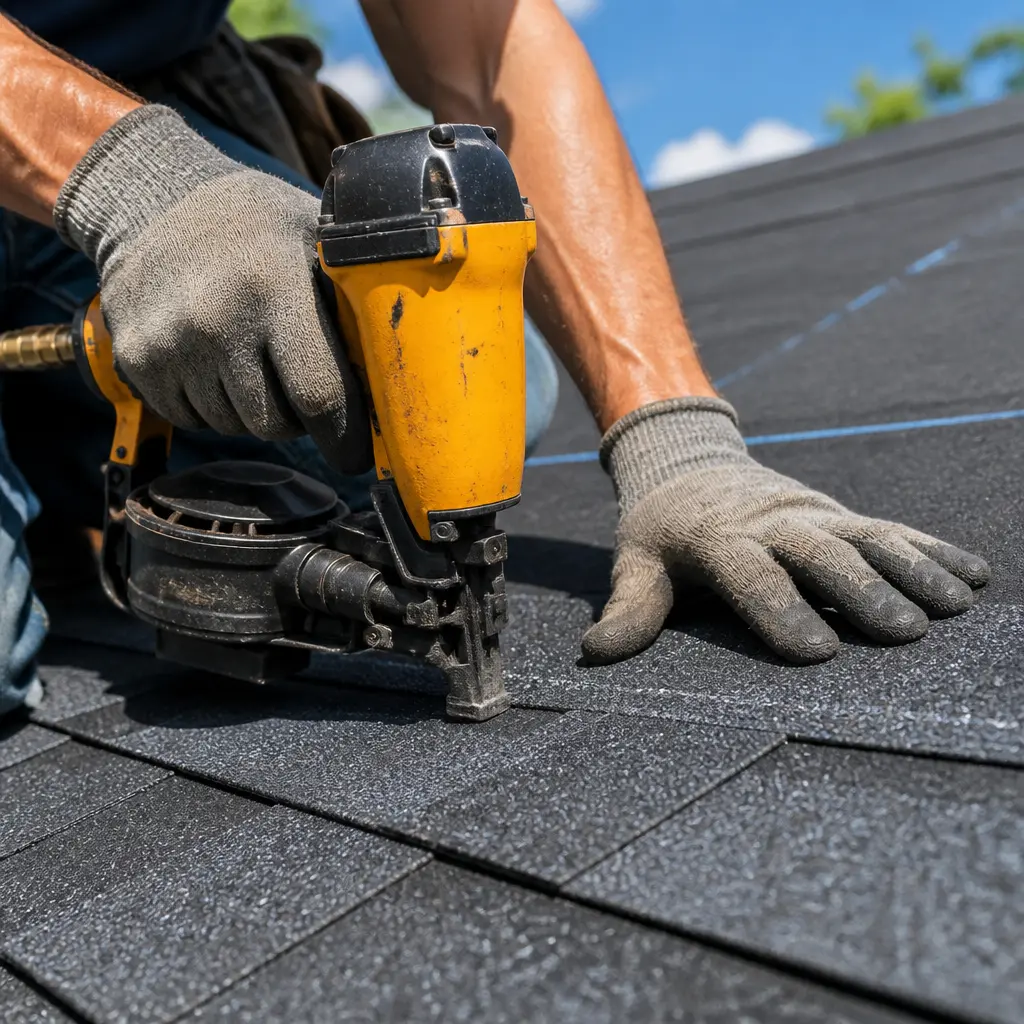
What Is the Best Time of Year to Replace a Roof?
There is no single best month for every roof replacement. Suitable work can take place throughout the year when conditions are safe, dry enough and appropriate for the materials being used.
Spring and summer often provide longer daylight hours, but they can still bring heavy showers, thunderstorms, strong winds and periods of extreme heat.
Autumn may offer mild working temperatures, although falling leaves, shorter days and unsettled weather can affect access and drainage. Winter may bring frost and fewer working hours, but calm and dry periods can still be suitable.
Demand may also affect the schedule. Waiting for a particular season does not guarantee good weather and may mean that an existing leak becomes worse.
In 2024, the United Kingdom received 1,242 millimetres of rain, equal to 107% of the 1991 to 2020 average. The year included the eighth wettest winter and sixth wettest spring in the national record.
The better approach is to choose a suitable contractor, agree a clear weather plan and arrange the work before serious defects allow more water into the property.
Why Can Roof Replacement Dates Change?
A start date is normally based on the expected length of earlier projects, material deliveries, access arrangements and the weather forecast. A delay at one property can affect later bookings.
Roofers may lose working time because of rain at the current site, even when the weather is dry at the next property. They must still leave each roof secure before moving to another project.
Conditions can also differ over a small area. A property on high or exposed ground may experience stronger winds than nearby sheltered streets.
The 2023 to 2024 storm season included 12 named storms, the greatest number since the current storm-naming system began in 2015. This included periods of strong wind and exceptional rainfall that caused widespread disruption.
A contractor should provide updates when a delay becomes likely. However, forecasting an exact replacement date several weeks ahead may not be possible.
Ask whether the stated date is fixed or estimated. You should also confirm how much notice will be given before scaffolding, deliveries and removal work begin.
| Question to ask | Why it matters |
|---|---|
| How will you monitor the weather? | Forecast checks help the contractor plan removal and protection |
| How much roof will be opened at one time? | Smaller working areas may be easier to protect from sudden rain |
| How will the roof be protected overnight? | The property must remain protected when workers leave |
| What happens if water enters the property? | A clear response plan can reduce damage and confusion |
| Will weather delays change the price? | The contract should explain possible additional costs |
| Are the materials suitable for the forecast temperature? | Some products have temperature and moisture limits |
Can Weather Delays Increase the Cost?
Weather delays can affect costs, but the result will depend on the agreement with the contractor.
Labour may be priced as a fixed amount for the full project or charged according to the time spent on site. Scaffolding, lifting equipment, skips, temporary coverings and welfare facilities may also be hired for a limited period.
A few lost hours may have little effect on the total price. A longer delay could lead to additional hire charges, repeat deliveries or further temporary protection.
The written quotation should state what is included and explain how unexpected delays will be handled. It should also make clear whether the contractor can charge extra without receiving the homeowner's agreement.
Do not assume that the cheapest quotation provides the best protection. A lower price may allow less time for preparation, fewer temporary materials or a smaller allowance for difficult conditions.
Ask for any change to the price in writing before additional work is completed. The explanation should identify the cause, the amount and whether the work is necessary to protect or complete the roof.
What Should Be Included in a Weather Plan?
A weather plan does not need to be a separate long document, but the main arrangements should be clear before the old roof is removed.
The plan should cover forecast checks, safe working conditions, the size of each exposed section and the method used to protect unfinished work.
It should also identify materials that have temperature or moisture limits. The contractor should know how these products will be stored and what will happen if conditions fall outside the permitted range.
Emergency arrangements should include contact details and a response to damaged covers, leaks or unsafe scaffolding. Homeowners should know who to contact rather than waiting until the next normal working day.
Rainwater drainage should remain effective throughout the work. Temporary sheeting must not direct large amounts of water towards walls, neighbouring properties, doors or paths.
The contractor should review the plan as the forecast changes. Conditions that were suitable when work began may not remain suitable later in the day.
- Check the forecast: Review expected rain, wind, temperature, frost and storms
- Limit exposed areas: Remove only the amount of roof that can be protected safely
- Protect materials: Keep roofing products dry, secure and within suitable temperatures
- Secure the site: Fix temporary covers and prevent loose items from being lifted by wind
- Keep drainage clear: Make sure rainwater can leave the roof without entering the building
- Plan for delays: Allow extra time rather than rushing work during poor conditions
- Agree responsibilities: Confirm who will respond to an overnight leak or damaged cover
- Record changes: Put revised dates, costs and additional work in writing
How Can a Professional Inspection Help Before Work Starts?
A professional inspection can help the contractor understand how easily the roof can be divided into safe working sections.
The inspection should consider the roof pitch, access, valleys, chimneys, roof windows, extensions and connections with neighbouring roofs. These details may affect how water can be controlled during the work.
The condition of the existing covering also matters. A badly damaged roof may not support normal access and may require additional platforms or protection before removal begins.
Checks inside the loft can identify existing damp, damaged insulation or weak timbers. Recording these problems before work starts can help separate existing defects from any issue that occurs during replacement.
Photographs should be taken where possible. They can help explain the planned sequence and provide a record of the property's condition.
A responsible contractor should be willing to change the schedule when conditions are unsafe. Continuing simply because scaffolding and materials are already on site may place workers and the property at risk.
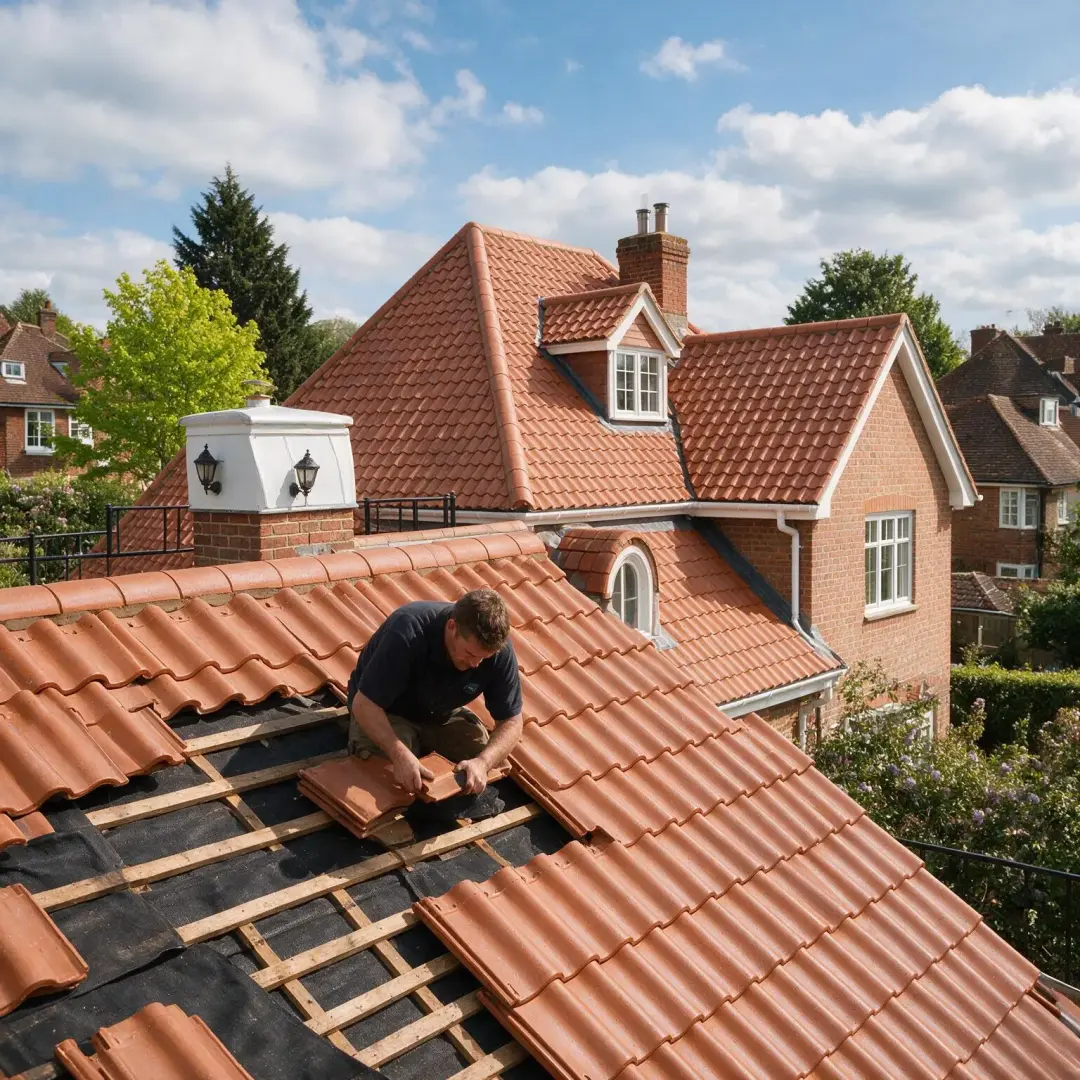
Frequently Asked Questions
```Can Roofers Work in Light Rain?
Roof-level work may need to stop even in light rain if surfaces become slippery or exposed materials could get wet. The contractor may complete protected tasks elsewhere, but safety and water protection should guide the decision.
What Happens If It Rains During a Roof Replacement?
The contractor should stop exposed work, protect open sections and check whether any water has entered the roof. Suitable temporary coverings should already be available before removal begins.
How Windy Is Too Windy for Roofing?
There is no single safe speed for every roof. Health and Safety Executive guidance states that winds above 23 miles per hour can affect balance, but gusts, roof height, pitch and exposure may make work unsafe at lower speeds.
Can a Roof Be Replaced in Winter?
Yes, when conditions are dry, calm and suitable for the products being installed. Work should stop when ice, frost, snow, strong wind or unsuitable temperatures create a risk.
Can a Roof Be Replaced During Hot Weather?
It may be possible, but the contractor must consider surface temperatures, worker safety and the installation limits of adhesives, membranes, sealants and other materials.
Will Rain Damage Roof Underlay?
Some underlays can provide temporary weather protection once they are fitted correctly. However, they should not automatically be treated as a finished roof, and their stated exposure limits must be followed.
Who Pays for Damage Caused by Rain During the Work?
This will depend on the cause, the contract and the insurance held by each party. Ask the contractor to explain their insurance and responsibility for temporary weather protection before work begins.
How Long Can Weather Delay a Roof Replacement?
A passing shower may cause a short pause, while repeated rain, strong winds, frost or storms may delay the work for several days. The length of the delay will depend on the roof and the remaining tasks.
Should Roofing Materials Be Left Outside?
Materials should be stored according to the manufacturer's instructions. They may need to be raised from the ground, covered, secured against wind or kept within a stated temperature range.
How Should You Prepare for Weather During a Roof Replacement?
Ask the contractor to explain the expected sequence before the project begins. You should understand how much of the roof will be opened, how it will be covered and how changes in the weather may affect the timetable.
Move valuable or delicate items away from the loft and upper rooms. Dust and small pieces of material can fall during removal, while an unexpected leak could affect belongings below the work.
Check that gutters, outlets and drains are clear so temporary rainwater can leave the building safely. Keep contact details available in case protection needs attention outside normal working hours.
Do not pressure the contractor to continue in unsafe conditions. A short delay is usually less serious than an injury, a damaged roof system or water entering the property.
Careful planning cannot remove every weather risk, but it can reduce the effect of sudden rain, wind and temperature changes. A clear written agreement and suitable temporary protection will help the replacement proceed safely and protect the home until the new roof is complete.
We hope you found this article useful: How Weather Can Affect a Roof Replacement. Are you considering roof replacement services in Birmingham, Dudley or Wolverhampton? Colmore Roofing Contractors can inspect your roof, plan the work around suitable weather and explain how your property will remain protected throughout the project. Contact the team to arrange a professional roofing assessment and clear quotation.