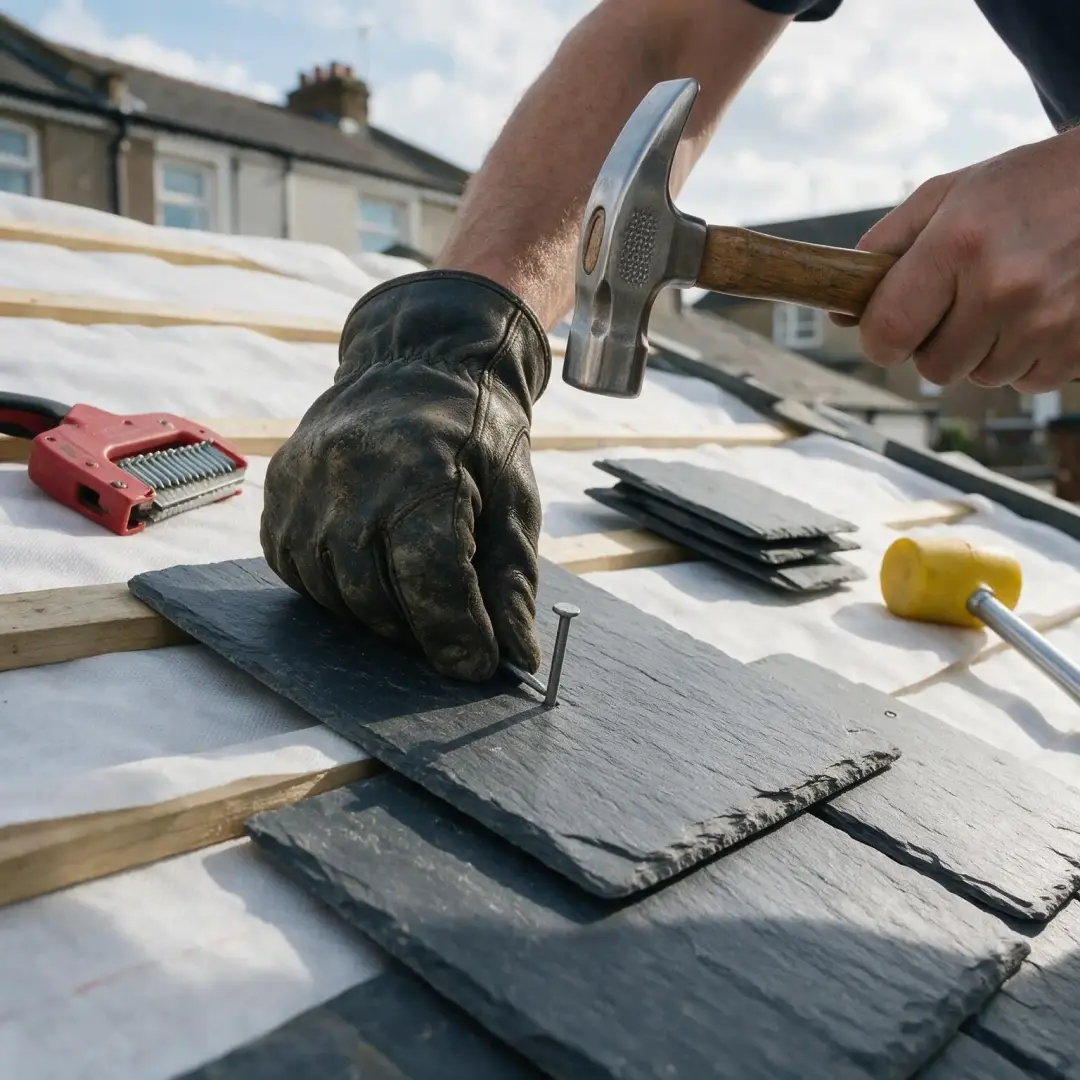
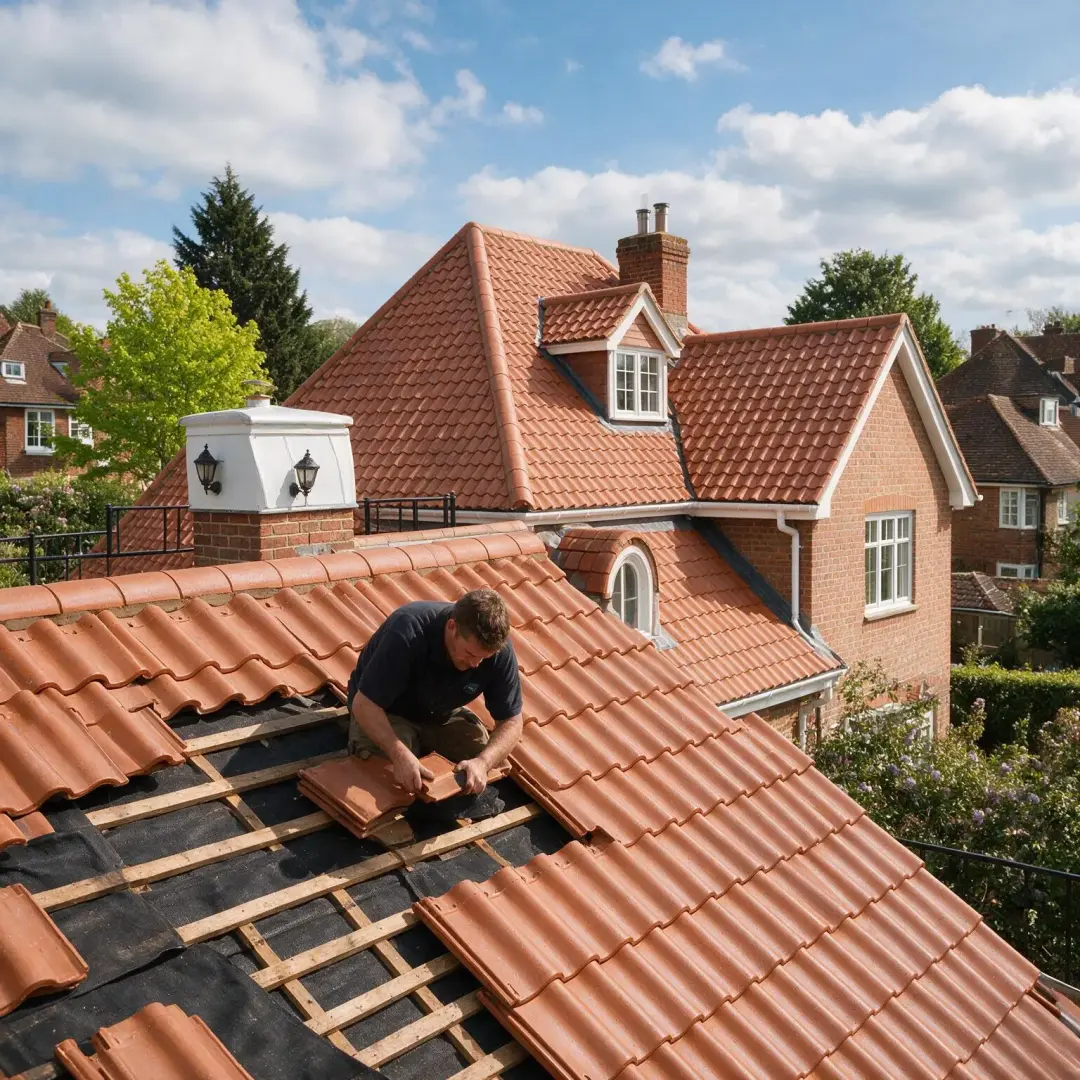
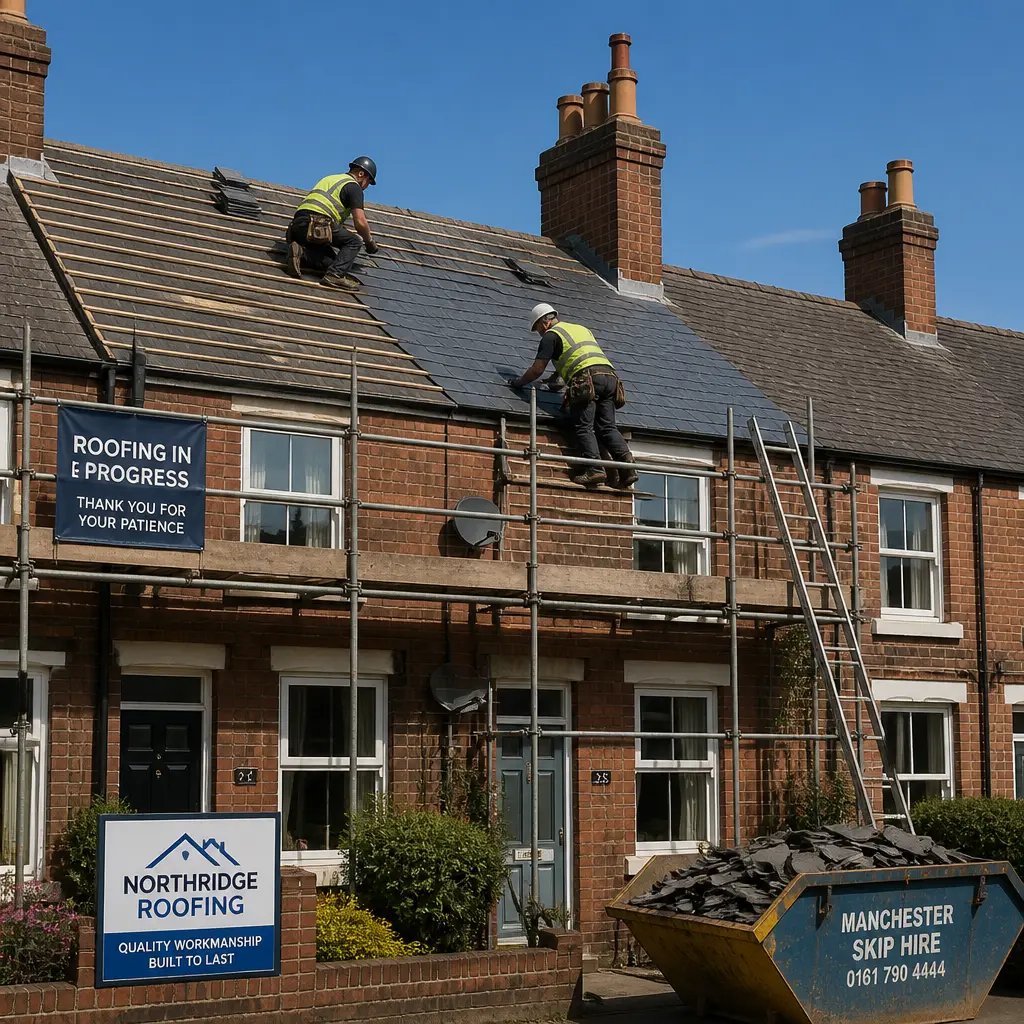
Are you asking: What are the signs your roof needs replacing? Warning signs include repeated leaks, widespread missing or broken tiles, a sagging roofline, daylight entering the loft, damaged underlay and repairs that no longer provide a lasting result.
Some roofing faults can be repaired without replacing the whole covering. However, replacement may be more suitable when damage is widespread, the roof is near the end of its useful life or several parts of the roofing system are failing at the same time.
What Are the Main Signs Your Roof Needs Replacing?
A roof rarely fails without giving some warning. You may notice problems inside the property, outside at roof level or within the loft space.
Common warning signs include water stains, recurring leaks, slipped tiles, cracked coverings, damaged flashing, sagging sections and visible light entering through the roof. Rising repair costs can also suggest that the roof is becoming less reliable.
One fault does not always mean the entire roof needs replacing. A missing tile or a small area of damaged flashing can often be repaired. The condition of the surrounding materials, age of the covering and number of previous repairs will help determine the correct approach.
A professional inspection should consider the roof covering, battens, underlay, flashing, ventilation, gutters, insulation and supporting timbers. This wider inspection is important because the visible fault may only be one part of the problem.
Early action can reduce the risk of damage spreading to ceilings, insulation, electrical fittings and structural timber.
- Leaks keep returning after repairs
- Tiles or slates are cracked, loose or missing across several areas
- The roofline appears uneven or begins to sag
- Daylight can be seen from inside the loft
- Roofing materials are breaking apart or losing their protective surface
- Flashing and roof joints are failing in several places
- There is widespread damp, staining or mould near the roof
- The roof has reached the later part of its expected working life
- Repair costs are becoming frequent or difficult to justify
- Storm damage has affected a large part of the roof
Do not wait for water to pour through the ceiling before arranging an inspection. Roof faults can allow small amounts of moisture into the structure for months before the damage becomes obvious inside the home. A roofer can assess whether a local repair will provide a lasting result or whether replacement would offer better protection and value.
| Warning sign | What it may indicate | Possible action |
|---|---|---|
| One recently broken tile | Local impact or weather damage | A small repair may be enough |
| Broken tiles across several slopes | Widespread age or material failure | Consider a full roof inspection |
| Recurring leaks | Several faults or failed underlying materials | Replacement may be more reliable |
| Sagging roofline | Possible structural or moisture damage | Arrange an urgent professional assessment |
| Damaged flashing around several joints | Age, movement or poor previous work | Repair or replace affected roof sections |
| Widespread underlay failure | Loss of secondary weather protection | The covering may need to be removed and replaced |
Repeated Roof Leaks
A single leak may come from one damaged tile, a blocked gutter or a small flashing fault. Repeated leaks are more concerning, especially when they appear in different rooms or return after several repairs.
Water can travel along rafters, underlay and ceilings before becoming visible. The wet patch inside the property may therefore be some distance from the point where rain enters.
Leaks that continue to return may indicate worn coverings, torn underlay, failing roof joints or damage across more than one section. Repeated patch repairs may become poor value when each repair only moves the problem to another area.
Official English Housing Survey findings show the scale of moisture problems. During 2024, around 4.2 million occupied homes were reported to have experienced new internal moisture damage following a storm during the previous 12 months.
A roofer should trace the source, inspect nearby materials and check whether the structure has remained dry. Replacement may be advised when several parts of the roof can no longer keep the building weatherproof.
Missing, Cracked or Slipped Tiles
Roof tiles and slates form the main barrier against rain. One damaged piece can often be replaced, but widespread movement or breakage may show that the covering is reaching the end of its useful life.
Look for empty spaces, uneven lines, cracked corners and tiles that have slipped towards the gutter. Pieces of slate, tile or mortar around the outside of the property can also indicate damage above.
Several failures may be caused by corroded fixings, weak battens, age, frost or movement within the roof. Replacing only the visible pieces may not solve the problem when the supporting materials are also worn.
Do not climb onto the roof to check it. Roof coverings may be fragile, and damage can become worse when walked on. View the roof from ground level or from a safe window, then arrange an inspection if you notice changes.
Replacement may be suitable when damage is widespread or new faults continue to appear after repairs.
A Sagging or Uneven Roofline
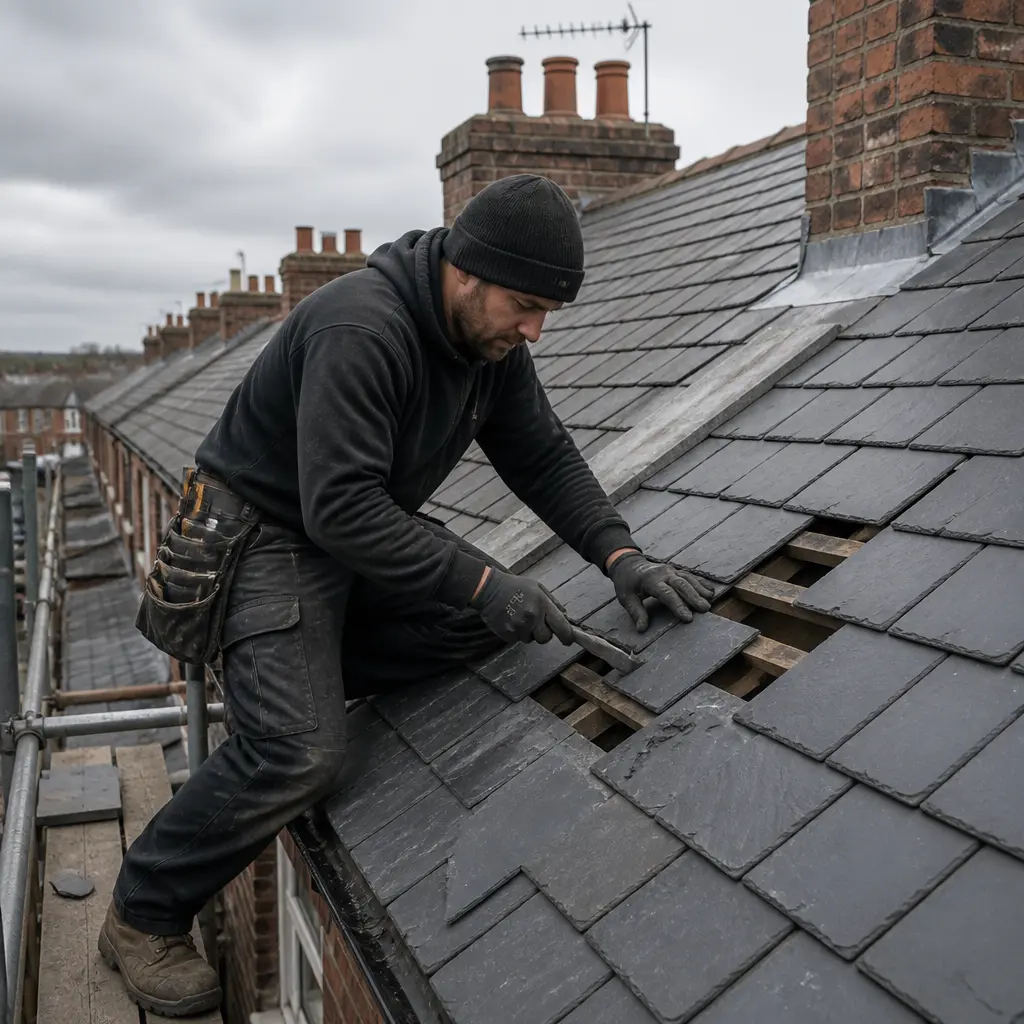
A roof should normally appear straight and even. A dip, curve or sagging section can indicate a problem with the supporting structure and should be inspected promptly.
Possible causes include long-term water entry, weakened rafters, damaged roof trusses, movement in the building or excessive weight on the structure. Poorly planned alterations within the loft can also affect support.
A sagging roof is different from a few uneven tiles. It may affect the shape of the main roof structure rather than only the outer covering.
Do not assume that replacing the tiles alone will correct the problem. The roof may need temporary support, timber repairs or structural work before a new covering can be installed.
Seek urgent advice if the roofline changes suddenly, parts of the ceiling move, timbers crack or the sag becomes more noticeable. Keep people away from the affected loft or room until the condition has been assessed.
The final work may involve repairing part of the structure or replacing the entire roof, depending on the cause and extent of the damage.
Daylight Entering the Loft
Enter the loft safely during daylight and look for bright gaps through the roof. Visible light may indicate missing coverings, holes in the underlay or open joints around roof features.
Small amounts of light may enter through designed ventilation openings. These should not be confused with irregular holes, broken materials or gaps that allow rain to enter.
While checking the loft, look for wet insulation, dark timber, water marks, rusted nails and white marks left by dried water. A musty smell can also suggest that moisture is present.
The absence of visible dripping does not prove that the roof is sound. Water may only enter during wind-driven rain, and insulation can hide small leaks.
Several gaps across the roof may suggest that the covering or underlay is badly worn. Replacement may provide a more reliable solution than repairing each opening separately.
Do not touch electrical cables or fittings in a wet loft. Arrange suitable professional help where water is close to electrical equipment.
Damp Patches, Mould and Ceiling Stains
Brown stains, peeling paint and damp patches on upper ceilings may be caused by water entering through the roof. Mould and a musty smell can develop when the affected area remains wet.
Not every damp problem comes from the roof. Condensation, plumbing leaks and problems with walls or windows can cause similar signs. The source should be confirmed before roof replacement work is agreed.
The English Housing Survey found that 1.4 million homes in England had a surveyor-recorded damp problem in 2024. This represented about 5% of the housing stock.
The survey also found that homes with roof disrepair were more likely to experience moisture damage following intense rain or a storm. This shows why damaged coverings and roof joints should be investigated before internal decoration is repaired.
Painting over a stain will not stop further water entry. The roof fault must be corrected, and wet materials should be allowed to dry. Damaged plaster, insulation or timber may also require replacement.
Damaged Flashing and Roof Joints
Flashing helps seal the roof around chimneys, walls, valleys, roof windows and other joints. It is commonly made from lead or another approved weatherproof material.
Warning signs include lifting edges, cracks, gaps, loose sections and failed seals. Mortar around chimney flashing may also break away over time.
A local flashing repair may solve the problem when the surrounding roof is sound. However, failure around several joints can suggest wider age or installation problems.
Roof valleys deserve particular attention because they carry large amounts of rainwater. Leaves, broken mortar and roofing debris can obstruct the flow and allow water to spread beneath the covering.
Replacement may be more practical when access to the failed flashing requires large areas of old covering to be removed or when nearby tiles and underlay are also worn.
A detailed quotation should explain whether the existing flashing will be reused, repaired or completely replaced as part of the work.
Roofing Materials Are Breaking Down
Roof coverings can become weaker as they age. Concrete tiles may lose parts of their outer surface, slates may split and flat roof coverings may crack, blister or lift at the edges.
Check gutters and the ground for unusual amounts of roofing material. Small fragments, flakes or granules may show that the covering is wearing away.
Moss alone does not mean that a roof needs replacing. However, heavy growth can hold moisture, hide damaged materials and make inspection more difficult. Unsafe or harsh cleaning methods can also damage the surface.
On a flat roof, watch for standing water, open seams, bubbles and areas that feel soft beneath the covering. These signs may indicate trapped moisture or damage below the surface.
Widespread material failure is difficult to solve with isolated repairs. A professional assessment can establish whether enough sound covering remains to justify repair or whether a new roof system is needed.

Your Roof Needs Frequent Repairs
Occasional maintenance is normal, particularly after severe weather. Concern increases when repairs are needed every year or when one repaired area is quickly followed by a new fault elsewhere.
Keep a record of repair dates, costs and affected areas. This can reveal whether faults are isolated or part of a wider pattern.
Several small repair bills may eventually cost more than planned replacement. Frequent work can also cause repeated disruption without giving confidence that the roof will remain dry.
Ask the contractor to explain the expected life of each repair. A low-cost patch may be reasonable as a temporary measure, but it should not be presented as a permanent solution when the rest of the covering is failing.
Replacement may offer better value when most tiles, battens or sections of underlay are similar in age and condition. Renewing the complete system can remove several weak points at once.
Compare the cost, expected life and guarantee of repair and replacement options before deciding.
The Roof Is Near the End of Its Useful Life
Roof life varies according to the material, installation, exposure, pitch and level of maintenance. There is no single age at which every roof must be replaced.
Age should be considered alongside condition. An older roof that remains dry, secure and well maintained may continue to perform well. A newer roof may fail early because of poor installation, unsuitable materials or severe weather damage.
Documents from previous owners, invoices and guarantees may show when the roof was last replaced. Planning records or old property listings can sometimes provide further clues.
An inspection becomes more important when an older roof develops several warning signs at once. Brittle materials, repeated leaks and widespread movement may show that repairs will provide only short-term relief.
Planning replacement before complete failure gives you more time to compare quotations, choose materials and arrange the work during suitable weather.
A roofer should base advice on the roof’s present condition rather than age alone.
| Question | Replacement may be suitable when | Repair may be suitable when |
|---|---|---|
| How much of the roof is damaged? | Faults affect several slopes or large areas | Damage is limited to one small section |
| Do leaks keep returning? | New leaks appear after repeated work | There is one clear and repairable cause |
| What is the condition of the underlay? | It is torn, brittle or failing widely | It remains sound around the damaged area |
| Are the battens and timbers sound? | Wider access and replacement are required | The structure is dry and undamaged |
| How old is the covering? | It is old and showing several forms of failure | Most of the covering has useful life remaining |
Storm or Wind Damage
High winds can lift tiles, loosen ridge coverings and damage flashing. Falling branches and wind-blown objects may crack the covering or harm the supporting structure.
After severe weather, inspect the property from ground level. Look for missing tiles, debris, damaged gutters and changes to the roofline. Check ceilings and the loft for signs of water entry.
The latest English Housing Survey weather resilience findings show that 15% of owner-occupied dwellings were reported to have experienced new internal moisture damage after a storm during 2024. The figures were higher for private rented and social rented homes.
A small area of storm damage may be repairable. Replacement may be needed when wind has lifted a large section, the roof structure has moved or the event has exposed existing age-related weaknesses.
Photograph visible damage from a safe position and contact your insurer promptly where you may need to make a claim. Avoid temporary work that could place you at risk.
Emergency covering should only be installed using safe access and suitable equipment.
Damaged Gutters, Fascias and Roof Edges
Gutters, fascias and roof edges work together to move rainwater away from the building. Problems in these areas do not always require roof replacement, but they can reveal wider deterioration.
Look for sagging gutters, water overflowing during rain, rotting fascia boards and staining down the walls. Broken tile edges or failed underlay may also be visible near the eaves.
Blocked gutters can send water behind the fascia or towards the walls. Over time, this may damage roof timbers and create damp around the upper rooms.
Replacement may be suitable when the eaves, underlay and lower battens are damaged across long sections. The work can allow these hidden components to be renewed correctly.
Gutters should be cleared and repaired before concluding that the main roof has failed. A contractor should check whether water is entering through the covering or simply overflowing because the drainage route is blocked.
Any new guttering should be correctly sized, supported and connected to a suitable drainage point.
Poor Roof Ventilation and Wet Insulation
Moist air can collect in a poorly ventilated loft and form condensation on cold roof surfaces. This can wet insulation and timber even when the outer covering does not leak.
Signs include water droplets on the underside of the roof, damp insulation, mould, rusted fixings and a stale smell. The problem may become worse during cold weather.
Ventilation faults do not always mean the roof needs replacing. Additional vents, better airflow and repairs to gaps around loft hatches may solve the problem.
However, replacement creates an opportunity to install suitable underlay, ventilation and insulation as a complete system. This may be helpful when the existing roof lacks modern ventilation or when condensation has caused wider damage.
English Housing Survey figures show that 56% of homes were in energy-efficiency bands A to C in 2024, compared with 26% in 2014. Around 42% had more than 200 millimetres of loft insulation.
Insulation and ventilation should be planned together so that heat retention does not prevent necessary airflow.
- Inside the home: Check upper ceilings for stains, peeling paint and damp patches
- Inside the loft: Look for light, wet insulation, dark timber and signs of mould
- From ground level: Look for missing coverings, uneven lines and damaged roof edges
- During rain: Check for overflowing gutters and active leaks
- After storms: Look for debris, broken coverings and changes to the roofline
- Repair records: Note how often faults return and how much has been spent
- Roof documents: Check the date, materials and guarantee from previous work
- Professional advice: Obtain a detailed inspection before agreeing to replacement
How Should a Roof Be Inspected?
Begin with a visual check from a safe position. Do not use a ladder or enter an unsafe loft simply to obtain a closer view.
A professional inspection should cover each roof slope, ridge, valley, flashing detail, roof window, chimney joint, gutter and edge. The loft should also be checked where access is available.
The contractor should identify the likely cause of each fault rather than only listing visible damage. For example, slipped tiles may be caused by failed fixings or battens underneath.
Ask for photographs and a written explanation of the findings. The report should separate urgent faults from routine maintenance and explain whether repair or replacement is recommended.
Where structural movement is suspected, advice from a suitably qualified building professional may also be needed.
Obtain more than one detailed quotation for major work. Compare the materials, preparation, ventilation, insulation, flashing, access equipment, waste removal, guarantees and payment terms.

Frequently Asked Questions
```Does One Leak Mean I Need a New Roof?
No. One leak may have a clear local cause that can be repaired. Replacement becomes more likely when leaks are widespread, keep returning or are linked to failing materials across the roof.
Can a Roof Need Replacing Even If It Does Not Leak?
Yes. Loose coverings, a sagging structure, damaged underlay and failing fixings may require attention before water becomes visible inside the property.
Is Moss a Sign That the Roof Has Failed?
Not by itself. Heavy moss can hide faults and hold moisture, but the roof should be assessed based on the condition of the covering and supporting materials.
Should I Replace Missing Tiles or the Whole Roof?
A few missing tiles can normally be replaced when the surrounding roof is sound. Widespread movement or repeated tile loss may justify replacement.
What Does a Sagging Roof Mean?
It may indicate weakened timber, long-term moisture damage, structural movement or excessive weight. Arrange a prompt professional assessment.
Can Roof Underlay Be Replaced Without New Tiles?
The covering normally needs to be lifted to reach the underlay. Some sound tiles may be reused, but this will depend on their condition and the planned roofing system.
How Do I Know Whether a Roof Repair Will Last?
Ask the contractor to explain the cause, the proposed work and its expected life. A written quotation should also state what is and is not covered.
Should I Replace My Roof Before Selling?
Replacement may help when the roof has serious or widespread faults. A local repair may be better value when the remaining roof is sound.
When Should You Replace Your Roof?
Roof replacement should be considered when the building can no longer be kept weatherproof through sensible, lasting repairs.
The clearest warning signs are repeated leaks, widespread broken coverings, structural sagging, failed underlay, several damaged joints and repair costs that continue to rise.
One isolated fault does not usually justify replacing the entire roof. A detailed inspection should confirm how much of the existing system remains sound and whether local work will provide a lasting result.
Do not delay when there is active water entry, visible structural movement or damage following a storm. Early work can protect insulation, ceilings, timbers, electrical fittings and belongings.
When replacement is recommended, ask for a written quotation covering the roof materials, underlay, battens, flashing, ventilation, insulation, drainage, access equipment and waste removal.
Choosing suitable materials and skilled installation can provide reliable protection for many years. Keep all invoices, photographs, approval records and guarantees after the work is complete.
We hope you found this article useful: Signs your roof needs replacing. Are you considering roof replacement in Birmingham, Dudley or Wolverhampton? Colmore Roofing Contractors can inspect your roof, explain whether repair or replacement is suitable and provide a clear quotation. Contact the team to arrange a professional roofing assessment for your property.