Are you asking: Should I repair my roof or replace it? A roof repair is often suitable when damage is limited and the rest of the roof remains sound. A roof replacement may be better when damage is widespread, leaks keep returning or the covering is near the end of its useful life.
The right choice will depend on the roof's age, material, condition, repair history and the extent of any hidden damage. A professional inspection can help you avoid paying for unnecessary work or relying on a repair that will not last.
Roof Repair or Roof Replacement?
Choosing between a roof repair and a roof replacement is not always simple. A missing tile or a small area of failed flashing may only require a local repair. However, several leaks, widespread wear or damage to the roof structure may make replacement the safer long-term choice.
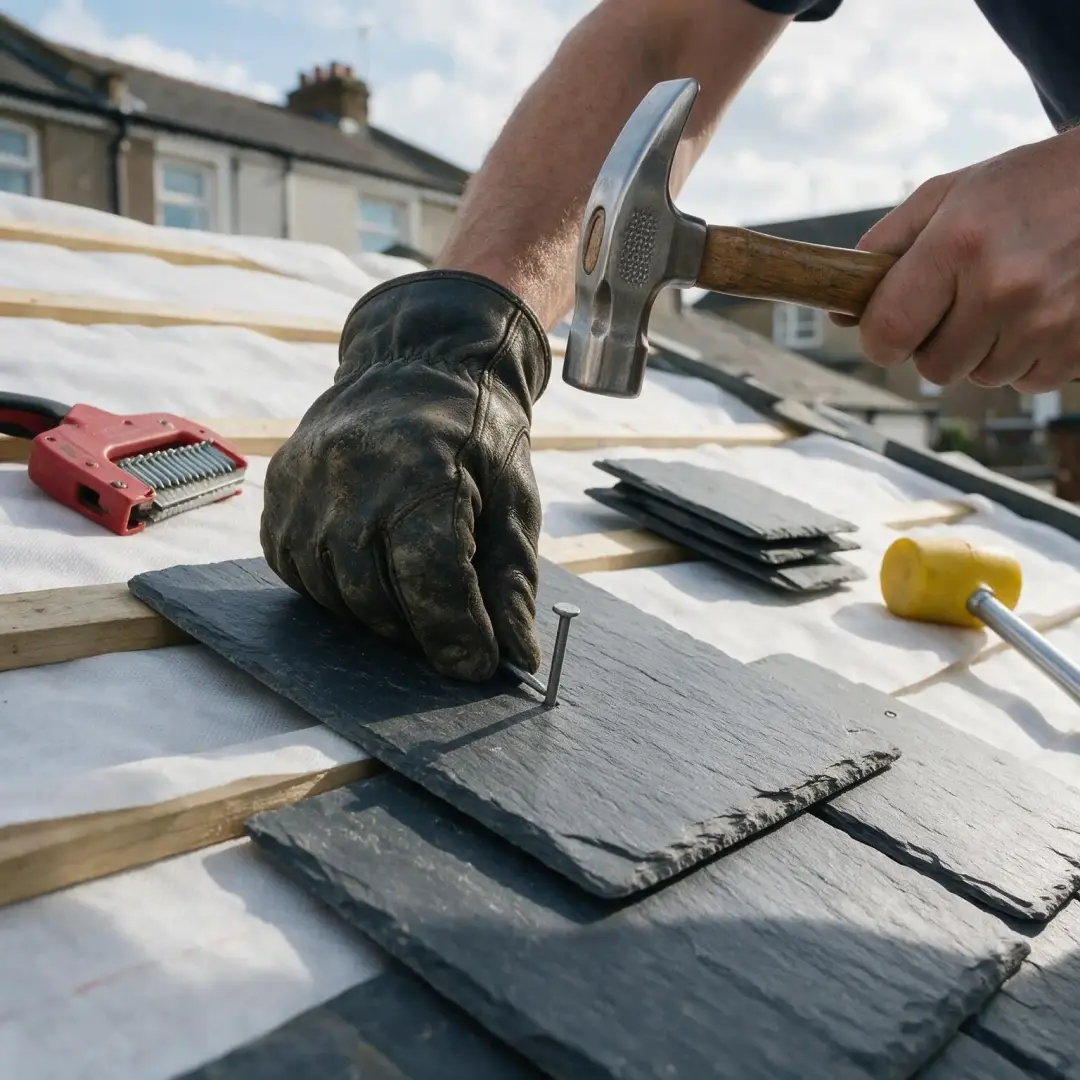
A repair normally deals with a specific problem while leaving most of the existing roof in place. This may include replacing broken tiles, repairing leadwork, sealing a small flat-roof defect or renewing a damaged section of underlay.
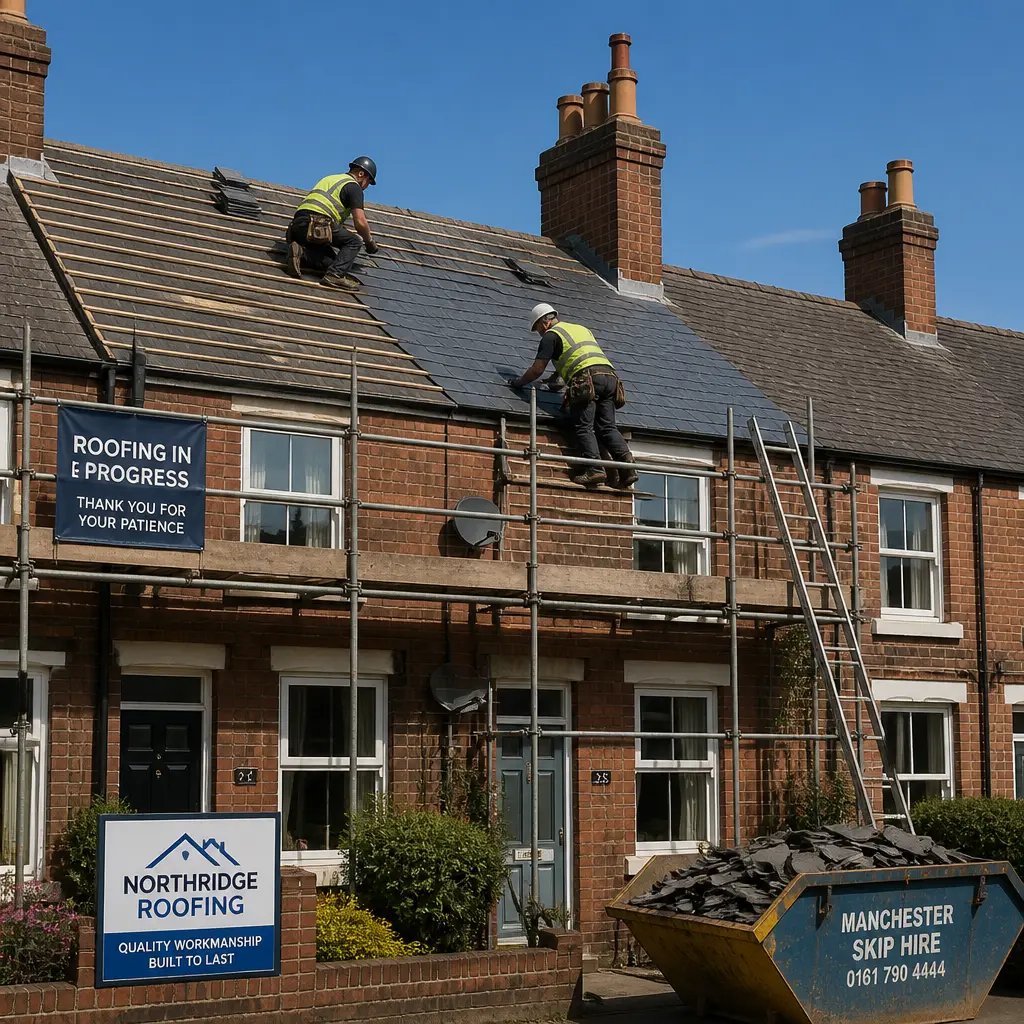
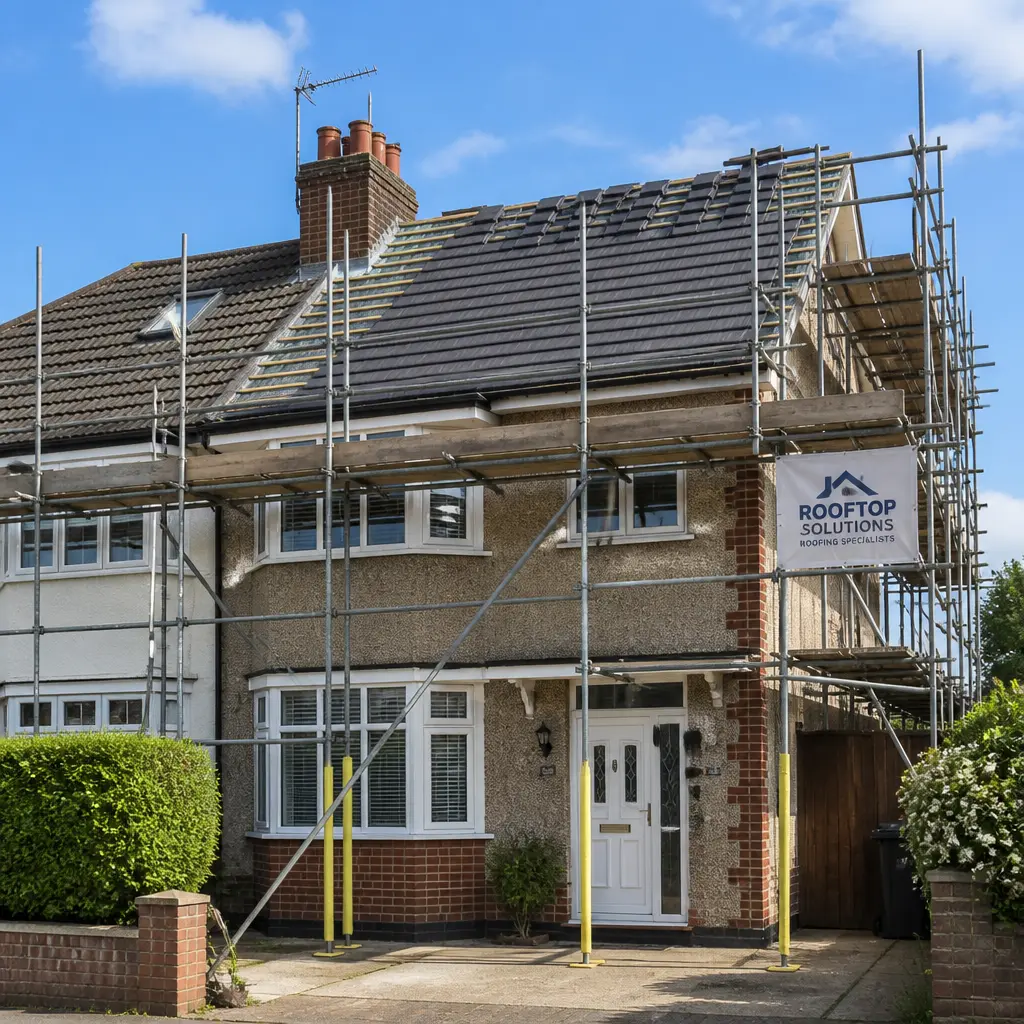
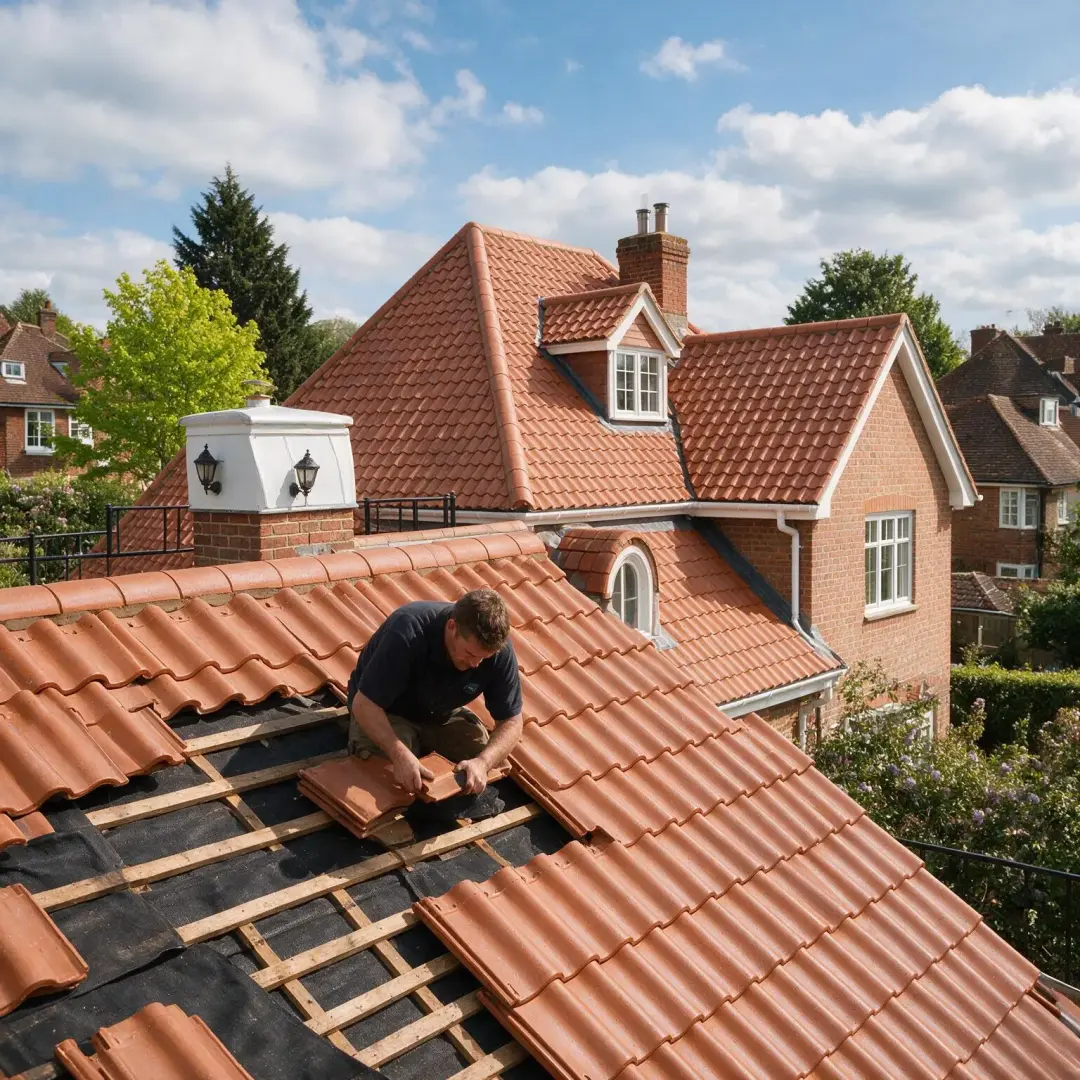
A replacement involves removing some or all of the old covering and installing a new roofing system. The work may also include new underlay, battens, flashing, ventilation, insulation and rainwater goods.
The lowest initial quotation is not always the best value. A cheap repair may cost more over time if leaks return or damage spreads. Equally, replacing a roof that still has many years of useful life may be unnecessary.
- A repair is often suitable when the problem is small and clearly identified
- Replacement may be suitable when damage affects large sections of the roof
- Recurring leaks can suggest that local repairs are no longer enough
- The condition of the underlay, battens and roof timbers should also be checked
- Repairing damage early may prevent damp, mould and internal water damage
- In 2024, 4.3 million households in England reported new moisture damage after intense rain or a storm
- Homes with roof disrepair were more than twice as likely to experience storm-related moisture damage
- A replacement can provide an opportunity to improve insulation and ventilation
A roofing contractor should explain why a repair or replacement is being recommended. Ask for photographs, details of the damaged areas and a written description of the proposed work. This evidence can help you compare quotations and decide whether the suggested solution matches the condition of the roof.
| Roofing situation | Repair may be suitable | Replacement may be suitable |
|---|---|---|
| A few broken or missing tiles | Yes, when surrounding tiles and the underlay remain sound | Possibly, if tiles are failing across most of the roof |
| One isolated leak | Yes, when the source can be found and repaired properly | Possibly, if the leak is caused by widespread failure |
| Several leaks in different areas | Only if each defect is limited and the main covering is sound | Often, particularly when previous repairs have failed |
| Worn flat-roof covering | Yes, when damage affects one small section | Often, when the covering is cracked, blistered or failing throughout |
| Sagging or damaged roof structure | Rarely suitable without structural work | May be required alongside timber repairs or strengthening |
| Roof near the end of its useful life | May provide a short-term solution | Often provides better long-term value |
When Is a Roof Repair the Better Choice?
A repair may be the better choice when the defect is limited, the cause is clear and the rest of the roof remains in good condition.
Examples include a small number of slipped tiles, local storm damage, a short section of failed flashing or a minor leak around a roof window. These problems can often be corrected without removing the main roof covering.
The repair should address the cause rather than simply cover the visible symptom. Water appearing on a ceiling may have travelled from a defect several metres away, so the area directly above the stain may not be the source.
A local repair is more likely to provide good value when the roof has not required repeated attention. If the same area has been repaired several times, there may be a wider problem with the covering, detail or structure.
The contractor should also check nearby materials. Replacing one damaged tile will not provide a lasting solution if the surrounding tiles are cracked, loose or no longer securely fixed.
When Is Roof Replacement More Suitable?
Replacement may be more suitable when defects affect large areas or when the roof covering has reached the end of its useful life.
Warning signs include frequent leaks, widespread cracked tiles, failing underlay, loose coverings, extensive moss damage, rotting battens or repeated problems after earlier repairs.
A replacement may also be required when water has damaged roof timbers or insulation. Removing the old covering gives the contractor access to inspect, repair and protect these hidden parts of the building.
Replacing the roof can provide a more consistent finish than repairing many separate areas. It can also reduce the risk that another section will fail soon after the first repair is completed.
However, replacement should not be recommended simply because the roof looks old. Some older roofs remain serviceable when they have been maintained correctly and still provide reliable weather protection.
How Does the Age of the Roof Affect the Decision?
Roof age is useful, but it should not be the only reason for choosing repair or replacement. The expected life of a roof varies according to its materials, installation, pitch, exposure and maintenance history.
Natural slate can remain serviceable for many decades when it is installed correctly. Clay and concrete tiles may also provide a long life, although individual tiles, fixings, battens and underlay can fail earlier.
Flat-roof coverings often require closer attention because standing water, movement and exposed joints can lead to local failure. Their working life will depend heavily on the product and the standard of installation.
An older roof with one minor defect may still be worth repairing. A much newer roof may require major work if it was installed poorly, damaged by severe weather or built with unsuitable materials.
Ask the contractor to estimate the remaining serviceable life of the whole roof. This can help you judge whether a repair is likely to last long enough to offer fair value.
How Much Damage Is Too Much to Repair?
There is no single level of damage that applies to every roof. The decision depends on where the damage is located, whether it is still spreading and how much sound material would remain after the repair.
A small area of storm damage may be repairable even when it looks serious. In contrast, several small defects across different roof slopes may show that the whole covering is becoming unreliable.
Hidden damage is also important. Water can affect underlay, battens, insulation, ceilings and structural timber before the full extent of the problem becomes visible inside the property.
Government housing figures show that roof condition has a clear link with storm-related moisture damage. In the 2024 to 2025 English Housing Survey, 38% of homes with roof disrepair experienced moisture damage following a storm. The figure was 17% among homes without roof disrepair.
Prompt inspection is therefore important when leaks appear. Delaying work may allow a repairable problem to develop into a larger and more expensive project.
Can Repeated Roof Repairs Become More Expensive?
Several small repairs can eventually cost more than planned. Each visit may involve labour, access equipment, inspection time and replacement materials.
Repeated repairs can be reasonable when separate problems arise over many years. They are less likely to offer good value when leaks return after a short period or new faults keep appearing across the roof.
Ask for a record of earlier repairs and compare the total cost with the price of replacement. You should also consider the inconvenience and risk of further internal damage between visits.
A repair quotation should explain how long the completed work is expected to last. No contractor can guarantee that an unrelated part of an old roof will not fail, but they should be clear about the limits of the repair.
When a contractor recommends another local repair, ask whether it is intended as a lasting solution or a temporary measure. This distinction can make a significant difference when comparing prices.
What Are the Risks of Delaying Roof Work?
A small roof defect can become more serious when rain continues to enter the building. Wet insulation may lose performance, timber may begin to decay and internal plaster may become stained or damaged.
Moisture can also encourage mould growth. English Housing Survey figures for 2024 found that 1.4 million homes in England, equal to 5% of the housing stock, had a damp problem recorded by a surveyor.
Household reports showed an even wider issue. During 2024 to 2025, 4.3 million households, equal to 17%, noticed new moisture damage following intense rain or a storm during the previous year.
Not every damp problem begins with the roof. Condensation, plumbing faults, walls and drainage can also be responsible. However, a damaged covering, failed flashing or blocked rainwater system should be investigated quickly.
Temporary protection may be needed while permanent work is arranged. It should not be treated as a substitute for correcting the cause of the leak.
Should You Repair or Replace a Flat Roof?
A flat roof may be repairable when one joint, edge or small section has failed and the surrounding covering remains firmly attached.
Replacement may be more suitable when the surface has widespread cracks, blisters, splits or standing water. Soft areas beneath the covering may indicate that the deck or insulation has become wet.
The contractor should inspect outlets, falls, upstands, edges and connections with walls. A visible split may not be the only source of water entry.
Patching an old covering can be difficult when the new material does not bond correctly or when moisture is trapped underneath. In this situation, a repair may hide the problem without restoring the full performance of the roof.
A replacement provides an opportunity to correct poor drainage, renew damaged decking and improve the insulation. The design should also allow for suitable ventilation or condensation control where required.
Can Roof Replacement Improve Energy Efficiency?
Replacing a roof creates an opportunity to inspect and improve the insulation, ventilation and airtightness of the roof space.
The covering itself is only one part of the building's energy performance. Insulation usually has a greater effect on heat loss, while correct ventilation helps control condensation and protect the roof structure.
In 2024, 56% of homes in England were within energy-efficiency bands A to C. This was an increase from 26% in 2014.
Government figures also show that 42% of dwellings had at least 200 millimetres of loft insulation in 2024. However, more than 2.7 million households were living in homes with less than 100 millimetres of loft insulation.
Insulation work must suit the roof design. Blocking ventilation or installing unsuitable materials may increase condensation risks, so the full roof system should be considered rather than treating insulation as a separate item.
Do Roof Repairs or Replacements Need Approval?
Minor maintenance and local repairs may not require a formal building control application. However, some roof replacement and alteration work is covered by building regulations.
Government guidance states that building regulations approval may be required when replacing coverings on pitched or flat roofs. Approval may also be needed for structural alterations or when a new covering substantially changes the roof's weight or fire performance.
Planning Portal guidance states that work affecting more than 50% of a roof may require approval. Insulation standards and other building requirements may then need to be considered.
Planning permission and building regulations are separate matters. Additional controls may apply to listed buildings, homes within conservation areas and projects that alter the roof's shape or height.
Requirements differ across England, Wales, Scotland and Northern Ireland. This article provides general guidance for homeowners in England. Check with the local planning authority or building control body before starting work when the scope is unclear.
| Question to ask | Why it matters |
|---|---|
| What caused the damage? | A lasting repair must correct the source rather than cover the symptom |
| How much of the roof is affected? | Widespread problems may make replacement better value |
| What condition are the hidden materials in? | Wet underlay, battens, insulation or timber may require wider work |
| How long should the repair last? | This helps distinguish a lasting repair from a temporary patch |
| What is included in the quotation? | Access, materials, waste removal and finishing work can affect the final cost |
| Will approval or notification be required? | Missing documents may cause problems during a future sale |
How Should You Compare Roofing Quotations?
Compare the proposed work rather than looking only at the total price. Two quotations may appear similar while covering very different levels of labour and materials.
A written repair quotation should identify the damaged area, the materials being removed, the materials being installed and any work to surrounding sections.
A replacement quotation should describe the roof covering, underlay, battens, flashing, ventilation, insulation, gutters, waste removal and access equipment. It should also state whether timber repairs are included or will be charged separately.
Check the expected start date, working period, payment terms and guarantee. Ask whether the guarantee covers both materials and workmanship and whether it can be transferred to a future property owner.
Very low quotations may leave out important items. Very high quotations do not automatically provide better work. Clear detail, evidence of suitable experience and a reasonable explanation of the roof's condition are more useful than price alone.
Should You Replace the Roof Before Selling?
Replacement before a sale may be sensible when the roof has active leaks, widespread damage or a very limited remaining life.
A damaged roof may lead buyers to reduce their offers, request further reports or withdraw from the purchase. They may allow for the expected cost of the work and add a further amount for disruption and hidden risks.
A local repair may be enough when the problem is small and the remaining roof is sound. Completing an unnecessary replacement shortly before moving may not produce an equal increase in the sale price.
Keep invoices, inspection reports, photographs, guarantees and building control documents. These can help show buyers and surveyors what work was completed.
Ask a roofing contractor to assess the condition and an estate agent to explain how the defect may affect local buyer demand. Their roles are different, so combining both views can support a more informed decision.
- Choose repair when: Damage is local, the cause is clear and the surrounding roof is sound
- Consider replacement when: Damage is widespread or leaks continue to return
- Check hidden materials: Underlay, battens, insulation and timbers may affect the decision
- Review previous work: Several recent repairs may suggest a larger problem
- Consider future plans: Your decision may differ if you plan to move soon
- Check approval: Some replacement and structural work may need building control involvement
- Compare full quotations: Make sure labour, access, waste and finishing work are included
- Keep documents: Store invoices, photographs, guarantees and approval records safely
How Can a Professional Roof Inspection Help?
A professional inspection should examine more than the visible roof surface. The contractor may need to check the loft, flashing, valleys, ridges, edges, gutters, underlay and structural timber.
Photographs can show problems that are difficult to see from ground level. They can also help explain why a particular repair or replacement has been recommended.
The inspection should identify urgent defects, areas that can be monitored and work that may be needed later. This makes it easier to plan costs rather than reacting to each leak as it appears.
Ask whether the inspection includes moisture readings, loft access or checks beneath the covering. Some hidden materials cannot be assessed fully until work begins.
A responsible contractor should be willing to recommend a repair when replacement is not needed. They should also explain when a repair would only delay an unavoidable replacement.
Frequently Asked Questions
```Is It Better to Repair or Replace a Roof?
A repair is usually better when the damage is limited and the surrounding roof remains sound. Replacement may be better when damage is widespread, leaks keep returning or the roof is near the end of its useful life.
Can Part of a Roof Be Replaced?
Yes. A section of roof may be replaced when damage is limited to one area. The contractor should check that the new and existing materials can be joined securely and will provide consistent weather protection.
How Many Times Can a Roof Be Repaired?
There is no fixed limit. Separate repairs over many years may be reasonable. Several repairs within a short period can suggest that the covering or another part of the roof is failing more widely.
Should You Repair a Roof Before Winter?
Visible defects should be inspected before periods of heavy rain, frost and strong winds where possible. Early action may prevent water damage and make emergency work less likely.
Can a Leaking Roof Always Be Repaired?
Not always. One clear defect may be repairable, but several leaks, damaged timbers or widespread covering failure may require partial or full replacement.
Is a Roof Repair a Permanent Solution?
A correctly completed repair can provide a lasting solution to a local defect. It cannot prevent an unrelated part of an ageing roof from failing later.
Does a New Roof Need New Insulation?
Not in every case, but replacement creates an opportunity to inspect insulation. Building requirements may also apply depending on the extent and type of work.
Can You Repair a Roof During Rain?
Some emergency protection may be possible, but permanent work normally requires suitable weather and safe working conditions. The contractor should explain how the property will remain protected.
How Do I Know Whether a Roofing Quotation Is Fair?
Obtain detailed written quotations and compare the scope, materials, access, waste removal, guarantees and likely working period. A quotation should explain the reason for the proposed work.
Should You Repair or Replace Your Roof?
A repair is often the best choice when the defect is small, the source is clear and the rest of the roof remains in good condition.
Replacement may provide better long-term value when damage affects large areas, leaks return after earlier repairs or the covering is close to the end of its useful life.
The decision should also consider hidden materials. Damaged underlay, battens, insulation or structural timber may turn a simple surface repair into a larger project.
Do not base the decision on roof age or price alone. Ask for an inspection, photographs and a written explanation of the proposed work. Compare the expected life of the repair with the cost and benefits of replacement.
Addressing the problem early can prevent moisture damage and reduce disruption. A clear assessment will help you choose work that protects the property without paying for more than the roof requires.
We hope you found this article useful: Roof Repair or Roof Replacement? Are you considering roof repairs or roof replacement services in Birmingham, Dudley or Wolverhampton? Colmore Roofing Contractors can inspect the roof, identify the cause of any damage and explain whether a repair or replacement is suitable. Contact the team to arrange a professional roofing assessment and clear quotation.