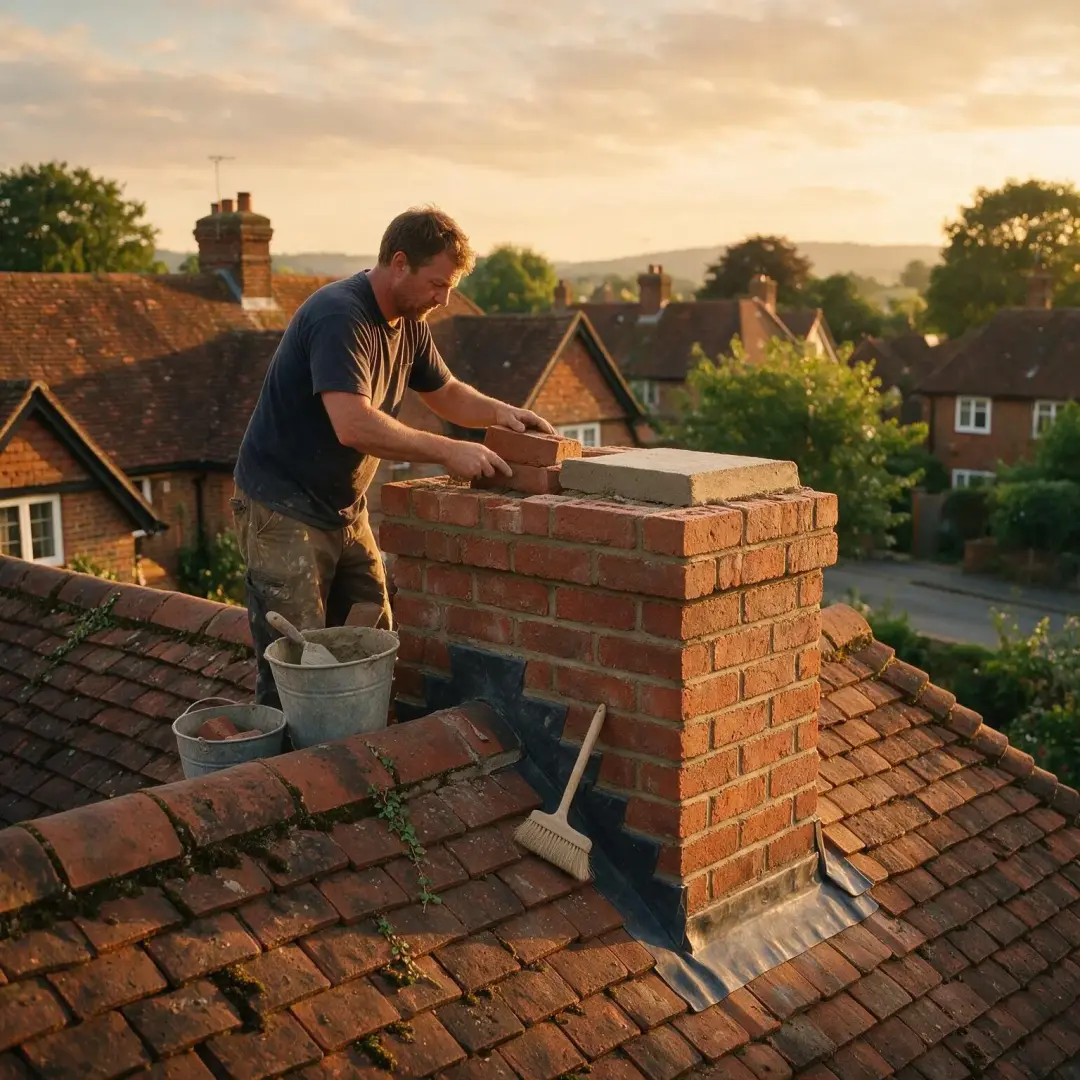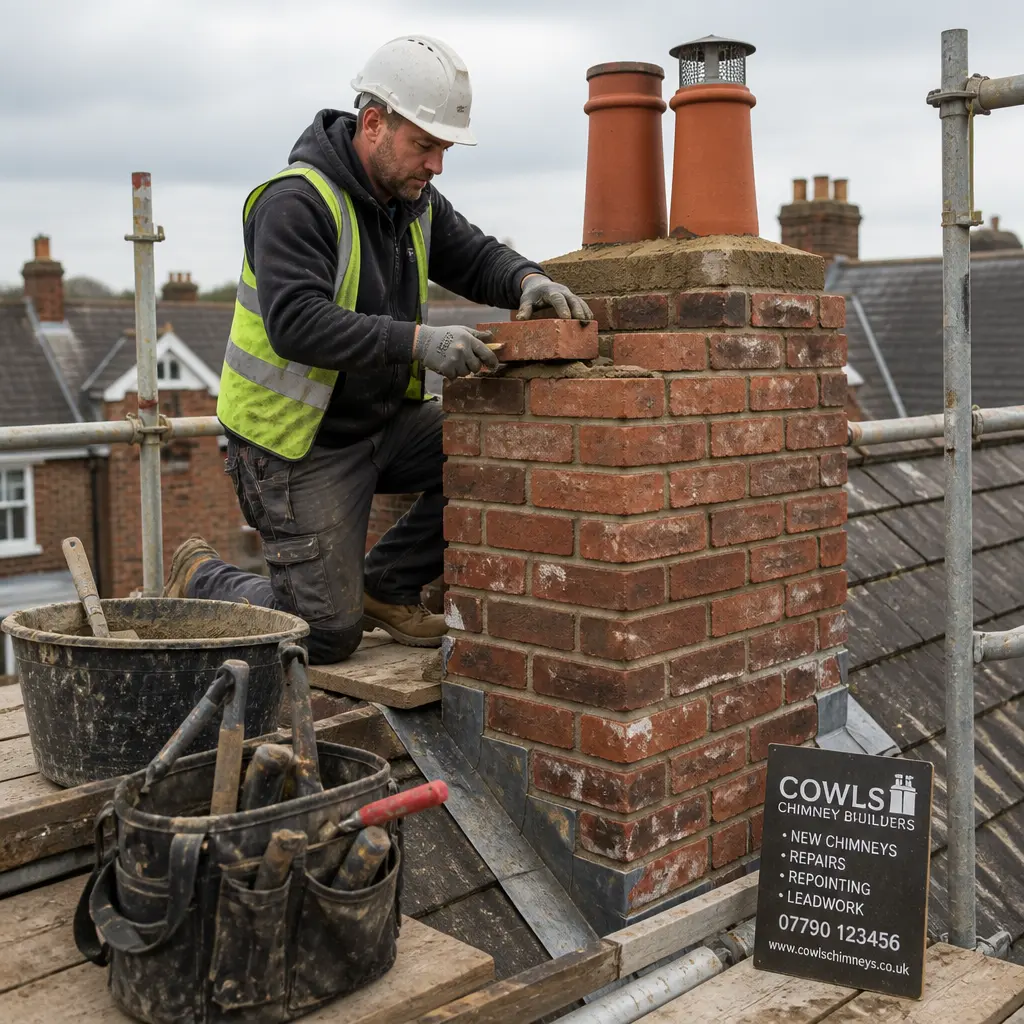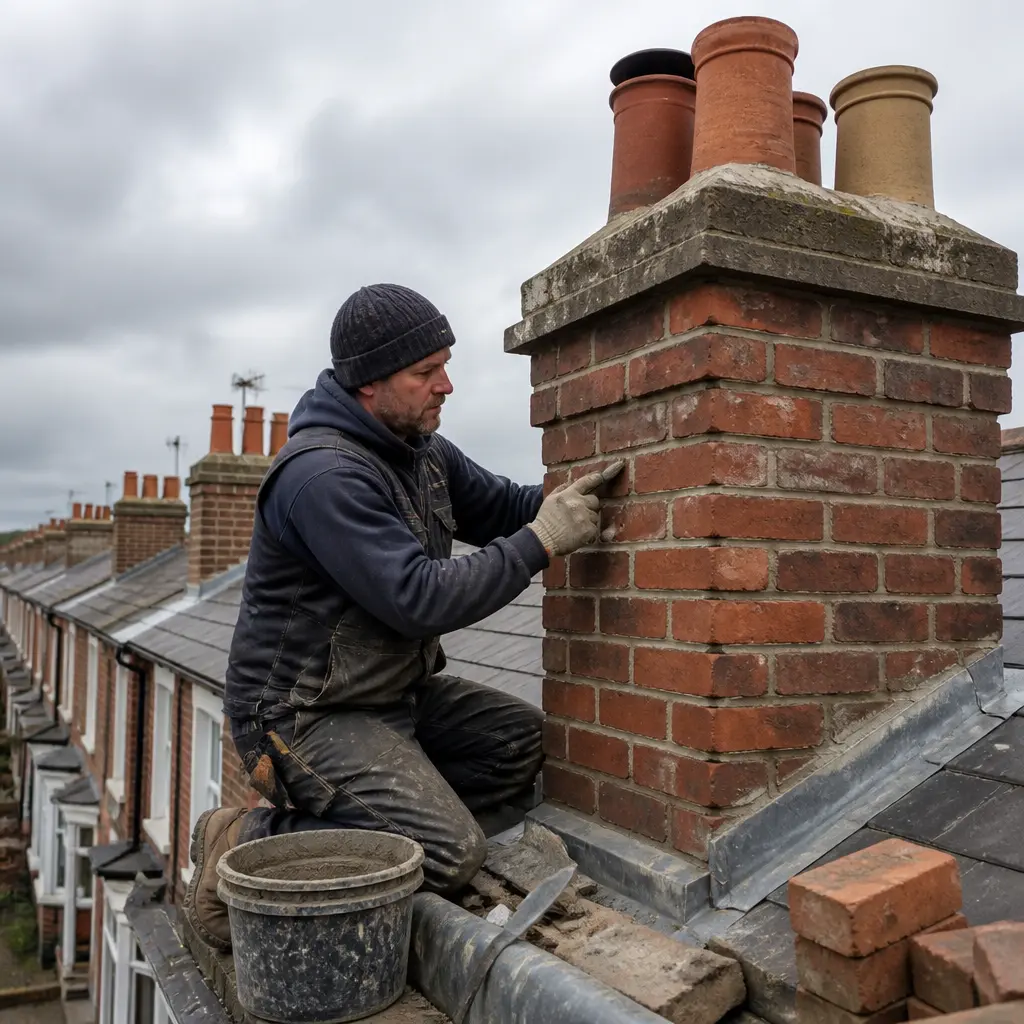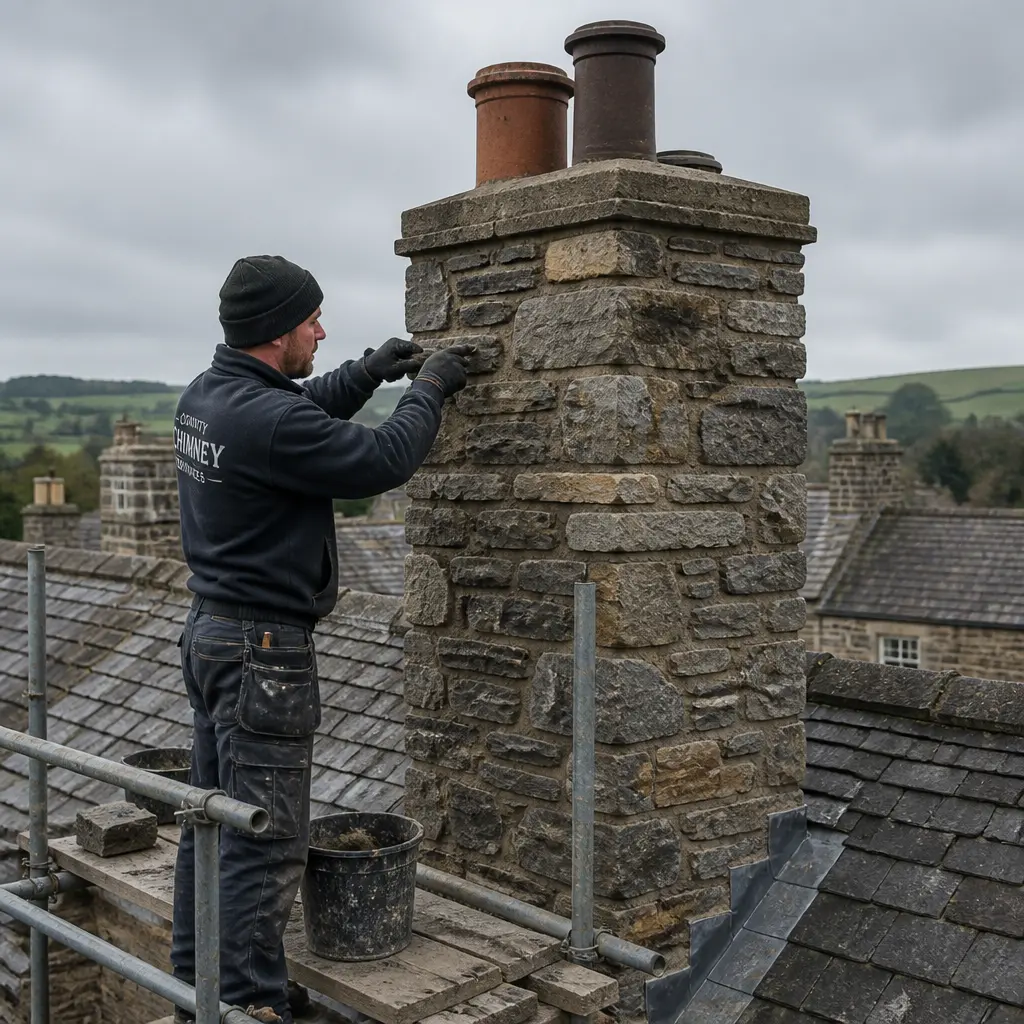
Rain, frost, wind, snow, heat and changing temperatures can all damage a chimney. Water may enter small cracks, strong winds can loosen pots and repeated freezing can cause bricks and mortar to break apart.
Weather damage often develops slowly and may not be noticed until damp, loose masonry or staining appears. Regular inspections and early repairs can help prevent a small fault from becoming a serious structural or safety problem.
How Can Weather Damage Your Chimney?
A chimney is one of the most exposed parts of a property. It stands above the roof and receives the full effect of rain, wind, frost, snow, sunlight and sudden temperature changes.
Rainwater can enter worn mortar joints, cracked bricks, damaged flaunching and gaps around the flashing. Once water enters the chimney, it may spread into the roof space, chimney breast, ceilings and nearby walls.
Cold weather can make existing damage worse. Water trapped inside bricks and mortar expands when it freezes. Repeated freezing and thawing can loosen the surface of the masonry and widen small cracks.
Strong winds can move chimney pots, cowls and unstable brickwork. Heat and sunlight may also dry materials unevenly, leading to movement or cracking.
Damage is more likely when the chimney is already old, poorly maintained or affected by unsuitable past repairs.
- Rain can enter cracked mortar, damaged flashing and open chimney pots
- Freezing water can widen cracks and break the surface of bricks
- Strong winds can loosen chimney pots, cowls and unstable masonry
- Snow and ice can add moisture and weight to damaged chimney sections
- Hot weather can cause mortar to dry, shrink or crack
- Fast temperature changes can cause different chimney materials to move
- The United Kingdom received 1,041.2 millimetres of rain during 2025
- Four storms were named by the western European storm naming group during 2025
- Fire and rescue services attended 2,019 chimney fires in England in the year ending March 2025
Weather does not always create a completely new fault. It often enters through an existing weak point and makes it worse. A small gap in the flashing or mortar may allow enough water to enter for damp, frost damage and internal staining to develop over time.
| Weather condition | Possible chimney damage | Warning signs |
|---|---|---|
| Heavy rain | Leaks, damp mortar, stained walls and damaged flashing | Damp patches, peeling paint or water near the fireplace |
| Frost and ice | Cracked bricks, loose mortar and damaged flaunching | Flaking brick faces or pieces of mortar on the roof |
| Strong wind | Loose pots, damaged cowls and unstable brickwork | Movement, leaning parts or unusual rattling sounds |
| Snow | Water entry, blocked terminals and extra moisture | Poor airflow, damp smells or staining after thawing |
| Hot, dry weather | Drying cracks and movement between materials | New gaps around mortar, pots or flashing |
| Rapid temperature changes | Expansion, contraction and widening joints | Fine cracks that become larger over time |
How Does Rain Damage a Chimney?
Rain is one of the main causes of chimney damage because water can enter through very small openings. Common entry points include cracked mortar joints, damaged bricks, worn flashing, broken flaunching and uncovered chimney pots.
Bricks and mortar can absorb moisture even when there is no clear hole. Older or damaged masonry may hold water for long periods, especially during repeated spells of rain.
Water may travel through the chimney before becoming visible. A damp patch on a wall or ceiling may therefore appear some distance from the actual opening.
Continued moisture can stain plaster, cause paint to peel and damage roof timbers. It can also mix with soot and other deposits inside the chimney, producing dark marks or unpleasant smells.
The United Kingdom has an average annual rainfall of about 1,154 millimetres. Even a year with below-average rainfall can expose a chimney to a large amount of water.
What Is Freeze and Thaw Damage?
Freeze and thaw damage happens when water enters a brick, mortar joint or crack and then freezes. Water expands as it turns into ice, placing pressure on the surrounding material.
When the ice melts, it leaves a larger space that can hold more water. The next freezing period may then create further damage. Repeated cycles can gradually break down the chimney.
The outer face of a brick may begin to flake, crumble or fall away. Mortar joints may become loose, while cracks in the flaunching can grow wider.
Chimneys are particularly at risk because they are exposed on several sides. Wet masonry may also remain colder than protected brickwork lower down the building.
Freeze and thaw damage can continue beneath the surface before it becomes easy to see. Loose pieces found on the roof or ground may be an early warning sign.
Can Strong Winds Damage a Chimney?
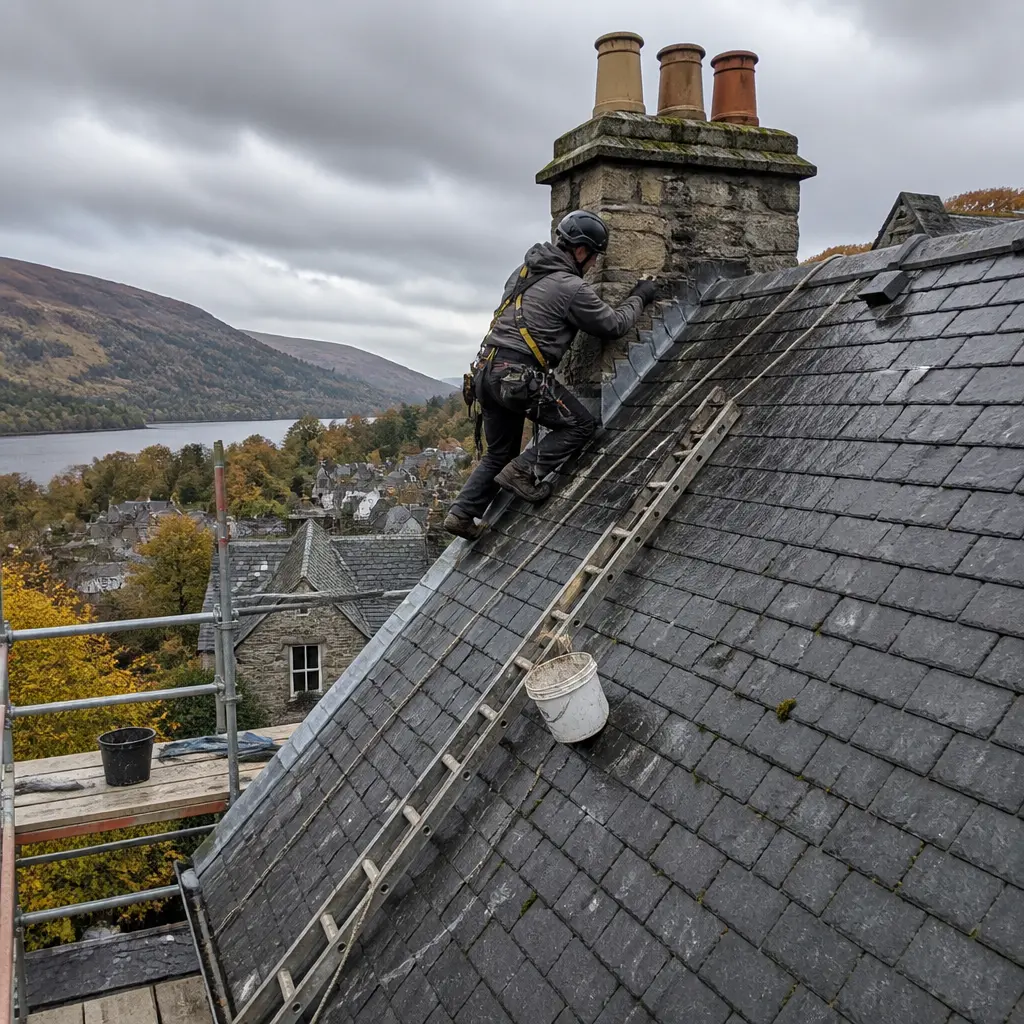
Strong winds place sideways pressure on the chimney stack, pots, cowls and other fittings. A sound chimney should resist normal weather, but weakened or poorly fixed parts may move during a storm.
A loose chimney pot may shift, crack its mortar base or fall. Cowls, caps and bird guards can also become damaged or detached if they are worn or incorrectly fitted.
Wind-driven rain can reach joints that are less exposed during calm weather. It may be forced beneath flashing or into small cracks around pots and flaunching.
The risk is greater when bricks or mortar are already loose. A chimney with a lean, deep crack or missing mortar should be inspected before further severe weather arrives.
Do not stand beneath a damaged chimney during strong winds. Loose masonry can fall without warning and may cause serious injury or damage to the roof.
Can Snow and Ice Block a Chimney?
Snow and ice may collect around a chimney pot, cowl or terminal. A large build-up can restrict airflow or allow water to enter as it melts.
A suitable chimney terminal should reduce direct entry while allowing smoke and gases to escape. It must be correctly selected for the chimney, appliance and fuel.
Melting snow can enter damaged mortar and flaunching in the same way as rain. If temperatures fall again, the trapped water may freeze and increase existing cracks.
Ice may also make a loose pot, cowl or damaged brick more dangerous. Property owners should not climb onto an icy roof to clear a chimney.
Stop using the connected appliance if smoke enters the room, the fire does not draw correctly or a carbon monoxide alarm operates. The chimney should be checked before it is used again.
How Can Hot Weather Affect a Chimney?
Hot and dry weather can affect mortar, sealants and the joints between different materials. Strong sunlight may heat one side of a chimney more than the other, causing uneven movement.
Bricks, mortar, metal flashing and clay pots do not all expand and contract at the same rate. Repeated heating and cooling can therefore create or widen small gaps.
Very dry conditions may cause old mortar to lose more moisture and become weak or powdery. Fresh mortar may also dry too quickly when repairs are completed without suitable protection.
The Met Office recorded 2025 as the United Kingdom’s warmest year since its annual temperature series began in 1884. The mean temperature was 10.09°C.
Warm weather alone will not normally destroy a maintained chimney. However, higher temperatures and longer dry periods can add pressure to materials that are already old, cracked or poorly repaired.
How Does Weather Damage Chimney Flashing?
Flashing forms a weatherproof joint where the chimney meets the roof. It is commonly made from lead or another suitable roofing material.
Rain, wind, heat and building movement can cause flashing to lift, split or pull away from the brickwork. Mortar holding the upper edge may also crack and fall out.
Once a gap forms, water can travel beneath roof tiles or slates. It may damage the underlay, battens, timber, insulation and internal plaster before the leak becomes visible.
Sealant may sometimes hide the opening for a short period, but it is not normally a lasting replacement for correctly fitted flashing.
Dark patches near the chimney breast, damp roof timbers and staining after wind-driven rain may all point to a flashing problem. A close inspection is needed to confirm the entry point.
How Does Weather Affect Chimney Flaunching?
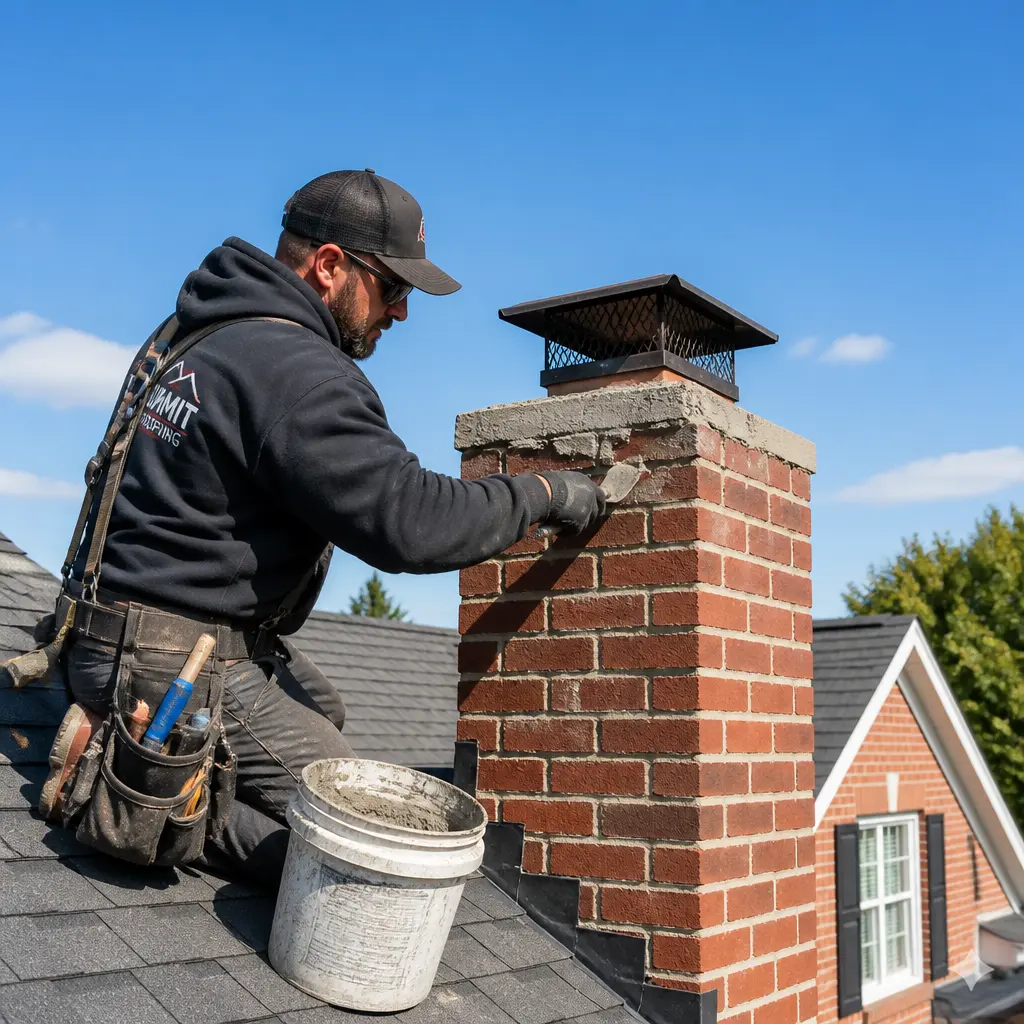
Flaunching is the sloping mortar around the base of the chimney pots. It supports the pots and directs rainwater away from the top of the stack.
Cracked or sunken flaunching can hold water rather than drain it. Water may then enter the stack around the chimney pots or through cracks in the mortar.
Frost can make the cracks wider, while heat can cause weak material to dry and break apart. Wind may then lift loose pieces or place more movement on the pots.
A chimney pot that appears to lean may have damaged flaunching beneath it. The problem should be inspected promptly because a loose pot can become dangerous during strong winds.
Placing a thin layer of new mortar over badly damaged flaunching may not provide a lasting repair. Loose material will normally need to be removed before a suitable new base is formed.
Can Weather Damage the Inside of a Chimney?
Weather damage is not limited to the visible chimney stack. Water entering from above can affect the flue liner, internal mortar, fireplace and chimney breast.
Moisture may combine with soot and combustion deposits to form dark, acidic staining. This can create unpleasant smells and damage internal surfaces.
A metal flue liner may corrode if it is exposed to continued moisture or unsuitable deposits. Clay liners can crack because of movement, frost or rapid temperature changes.
Water may also cause fallen mortar or masonry to collect inside the flue. A blockage can restrict airflow and prevent smoke and gases from leaving safely.
A camera survey or smoke test may be needed when internal damage is suspected. The fire or stove should not be used until the flue has been checked and confirmed as safe.
| Chimney part | How weather affects it | Possible repair |
|---|---|---|
| Brickwork | Water absorption, frost damage and surface loss | Brick replacement or partial rebuilding |
| Mortar joints | Erosion, cracking and water entry | Raking out and repointing |
| Flashing | Lifting, splitting or separation from the stack | Repair or full replacement |
| Flaunching | Cracking, sinking and water collection | Removal and renewal |
| Chimney pots | Wind movement, cracking or loosening | Resetting or replacement |
| Flue liner | Moisture damage, corrosion or cracking | Repair, testing or replacement |
What Are the Signs of Weather Damage?
Some signs can be seen from ground level, while others appear inside the property. Common external warning signs include cracked mortar, missing brick faces, leaning pots and damaged cowls.
Pieces of brick or mortar in the gutter, on the roof or beside the building may show that the chimney is breaking down. White marks on bricks can also appear when moisture carries salts to the surface.
Inside the property, look for damp patches, peeling wallpaper, stained plaster and musty smells near the chimney breast. Water may also appear in the fireplace after heavy rain.
Smoke entering a room, poor airflow and unusual smells when an appliance is used may indicate internal damage or a blockage.
Not every damp mark is caused by the chimney. Roof coverings, gutters, plumbing and condensation can produce similar signs. A suitable inspection is needed before repairs are chosen.
Can Small Weather Damage Become a Structural Problem?
Small cracks and missing mortar can become more serious when they are left open to repeated rain, frost and wind. Water enters the opening, weakens nearby materials and makes the gap larger.
As mortar joints fail, individual bricks may become loose. A damaged upper section can begin to lean or move away from the sound lower part of the stack.
The chimney may need partial rebuilding if the masonry can no longer be repaired safely. Damage can also spread into the roof when leaking water affects timber and other materials.
A structural problem is more likely when there are deep cracks, clear movement or large areas of loose brickwork. A shared chimney may also affect the adjoining property.
Early repointing or flashing work is normally less disruptive than rebuilding. An inspection can identify whether the damage is limited to the surface or extends further into the chimney.
What Should You Do After a Storm?
Check the chimney from a safe position at ground level after severe wind or heavy rain. Look for leaning pots, missing cowls, fresh cracks or pieces of masonry on the roof and ground.
Check the loft, ceilings, chimney breast and fireplace for new damp patches. Water marks that appear after wind-driven rain may point to damaged flashing or mortar.
Do not climb onto the roof or attempt to move loose chimney parts. Keep people, animals and vehicles away from the area below if masonry appears unstable.
Stop using the fire or stove if the chimney has moved, water is entering the flue or smoke is not clearing correctly.
An emergency visit may be needed to remove a loose part or install temporary weather protection. A permanent repair may follow when safe access, materials and suitable weather are available.
Current United Kingdom Weather and Chimney Statistics
Met Office figures show that the United Kingdom received 1,041.2 millimetres of rainfall during 2025. This was 90% of the average for the 1991 to 2020 period.
England received 789.1 millimetres of rain during the year, while Wales received 1,419.3 millimetres. Scotland received 1,346.8 millimetres and Northern Ireland received 1,116 millimetres.
Four storms were named by the western European storm naming group during 2025. Storm Éowyn was described by the Met Office as the most powerful windstorm to affect the United Kingdom for more than a decade.
Official fire figures show that fire and rescue services attended 2,019 chimney fires in England in the year ending March 2025. This was 5.5% lower than the 2,136 incidents recorded during the previous year.
These figures do not measure chimney weather damage directly. They show the level of weather exposure and the continued importance of chimney care and safe use.
How Can You Protect a Chimney From the Weather?
Arrange regular inspections so that cracked mortar, damaged flashing and loose pots can be repaired before water and frost make the problem worse.
Keep the chimney pot, cowl or terminal in suitable condition. Any fitting must allow enough airflow and must be appropriate for the connected appliance and fuel.
Repair failed mortar with a material that suits the age and type of brickwork. A very hard or unsuitable mortar can trap moisture and damage softer bricks.
Keep roof coverings and gutters near the chimney clear and in good condition. Overflowing gutters and broken tiles can make damp problems harder to identify.
Unused chimneys still need ventilation and weather protection. Completely sealing a flue without a suitable plan may trap moisture inside it.
Property owners should complete visual checks after storms, but roof-level inspections and repairs should be left to trained contractors with safe access equipment.
- Brickwork: Check for cracks, loose bricks and flaking surfaces
- Mortar: Look for open joints, gaps and powdery material
- Flashing: Check for lifting, splitting and gaps beside the roof
- Flaunching: Look for cracks or areas where water can collect
- Chimney pots: Check for leaning, movement and broken sections
- Cowls and guards: Make sure fittings are secure and suitable
- Internal walls: Watch for damp, staining and peeling finishes
- Fireplace: Report water, debris, smoke or unusual smells
When Should a Weather-Damaged Chimney Be Inspected?
Arrange an inspection when you notice new cracks, loose materials, damp, leaning pots or signs that the chimney has moved.
An inspection is also sensible after a major storm, particularly when the chimney is old or has received temporary repairs in the past.
Urgent help is needed if bricks or pots may fall, the stack has a clear lean or a large crack has appeared. Keep the area below clear until it has been made safe.
Stop using the connected appliance if smoke enters the room, a carbon monoxide alarm operates or debris has fallen into the flue.
A contractor may inspect the external stack, flashing, pots and roof covering. Further checks may include the roof space, a camera survey or a smoke test.
The inspection should identify both the visible damage and the reason it developed before a permanent repair is recommended.
Should You Repair Weather Damage Yourself?
Most chimney repairs are not suitable household tasks. Roof work creates a serious fall risk, especially after rain, frost, snow or strong winds.
Loose chimney pots and damaged brickwork can move without warning. Trying to remove or reset them without suitable equipment may place people below at risk.
A surface coating of mortar or sealant may hide the visible crack without dealing with the cause. Water can remain trapped behind the repair and continue damaging the chimney.
Incorrect work on a flue, cowl or terminal may also affect ventilation and allow smoke or carbon monoxide to enter the property.
Property owners can complete visual checks from the ground and report what they have seen. A trained contractor should inspect and repair roof-level masonry, flashing and flue components.
Frequently Asked Questions
```Can Rain Get Through Chimney Bricks?
Yes. Damaged or porous bricks can absorb water. Rain can also enter through cracked mortar joints, flaunching, flashing and open chimney pots.
Why Does My Chimney Leak Only When It Is Windy?
Wind can drive rain into small openings that remain dry during calm weather. Common causes include lifted flashing, cracked mortar and gaps around chimney pots.
Can Frost Cause Chimney Bricks to Crumble?
Yes. Water inside the brick can freeze and expand. Repeated freezing and thawing may cause the outer face to flake or break away.
Can a Chimney Pot Blow Off?
A loose or poorly secured pot can move or fall during strong winds. Cracked flaunching around its base can increase the risk.
Does a Chimney Need a Rain Cap?
Some chimneys benefit from a suitable cowl, cap or terminal. The product must match the chimney, appliance and fuel while allowing safe airflow.
Why Is There a Damp Patch Beside My Chimney?
Possible causes include damaged flashing, cracked masonry, condensation or water entering through the chimney pot. An inspection is needed to confirm the source.
Can Hot Weather Crack Chimney Mortar?
Hot and dry conditions can contribute to drying and movement, especially when mortar is already weak or unsuitable. Fresh repairs must be protected from drying too quickly.
How Often Should a Chimney Be Checked?
The correct period depends on the chimney’s age, condition, use and exposure. Checks should also be arranged after severe weather or when new damage appears.
Can I Use My Fire After Storm Damage?
Do not use it when the chimney has moved, debris has fallen, water is entering or smoke is not clearing correctly. Arrange an inspection first.
How Should You Deal With Chimney Weather Damage?
Begin by checking the chimney from a safe position. Look for cracked mortar, damaged bricks, leaning pots, loose cowls and changes that appeared after severe weather.
Check inside the property for damp, staining, debris and unusual smells. Stop using the connected fire or stove if smoke does not clear properly or the chimney may be blocked.
Small faults should be repaired before further rain and frost make them worse. Repointing, flashing work or renewing flaunching may be enough when the main structure remains sound.
More serious damage may require brick replacement, partial rebuilding or work to the flue liner and roof. The correct repair will depend on a close inspection.
Regular maintenance cannot prevent every weather event, but it can reduce the chance of water entry, falling masonry and costly internal damage.
Has rain, frost or strong wind damaged your chimney? Colmore Roofing Contractors can inspect the brickwork, mortar, flashing, flaunching and chimney pots before recommending a suitable repair. Contact the team to arrange a professional chimney stack repair in Birmingham, Dudley and Wolverhampton.