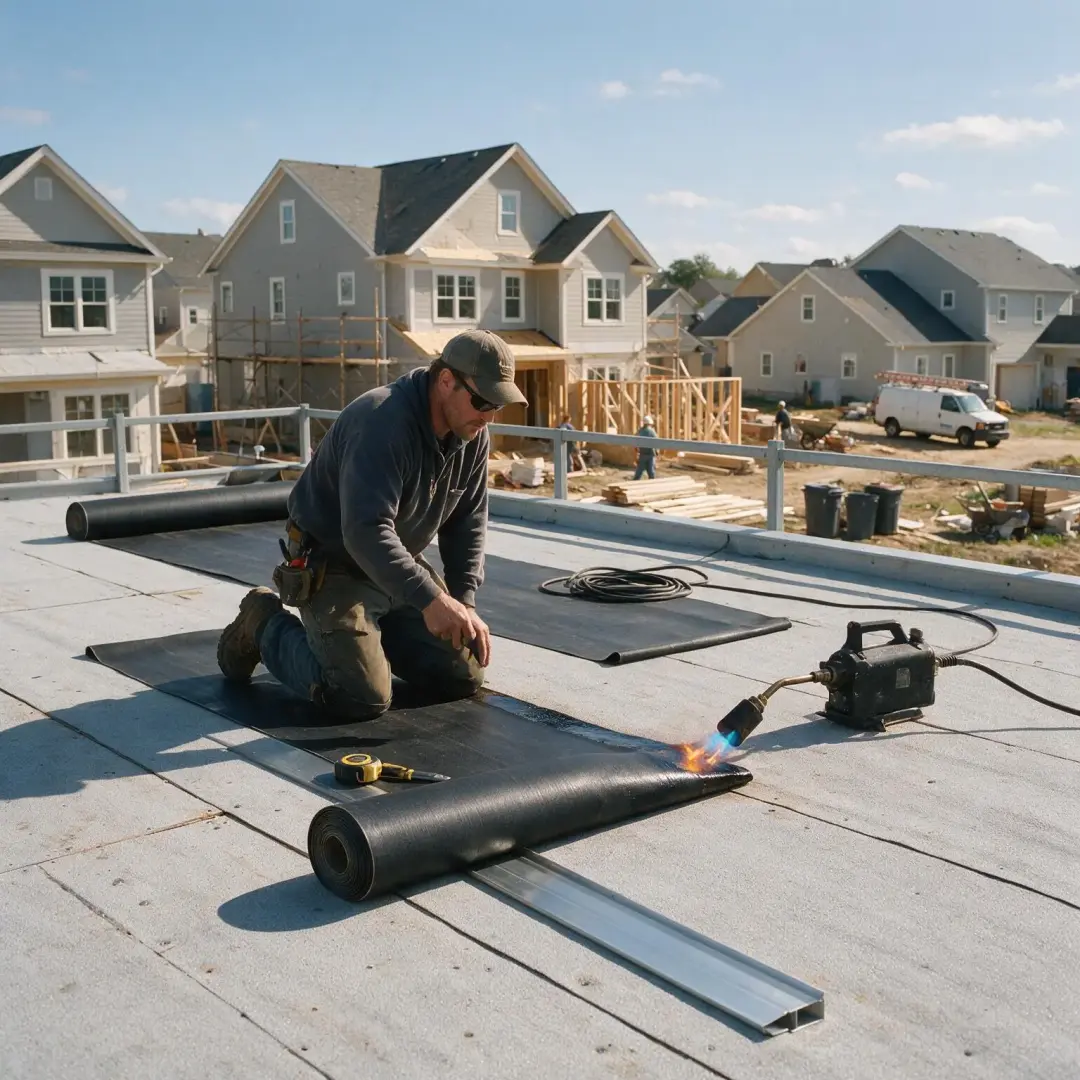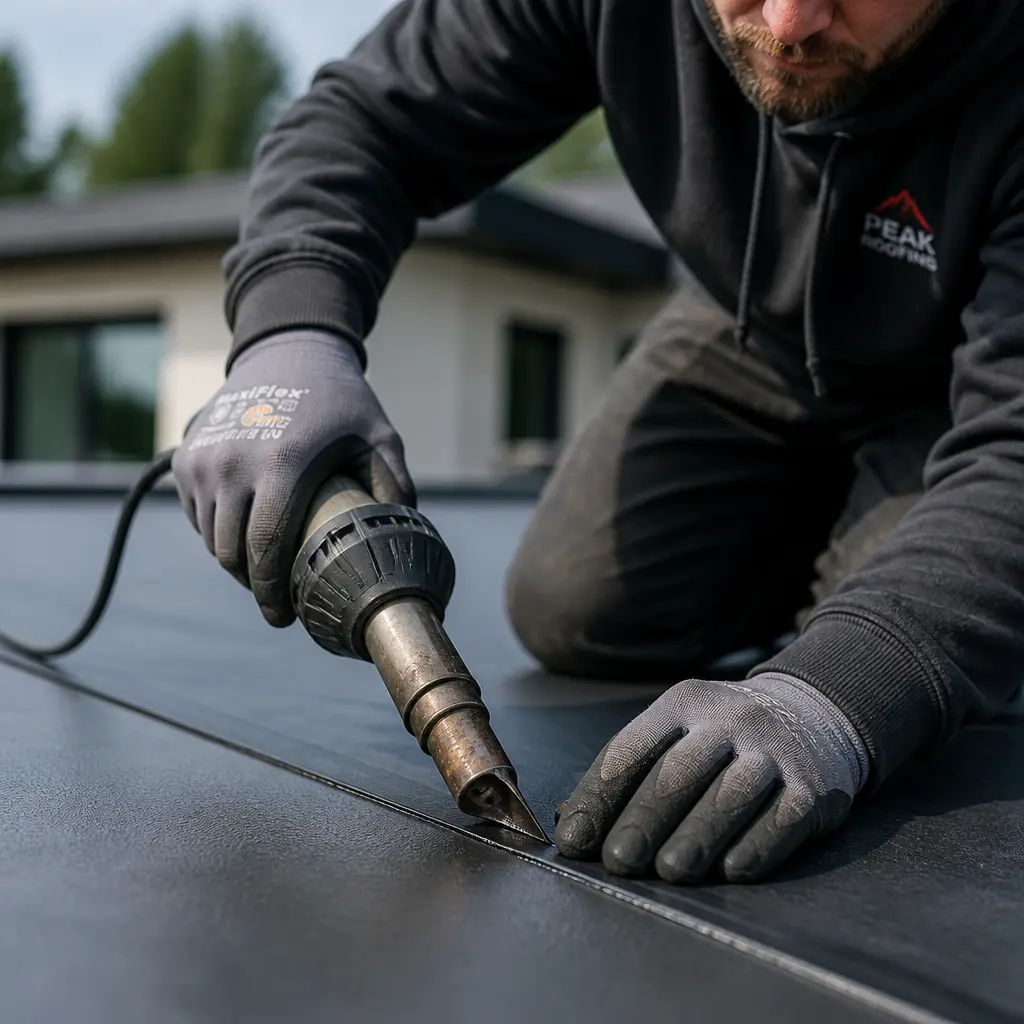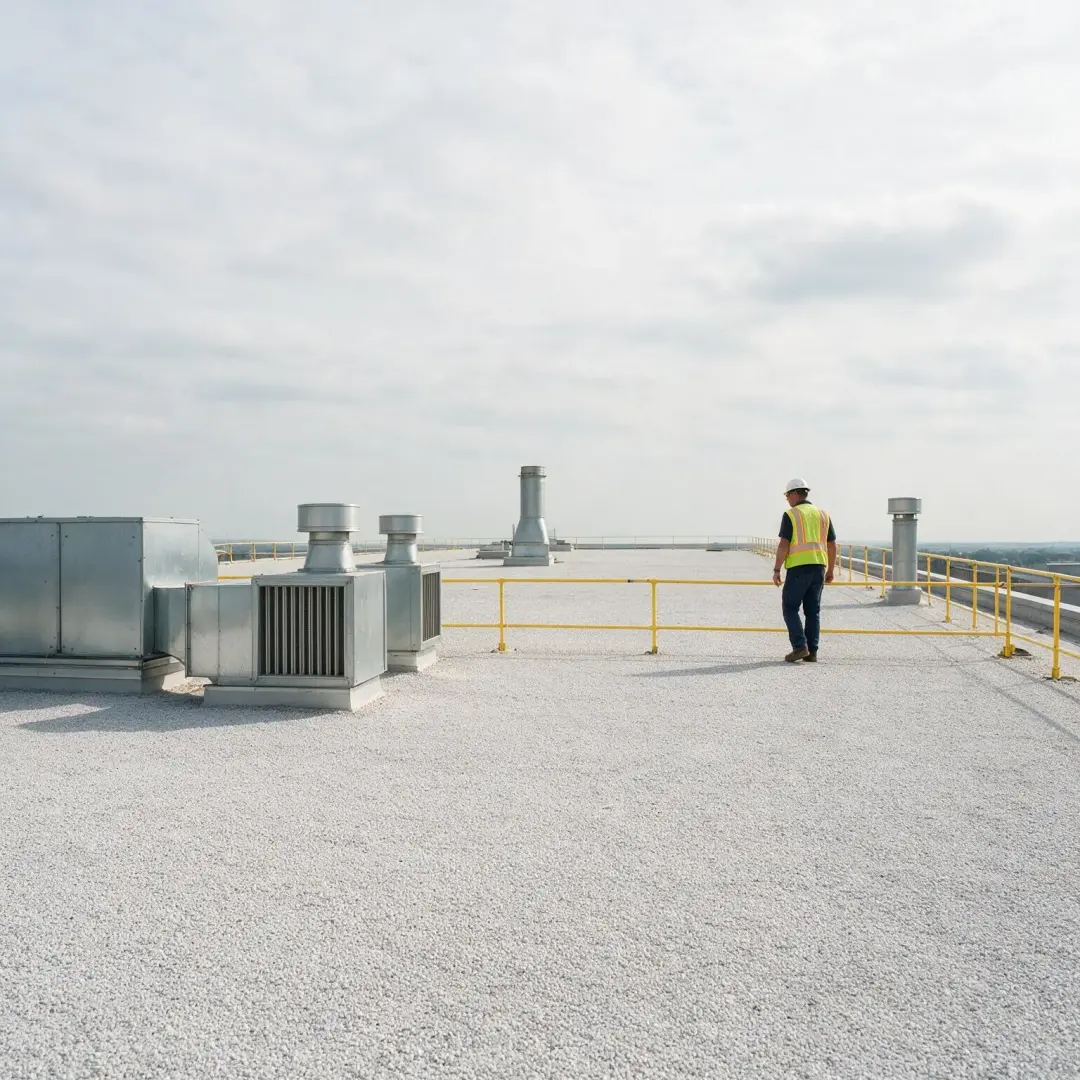
Rain, heat, frost, snow and strong winds can all affect a flat roof. Weather may weaken the surface, block drainage, loosen edges or allow water to reach the insulation and roof deck.
Regular inspections and prompt maintenance can reduce the risk of leaks and costly structural damage. Property owners should pay particular attention after storms, periods of heavy rain and sudden changes in temperature.
Why Does Weather Affect a Flat Roof?
A flat roof has a much lower slope than a pitched roof. It should still have carefully formed falls that move rainwater towards outlets, gutters or drainage channels.
Because water moves away more slowly, blocked outlets or low areas can cause water to remain on the surface. This is often called standing water or ponding.
The roof covering is also exposed to sunlight, changing temperatures, frost, wind and falling debris. Over time, these conditions can place stress on joints, edges and other waterproof details.
A correctly designed and installed roof should be able to manage normal local weather. However, poor drainage, ageing materials, unsuitable repairs or limited maintenance can make weather damage more likely.
- Heavy rain can expose blocked outlets, weak joints and damaged roof coverings
- Standing water adds weight and can speed up surface damage
- Hot weather can cause some materials to expand, soften or lose flexibility
- Frost can enlarge small cracks when trapped water freezes
- Strong winds can lift loose edges, trims and poorly fixed materials
- Snow and ice can add weight while hiding drainage points
The effect of weather depends on the type, age and condition of the roof. Felt, rubber, fibreglass and liquid-applied systems respond differently, so any inspection or repair should suit the material already in place.
How Heavy Rain Can Affect a Flat Roof
Heavy rain can reveal problems that remain hidden during dry weather. Water may enter through a split, open joint, loose edge or poorly sealed connection around a pipe, roof window or wall.
Leaves, moss and other debris can block an outlet and prevent water from leaving the roof. Water may then spread across a larger area or rise above vulnerable details.
The place where a leak appears inside the building may not sit directly below the damaged section. Water can travel along insulation, timber or the underside of the roof deck before becoming visible.
Wet insulation may lose some of its ability to control heat loss. Prolonged moisture can also damage timber decking and increase the risk of mould inside the roof construction.
What Is Standing Water?
Standing water is rainwater that remains on a roof rather than draining away. A small amount of water may remain briefly after rain, but large or long-lasting pools can suggest a drainage or surface-level problem.
Water is heavy. One millimetre of rain falling across one square metre produces about one litre of water, which weighs about one kilogram. This means 25 millimetres of rain across a 20 square metre roof represents about 500 litres of water before drainage.
The roof should be assessed when water remains for an extended period, becomes deeper after each storm or gathers near joints and edges.
How Hot and Sunny Weather Affects a Flat Roof
A flat roof can become much hotter than the surrounding air when it is exposed to direct sunlight. Dark materials normally absorb more heat than lighter or reflective surfaces.
Roofing materials expand as they become warm and contract as they cool. Repeated movement can place stress on seams, joints, edges and connections to walls.
Older felt may become brittle or develop surface cracks. Some materials may soften during very hot weather, while poorly installed coverings may blister or separate from the layer below.
Sunlight can also affect the surface over a long period. Suitable finishes, protective layers and regular maintenance can help limit early wear.
People should not walk on a hot roof unless it is necessary and safe. Some coverings are easier to mark or damage when warm.
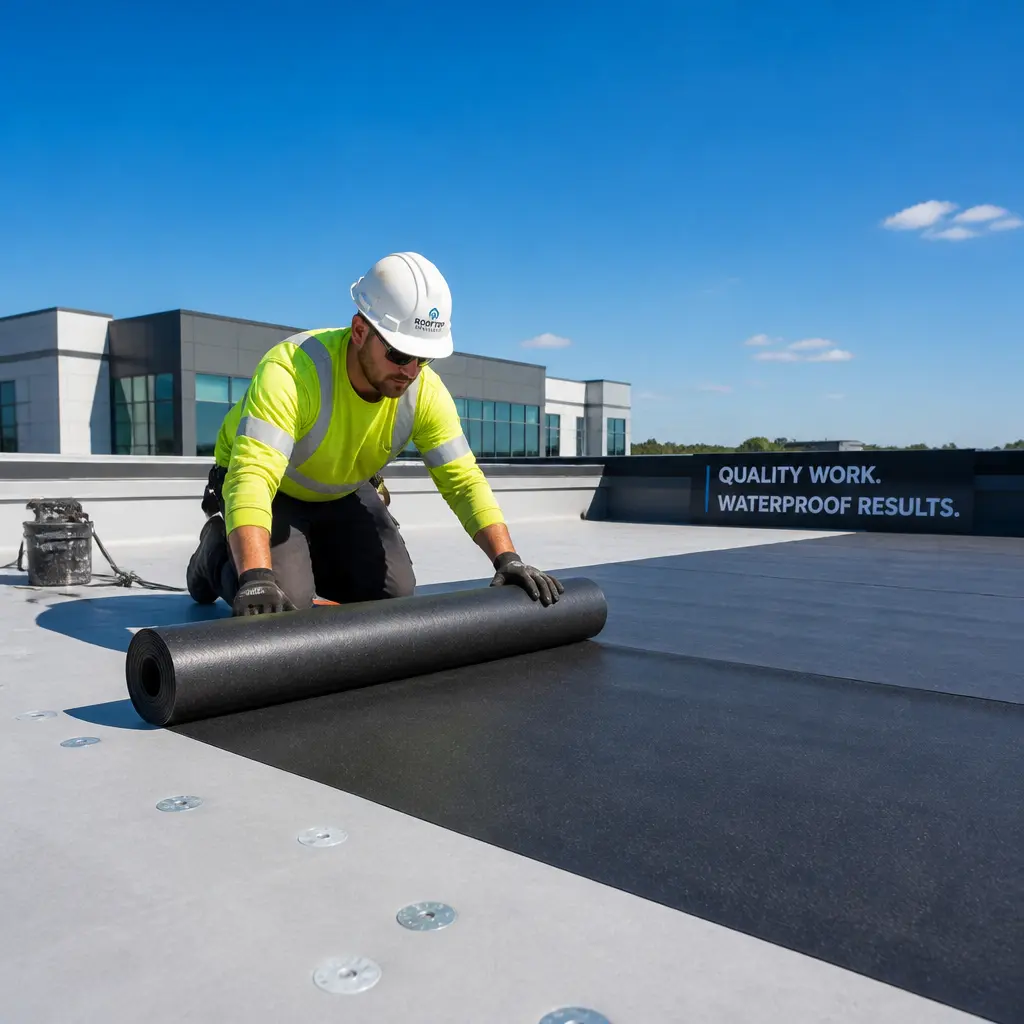
Are Hotter UK Summers a Concern?
Weather records show that warmer conditions are becoming more common across the United Kingdom. The Met Office reported that 2025 was the warmest year in the UK temperature series beginning in 1884.
The average UK temperature for 2025 was 10.09°C. The decade from 2016 to 2025 was also 0.51°C warmer than the 1991 to 2020 average.
These figures do not mean that every roof will suffer heat damage. They do show why roof design, suitable materials, insulation and ventilation should account for changing conditions.
Any coating or repair product should be compatible with the existing roof and applied within the temperature range set by its manufacturer.
How Frost and Freezing Temperatures Cause Damage
Water can enter small cracks, open joints and gaps around roof details. When the temperature falls below freezing, the water can turn to ice and expand.
Repeated freezing and thawing may make an existing crack wider. This process can affect the roof covering, pointing around nearby walls and some edge details.
Ice can also block an outlet or downpipe. Melting water may then remain on the roof because it has no clear route into the drainage system.
Frost may make some older roofing materials less flexible. Walking across a cold and brittle surface can cause avoidable damage.
A roof should not be inspected by an untrained person when it is wet, icy or covered by frost. Safe access and suitable edge protection are essential.
Can Snow Damage a Flat Roof?
Snow adds weight to a flat roof, particularly when it becomes wet, compacted or covered by ice. Drifting can also cause deeper deposits to form against walls and raised sections.
A sound roof should be designed for suitable loads, but existing structural weakness or water-damaged timber may increase the risk of movement.
Snow can cover outlets and make it harder for melting water to drain away. A sudden thaw may produce a large amount of runoff in a short period.
Property owners should not climb onto a snowy or icy roof to clear it. They should seek professional advice if the roof appears to sag, unusual cracking develops or doors and windows below become difficult to open.
Water entering electrical fittings should be treated as an urgent safety concern.
How Strong Winds Affect Flat Roofing
Wind passing across a building can create pressure around roof edges and corners. Loose materials may be lifted, while poorly fixed trims or flashings can move away from the roof.
Damage often begins at a vulnerable edge and then spreads across a larger area. A small loose section should therefore be repaired before another storm makes the problem worse.
Branches, tiles and other windblown objects can puncture or scrape the covering. Debris can also collect around outlets and cause drainage problems during later rainfall.
The United Kingdom experienced six named storms during the 2024 to 2025 storm season. Storm Éowyn in January 2025 was described by the Met Office as the country’s most powerful windstorm for more than a decade.
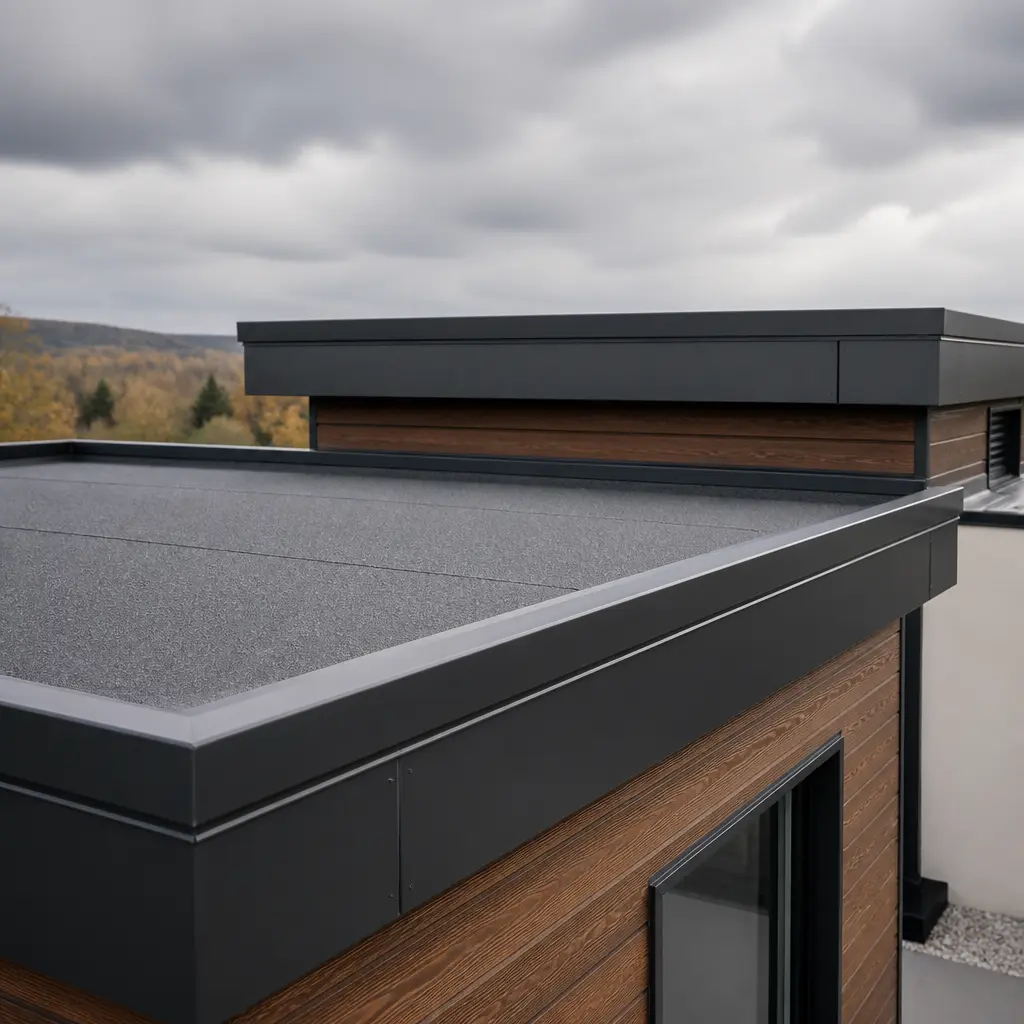
Which Parts Are Most Vulnerable to Wind?
Edges, corners and raised details normally receive greater wind pressure than the central area of a roof. These sections need suitable fixing and careful waterproofing.
Common areas to check after high winds include:
- Perimeter trims and metal edge details
- Felt laps, seams and repaired patches
- Flashings where the roof meets a wall
- Roof windows, vents and pipe connections
- Loose gravel or protective finishes
- Nearby branches and damaged overhanging trees
A visual inspection from ground level may reveal loose material or displaced trims. A closer roof inspection should be completed by a suitable professional.
| Weather condition | Possible effect | What to check |
|---|---|---|
| Heavy rain | Leaks, standing water and overflowing drainage | Outlets, gutters, joints and ceilings below |
| Strong sunlight | Expansion, surface ageing and cracking | Blisters, splits, exposed areas and seams |
| Frost and ice | Larger cracks and blocked outlets | Existing defects, drainage points and edges |
| Strong wind | Lifted coverings, loose trims and impact damage | Corners, perimeter details, flashings and debris |
| Snow | Added weight and hidden drainage points | Sagging, internal cracking and water after thawing |
Weather damage can develop in several ways at the same time. A professional inspection may be needed to find the full cause.
How Sudden Temperature Changes Affect Roofing Materials
A roof can become warm in direct sunlight and cool quickly when cloud, rain or night-time temperatures arrive. This change causes the materials to expand and contract.
Different parts of the roof may move at different rates. The waterproof covering, timber deck, metal trims and nearby walls do not always respond to temperature in the same way.
Well-designed joints and flexible details allow a suitable amount of movement. Problems can develop when a material has become brittle, a joint is too tight or two unsuitable products have been joined together.
Common signs include straight cracks near joints, open seams, raised sections and splits around fixed objects.
A patch may stop water for a short period, but repeated movement can cause it to fail unless the reason for the damage is addressed.
How Weather Affects Different Flat Roofing Materials
Each flat roofing material has its own strengths and maintenance needs. The quality of the installation is as important as the material itself.
Felt may become brittle as it ages and can develop cracks or loose laps. A mineral surface helps protect some felt systems from sunlight.
Ethylene propylene diene monomer rubber is flexible and can manage normal temperature movement. However, damage can occur at poorly formed seams, edges or penetrations.
Glass-reinforced plastic forms a hard surface. It needs suitable joints and a stable deck because movement can place stress on rigid sections.
Liquid-applied systems can cover detailed shapes, but their performance depends on correct preparation, suitable thickness and dry installation conditions.
Can Weather Affect a New Flat Roof Installation?
Weather can affect both the timing and quality of flat roof work. Many products should not be installed on wet, frozen or dirty surfaces.
Rain can wet the roof deck or insulation before the waterproof layer is complete. Trapping moisture beneath the new covering may lead to blisters, decay or poor bonding.
Cold conditions can affect adhesives, coatings and curing times. Very hot weather may cause some products to dry too quickly or become difficult to handle.
Strong wind can make large sheets and loose materials unsafe to control. It can also carry dust and dirt onto prepared surfaces.
The contractor should follow the product instructions and protect the building if the roof cannot be made fully waterproof in one day.
Why Flat Roof Drainage Is Important
Drainage is one of the most important parts of a flat roof. The surface should direct water towards correctly sized outlets, gutters or downpipes.
New national standards for sustainable drainage systems were published for England in 2025. They state that drainage should account for everyday rainfall, extreme rainfall, climate change and future maintenance.
The standards also call for the latest rainfall data to be used when drainage is designed. Although they cover wider development drainage rather than individual roof repairs, they show the importance of planning for both frequent and severe rain.
Existing roofs should be checked for blocked outlets, poorly positioned drainage points and low areas. Adding a new covering without correcting a drainage fault may allow the same problem to return.
What Are the Signs of Weather Damage?
Some damage is easy to see, while other problems remain beneath the surface. Property owners should look for changes rather than waiting for a serious leak.
Possible warning signs include:
- Water remaining on the roof after surrounding areas have dried
- Splits, cracks, bubbles or raised sections
- Loose edges, trims or flashings
- Blocked, damaged or overflowing outlets
- Water marks on ceilings and walls
- Peeling paint, damp smells or visible mould
- Soft or uneven areas on the roof surface
- Loose materials following strong winds
Electrical fittings near a leak should not be touched. The affected area should be made safe and checked by a suitable professional.
When Should a Flat Roof Be Inspected?
A flat roof should be inspected regularly and after severe weather. The suitable timing will depend on the building, roof material, surrounding trees and previous problems.
An inspection is particularly useful after heavy rain, high winds, snow or a long period of hot weather. It may also be needed when water marks appear inside the building.
Commercial buildings and roofs containing equipment may require a planned maintenance schedule. Records and photographs can help identify gradual changes.
Inspections should cover the surface, perimeter, wall joints, outlets, gutters, roof windows, pipes and visible internal areas below.
People should not access an unprotected roof without suitable training and safety equipment. A ground-level check is safer when professional access has not been arranged.
How Can You Protect a Flat Roof from Bad Weather?
No roof can avoid all weather exposure, but planned maintenance can lower the risk of avoidable damage.
A suitable maintenance plan should include:
- Keeping outlets, gutters and downpipes clear
- Removing loose leaves and debris safely
- Repairing small splits and loose edges promptly
- Checking seals around pipes, vents and roof windows
- Cutting back branches that touch or overhang the roof
- Recording standing water and repeated leak locations
- Using products that are compatible with the roof system
Maintenance should address the cause of a problem. Covering a crack without checking drainage, movement or wet materials below may provide only a temporary result.
Should You Repair or Replace a Weather-Damaged Roof?
A local repair may be suitable when the damage is limited and the surrounding roof remains secure, dry and in reasonable condition.
Replacement may be more suitable when there are several leaks, widespread cracking, repeated storm damage, wet insulation or rotten decking.
The age of the covering should also be considered. Repairing one section may offer poor value when other areas are likely to fail soon.
A roof survey should identify the likely entry point, the condition of the drainage and any signs of hidden moisture. The contractor should explain whether the proposed repair is temporary or expected to provide a lasting solution.
The decision should be based on the full roof system rather than the appearance of the surface alone.
Can Roof Insulation Reduce the Effect of Weather?
Insulation helps control heat movement between the building and the roof. In a correctly designed warm roof, insulation is normally placed above the structural deck and below the waterproof covering.
This arrangement can help keep the deck at a more stable temperature and reduce the risk of condensation. It does not prevent the outer covering from being exposed to rain, sunlight and wind.
Insulation must form part of a complete design that also considers moisture control, ventilation where required, edge heights and drainage.
Wet insulation should not simply be covered by a new membrane. The cause and extent of the moisture must be checked first.
Building requirements may apply when a flat roof is replaced or significantly altered, so suitable professional advice should be obtained.
Current UK Weather and Climate Statistics
The Met Office reported that 2025 was both the warmest and sunniest year recorded in the United Kingdom. Its average temperature was 10.09°C.
The United Kingdom received 1,041.2 millimetres of rain during 2025, equal to about 90% of its 1991 to 2020 annual average.
Rainfall was not evenly spread through the year. Spring 2025 was the United Kingdom’s sixth driest spring and England’s second driest since records began in 1836. Wetter conditions returned during parts of the autumn and winter.
These figures show that roofs need to manage a mixture of dry, sunny periods and sudden wet or stormy conditions rather than one single weather pattern.
Does Climate Change Matter for Flat Roofs?
The Met Office reports that the United Kingdom is becoming warmer and that temperature extremes are becoming more frequent and intense.
Higher temperatures may increase movement and heat stress within roofing materials. More intense rainfall can place greater pressure on outlets, gutters and surface water systems, even when the annual rainfall total is not unusually high.
This does not mean that every existing roof must be replaced. It does mean that repairs and new installations should consider suitable drainage, secure edge fixing, compatible materials and safe maintenance access.
Property owners may also consider reflective surfaces, improved insulation or rainwater management where these measures are suitable for the building.
Any major change should be designed as part of the full roof system and should meet current building requirements.
What Should Be Checked After a Storm?
Start with a safe visual check from ground level. Look for loose trims, hanging materials, damaged branches and overflowing gutters.
Inside the building, check ceilings, upper walls, roof windows and nearby electrical fittings for water marks or dampness.
A professional roof inspection should consider:
- New punctures, cracks or open seams
- Movement at corners and perimeter edges
- Damage around pipes, vents and roof windows
- Blocked outlets and unexpected standing water
- Loose protective material or windblown debris
- Signs that water has reached the deck or insulation
Temporary coverings should be securely installed and must not create a further wind hazard.
Can Small Weather Damage Become a Larger Problem?
A small split or loose edge may allow only a limited amount of water to enter at first. Continued rainfall and temperature movement can make the opening larger.
Once water reaches the insulation or deck, the visible surface defect may no longer show the full extent of the damage.
Repeated wetting can weaken timber, affect internal finishes and create damp conditions. The cost of work may then rise because materials below the covering also need to be replaced.
Early repairs are not always possible during severe weather, but the area should be made safe and protected until a suitable permanent repair can be completed.
A professional should check recurring leaks rather than repeatedly treating the internal stain.
Frequently Asked Questions
```Can Heavy Rain Cause a Flat Roof to Leak?
Heavy rain can enter through existing cracks, failed seams, loose edges and poorly sealed roof details. It can also overwhelm blocked or unsuitable drainage. The rain does not always create the original defect, but it often reveals it.
How Long Can Water Remain on a Flat Roof?
Water should move towards the drainage system. Large or deep pools that remain for an extended period should be investigated, particularly when they occur near joints, edges or roof openings.
Can Hot Weather Melt a Flat Roof?
A suitable roofing system should cope with normal local summer temperatures. However, some surfaces can soften or become easier to damage when very hot. Age, poor installation and unsuitable products may increase the risk.
Should a Flat Roof Be Checked After Strong Winds?
Yes. Strong winds may loosen edges, trims, flashings and existing repairs. Windblown debris can also puncture the surface or block drainage points.
Can Frost Cause Roof Cracks?
Frost can make existing cracks worse when trapped water freezes and expands. Older materials may also become more brittle in cold conditions.
Is It Safe to Clear Snow from a Flat Roof?
Property owners should not climb onto a snowy or icy roof. The surface may be slippery, hidden openings may be present and removing snow unevenly can create other risks. Professional advice should be obtained when there is concern about the roof load.
How Often Should a Flat Roof Be Maintained?
The correct schedule depends on the roof, building and surrounding area. Regular planned checks and additional inspections after severe weather can help find problems early.
How Can You Keep a Flat Roof Weather-Ready?
A weather-ready flat roof begins with a sound covering, suitable drainage and secure edges. Regular checks can then identify small changes before water reaches the structure below.
Outlets and gutters should be kept clear, particularly during autumn and after storms. Cracks, open joints and loose trims should be repaired using products that suit the existing system.
Inspections should also consider the roof deck, insulation and internal areas rather than concentrating only on the visible covering.
Weather cannot be controlled, but its effect can often be reduced through suitable design, correct installation and planned maintenance.
When damage is widespread or a leak keeps returning, a full professional assessment is more useful than another surface patch.
Has rain, wind, frost or hot weather damaged your flat roof? Colmore Roofing Contractors can inspect the roof covering, edges, drainage, insulation and deck before recommending suitable repairs. Contact the team to arrange a professional flat roof assessment in Birmingham, Dudley or Wolverhampton.