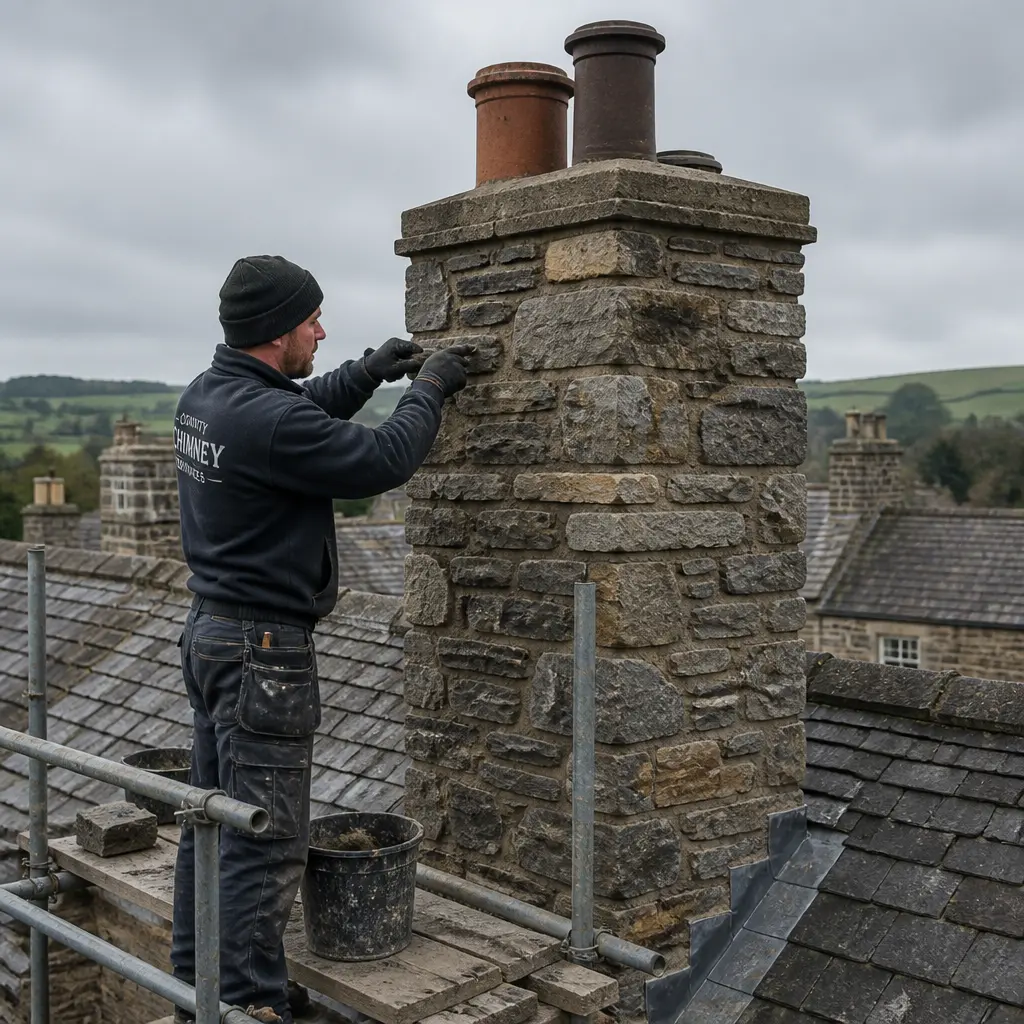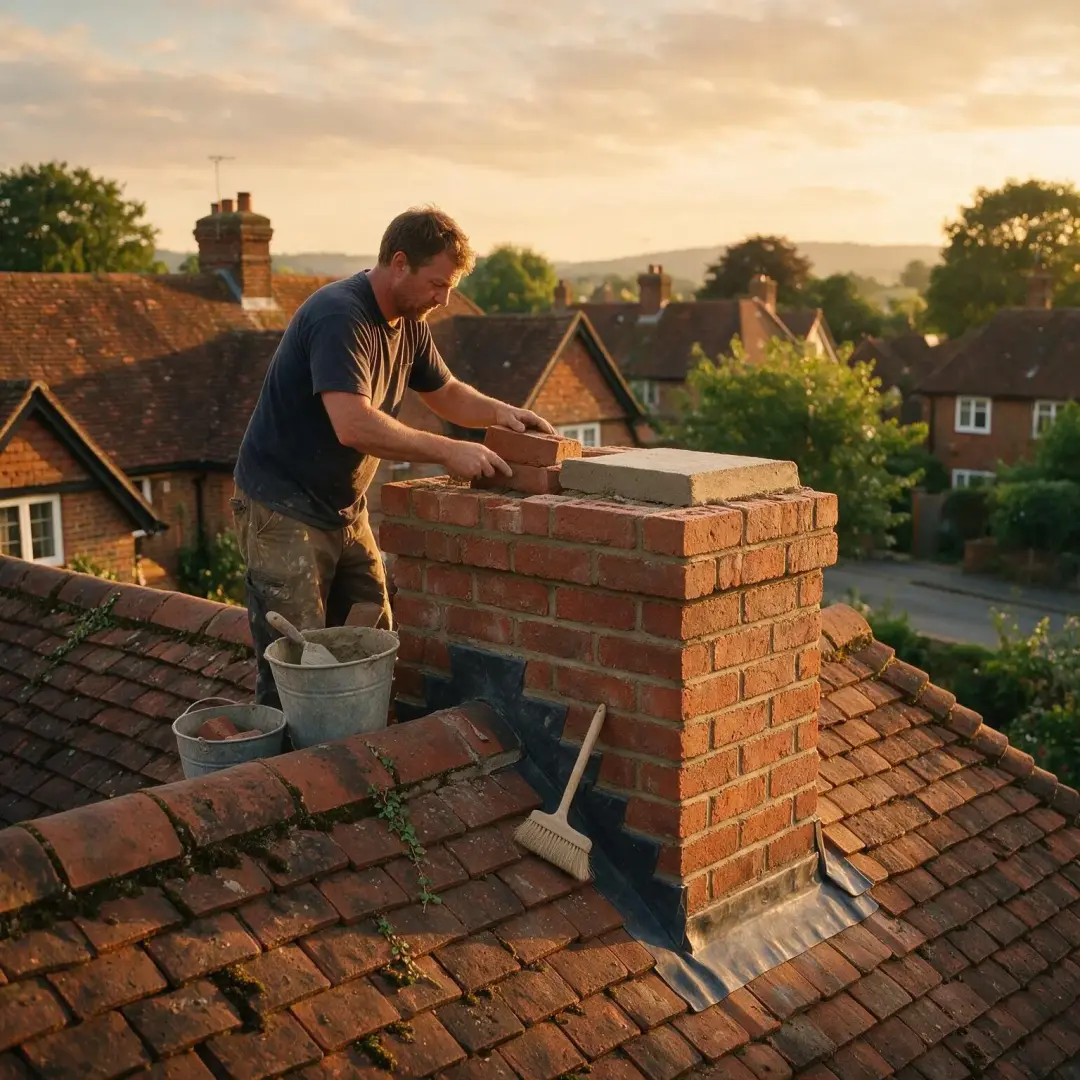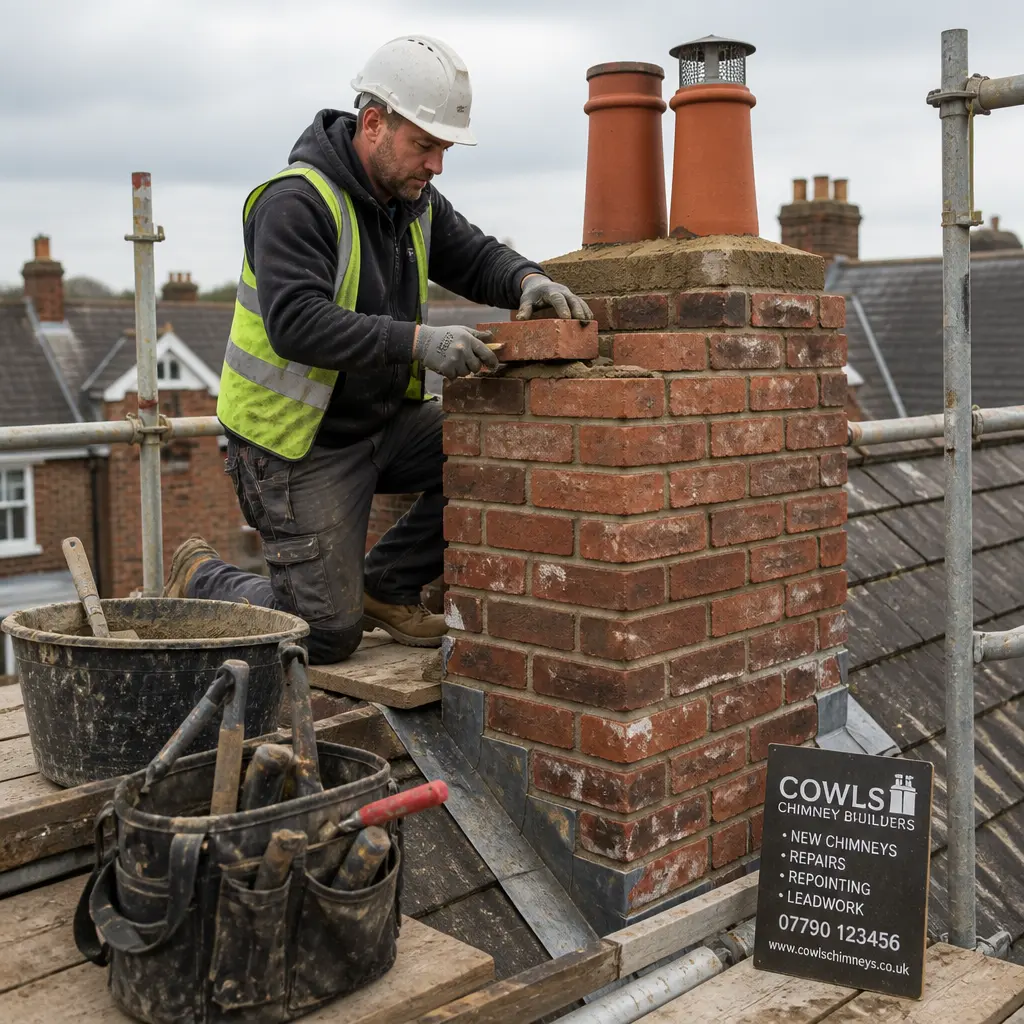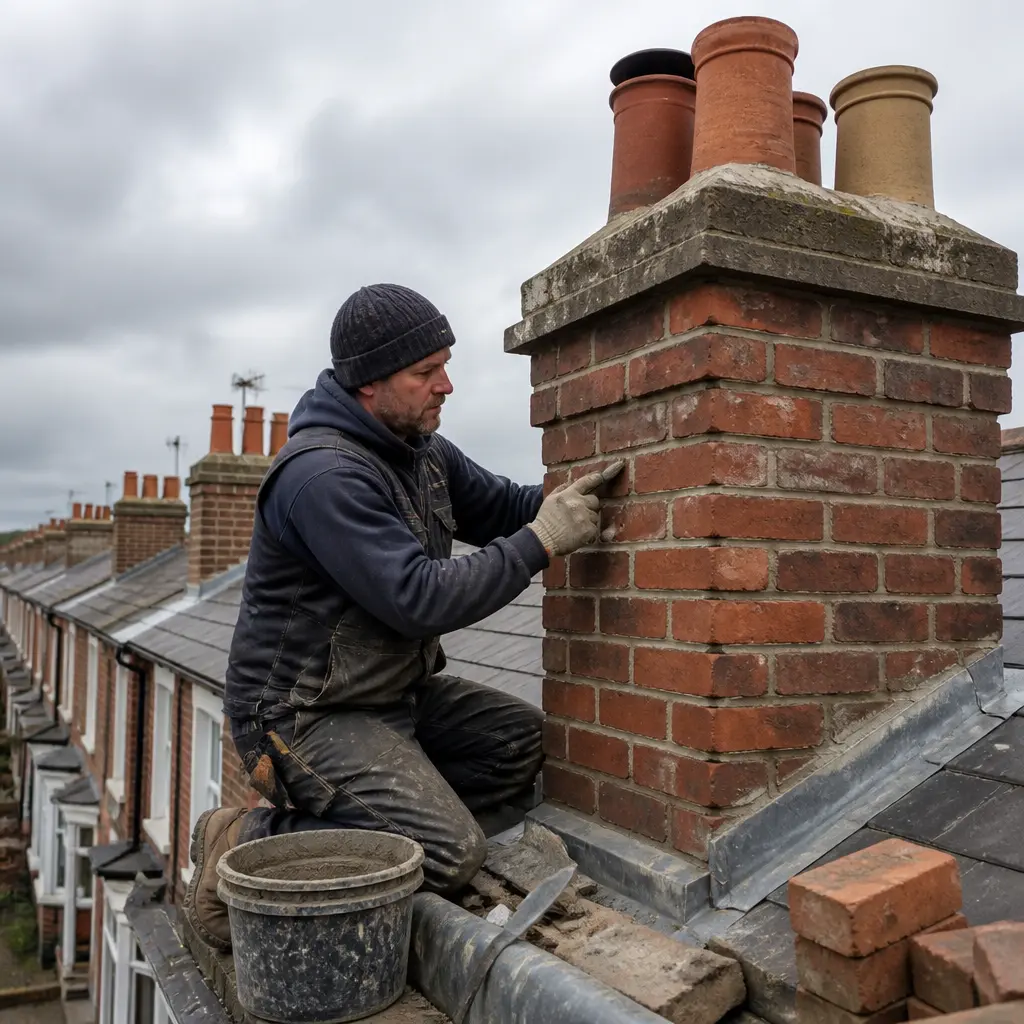
Chimney repairs can become expensive when small problems, such as loose mortar, damaged flashing or soot build-up, are allowed to get worse. Regular sweeping, inspections and prompt maintenance can help protect the chimney, roof and rooms below.
Problems involving smoke, fire, carbon monoxide, falling masonry or an unstable chimney should always be assessed by a suitably trained professional.
Why Is Preventive Chimney Maintenance Important?
A chimney is exposed to rain, frost, wind, heat and combustion gases throughout the year. These conditions can gradually damage bricks, mortar, flashing, chimney pots and the internal flue.
Early damage may appear minor. A small crack in a mortar joint, for example, can allow water to enter the stack. During cold weather, this water may freeze and expand, causing the crack to grow and nearby bricks to break apart.
Water can also travel through failed flashing and affect roof timbers, ceilings, plaster and decorations. A repair that begins as local repointing can become a much larger rebuilding or roofing project if it is ignored.
Regular maintenance also supports the safe operation of open fires, stoves and other fuel-burning appliances. Blocked or damaged flues can prevent smoke and gases from leaving a property safely.
- Fire and rescue services attended 2,019 chimney fires in England in the year ending March 2025
- This was 5.5% lower than the 2,136 chimney fires recorded in the previous year
- Chimney fires were 61% lower than they were ten years earlier
- Fire and rescue services attended 142,494 fires of all types during the same year
- Repair and maintenance construction output grew by 2.1% in the three months to May 2026
Although chimney fire numbers have fallen over the longer term, more than two thousand incidents still required an emergency response in one year. Regular sweeping, suitable fuel and early repairs remain important for any property with a working chimney.
Arrange Regular Chimney Inspections
A regular inspection can identify damage before it becomes visible inside the property. The check should cover the chimney pot, mortar flaunching, brickwork, pointing, flashing and the area where the stack meets the roof.
The internal flue may also need to be checked, particularly when a fire or stove is used regularly. A camera survey can help identify cracks, blockages, separated liner sections and fallen masonry that cannot be seen from either end of the chimney.
The right inspection schedule will depend on the age of the property, the chimney’s condition, the type of appliance and how often it is used. It is also sensible to arrange an inspection after severe weather, a chimney fire or any major work to the roof.
Photographs from the inspection can provide a useful record. They allow changes in cracks, mortar joints and brick surfaces to be compared over time.
Have Working Chimneys Swept
Soot and creosote can collect inside a working chimney. Creosote is a combustible deposit that can form when wood and other fuels do not burn cleanly.
Heavy deposits can reduce the space available for smoke and gases to escape. They may also increase the risk of a chimney fire and hide damage within the flue.
The sweeping schedule should be based on the appliance, fuel and amount of use. A professional chimney sweep can inspect the deposits and advise how often the work should be completed.
The chimney should normally be swept before the main heating season begins. A second sweep may be needed where an appliance is used heavily or where deposits form quickly.
Keep a record of each sweep, including any faults or recommendations reported by the chimney sweep.
Burn Suitable, Dry Fuel
Fuel quality can have a direct effect on the amount of soot and creosote produced. Wet wood burns at a lower temperature and creates more smoke, moisture and deposits than properly dried wood.
Only fuel that is suitable for the appliance should be burned. Household rubbish, painted timber, treated wood and unsuitable plastics can release harmful gases and create damaging deposits.
Logs should be stored in a dry, ventilated place and protected from direct rain. Air should be able to move around the wood rather than being trapped beneath an airtight cover.
The appliance should be operated according to its instructions. Leaving a fire to burn at a very low level for long periods can encourage incomplete combustion and faster deposit build-up.
Avoid Long Periods of Low-Temperature Burning
A fire that receives too little air may burn poorly and create more smoke. This smoke cools as it rises through the chimney, allowing deposits to collect on the inside of the flue.
Do not close the appliance controls further than recommended by the manufacturer. Air vents should also be kept clear and should not be blocked to stop draughts.
Repeated glass blackening, heavy smoke or unusually rapid soot build-up may suggest that the appliance is not burning correctly. Arrange for the appliance and flue to be checked rather than continuing to use them in the same way.
Repair Damaged Mortar Before Water Gets In
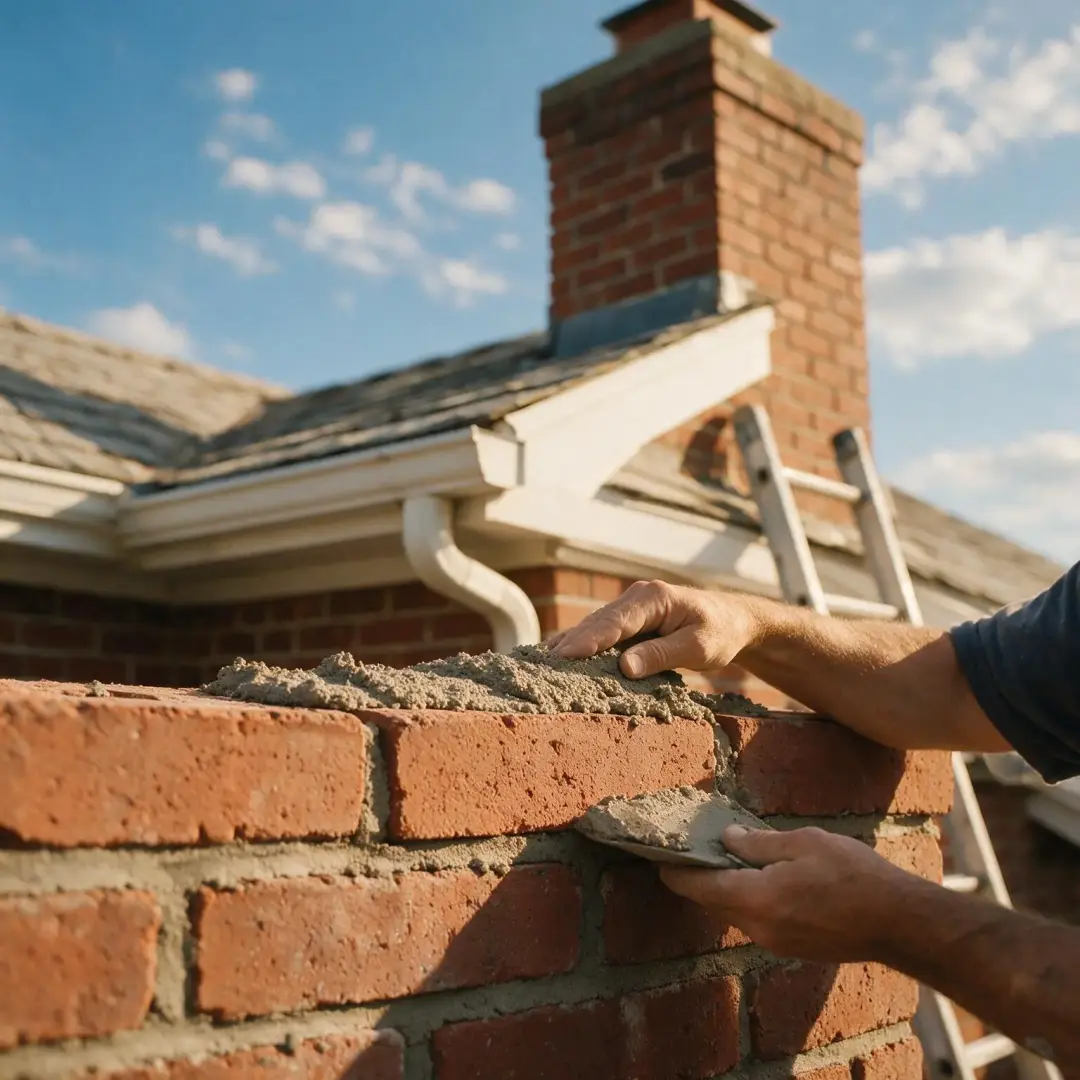
Mortar joints protect the gaps between chimney bricks. Over time, rain, frost and changing temperatures can cause the mortar to crack, loosen or wash away.
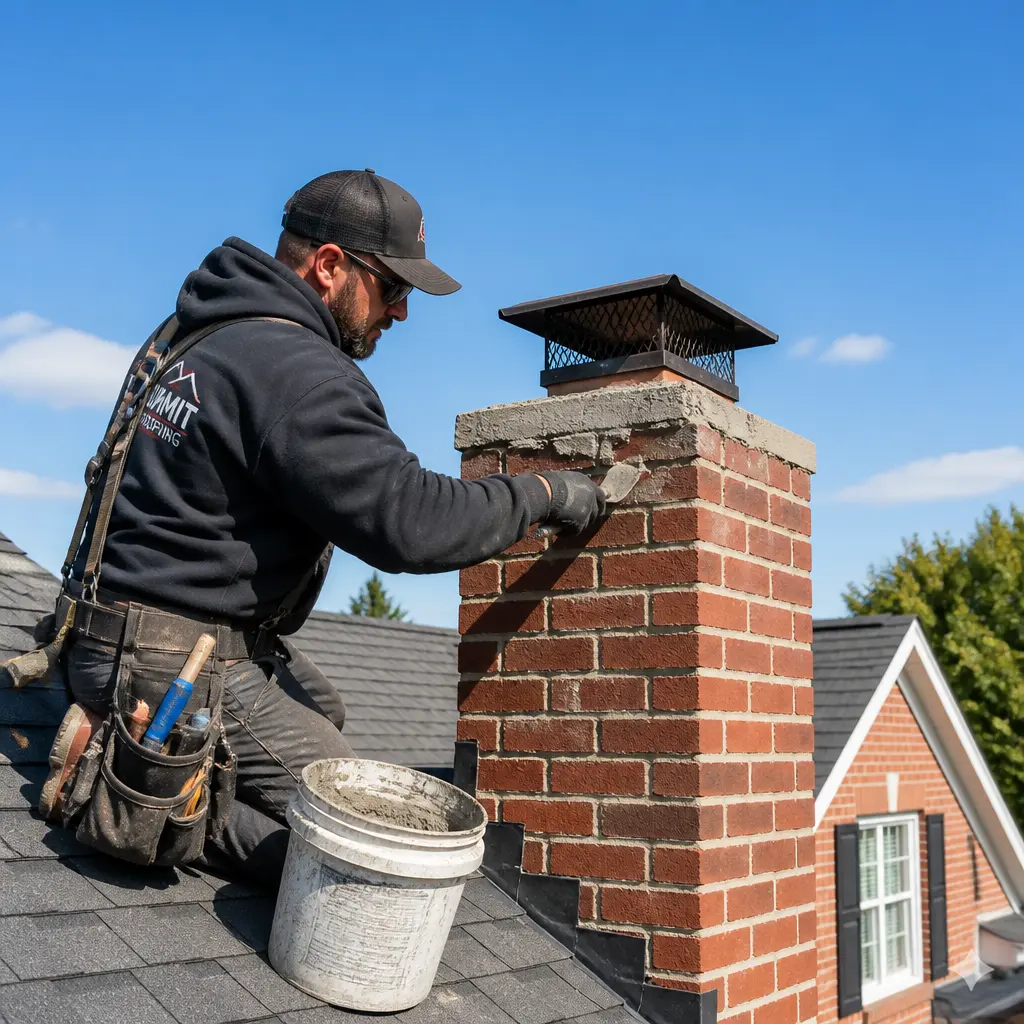
Early repointing can reduce water entry and help maintain the strength of the stack. The loose material should be removed to a suitable depth before the joints are cleaned and filled with compatible mortar.
Applying a thin layer of new mortar over damaged joints is unlikely to provide a lasting repair. It can separate from the old surface and leave the original fault in place.
The replacement mortar should suit the age and type of brickwork. Mortar that is much harder than the bricks may trap moisture or cause the brick faces to fail, particularly on older properties.
Loose mortar on the roof, deep cracks or visible movement should be assessed promptly.
Check the Chimney Flashing
Flashing seals the joint between the chimney and the roof. It prevents rainwater from passing through the gap and entering the roof space.
Loose, split, missing or poorly fitted flashing can lead to damp ceilings, damaged plaster and wet roof timbers. Water may travel along roof materials before it becomes visible, so an indoor stain may not be directly below the opening.
Check for lifted edges, cracks, gaps and signs of past sealant repairs. Nearby roof tiles, valleys and underlay should also be examined.
A small local fault may sometimes be repaired, but badly worn flashing will usually need to be replaced. Thick layers of general sealant should not be treated as a permanent answer.
Maintain Chimney Pots, Cowls and Flaunching
The chimney pot and the mortar around its base are exposed to strong winds, rain and frost. Cracks or failed mortar can allow water into the flue and may leave the pot unstable.
Damaged pots should be repaired, reset or replaced before they become loose. The replacement must suit the chimney, appliance and flue size.
A suitable cowl may help reduce rain entry or prevent birds from nesting in the flue. However, the wrong product can restrict airflow and affect the safe operation of the appliance.
A working chimney must not be covered with a cap that blocks the flue. An unused chimney will normally still need controlled ventilation to limit condensation.
Any damaged or missing bird guard should be replaced with a product that is suitable for the fuel and appliance.
Act Quickly When Damp Appears
Damp around a chimney may be caused by failed flashing, cracked mortar, damaged bricks, an open chimney pot or condensation inside an unused flue.
The source should be found before the wall is painted or replastered. Covering a stain may improve its appearance for a short time, but it will not stop further water entry.
Long-term damp can damage plaster, decorations, roof timbers and nearby electrical fittings. Moisture can also make frost damage to the outside of the chimney more severe.
Avoid covering chimney brickwork with a waterproof coating without professional advice. Some coatings can trap moisture inside the masonry and make deterioration worse.
Keep Unused Chimneys Ventilated
An unused chimney can still cause damp, draughts and damage. Blocking the chimney completely at both ends may trap moisture inside the flue.
Rain protection should be provided at the top while maintaining suitable airflow. The correct method will depend on whether the fireplace remains open, has been sealed or may be used again later.
Old soot and salts can continue to affect plaster after a fireplace is no longer used. Damaged internal finishes may need to be removed once the source of moisture has been corrected and the wall has dried.
The outside of an unused stack still needs maintenance. Pots, flashing, mortar and bricks can fail even when no appliance is connected.
Watch for Early Warning Signs
Regular checks from ground level may reveal developing faults. Warning signs should not be ignored simply because the fire or stove appears to work normally.
Look for loose mortar, cracked pots, flaking bricks, leaning sections, damaged flashing and plants growing from the stack. Inside the property, check for damp marks, soot stains, unusual smells and falling debris.
Smoke entering a room, a strong soot smell or repeated difficulty keeping a fire alight may indicate a blockage, poor draw or flue damage.
| Warning sign | Possible cause | Recommended action |
|---|---|---|
| Loose or missing mortar | Weather damage or frost action | Arrange repointing before more water enters |
| Damp near the chimney | Failed flashing, damaged masonry or condensation | Inspect the roof, stack and flue |
| Smoke entering a room | Blocked flue, poor draw or inadequate ventilation | Stop using the appliance and arrange an inspection |
| Cracked chimney pot | Frost, age or impact damage | Repair or replace it before it becomes unstable |
| Falling soot or debris | Heavy deposits, damaged liner or loose masonry | Arrange sweeping and a flue inspection |
| A leaning chimney stack | Structural movement or weakened masonry | Keep the area clear and request an urgent assessment |
Protect the Chimney From Birds and Debris
Birds may build nests inside open chimney pots, particularly when a flue is not used during spring and summer. Leaves, twigs and other material can also enter an unprotected chimney.
A complete or partial blockage can cause smoke and gases to return to the room. Dry nesting material may also catch fire.
A suitable bird guard or cowl can reduce the risk, but it must allow enough airflow and be approved for the connected appliance and fuel.
Do not light a fire to remove a suspected nest. Active nests and wild birds may have legal protection, so professional advice should be obtained before any removal work begins.
The chimney should be swept and inspected before it is used again.
Service the Appliance and Check Ventilation
A well-maintained chimney cannot correct faults within a damaged or poorly installed appliance. Fires, stoves and other fuel-burning appliances should be serviced at the intervals recommended by the manufacturer.
The service should check seals, controls, internal parts and the connection between the appliance and the flue.
Room ventilation must also be kept clear. Blocking air vents can reduce the supply of oxygen available for combustion and prevent the chimney from drawing correctly.
Extractor fans may affect chimney performance in some properties. This is more likely in modern or heavily insulated homes with limited natural airflow.
Repeated smoke entry or poor appliance performance should be investigated rather than accepted as normal.
Fit and Test Carbon Monoxide Alarms
Carbon monoxide is a poisonous gas produced when fuel does not burn completely. It cannot be seen, tasted or smelled.
A blocked flue, damaged liner, faulty appliance or poor ventilation may allow the gas to collect inside a property.
Fit suitable carbon monoxide alarms in the positions recommended by the product and appliance instructions. Test them regularly and replace them when they reach the end of their stated service life.
Alarms provide an important warning, but they do not replace sweeping, servicing or repairs.
Leave the property and seek urgent help if an alarm sounds or if people inside develop symptoms such as headaches, dizziness, sickness, weakness or confusion.
Do Not Delay Repairs After Severe Weather
Strong winds, heavy rain, snow and frost can expose existing chimney weaknesses. A loose pot, damaged cowl or weakened brick may move during bad weather.
Inspect the chimney from a safe position after a severe storm. Look for debris on the roof or ground, changes in the stack’s position and missing sections of mortar.
Do not climb onto a wet or damaged roof. Safe access equipment and suitable fall protection are normally required for a close inspection.
Keep people and vehicles away from the area below if materials appear likely to fall.
Avoid Temporary Repairs That Hide the Problem
Quick surface repairs may hide a fault without correcting its cause. Common examples include covering failed flashing with thick sealant, filling mortar cracks with general-purpose filler and painting over damp stains.
These methods can make the chimney look better for a short period while water continues to enter behind the repair.
Unsuitable materials may also trap moisture or make later repairs more difficult. The work should use products that are compatible with the chimney, roof and age of the building.
A written repair plan should explain what has failed, why it has failed and how the proposed work will prevent the problem from returning.
Choose a Suitable Chimney Contractor
The correct professional will depend on the fault. Chimney maintenance may involve a chimney sweep, roofer, builder, heating installer or structural specialist.
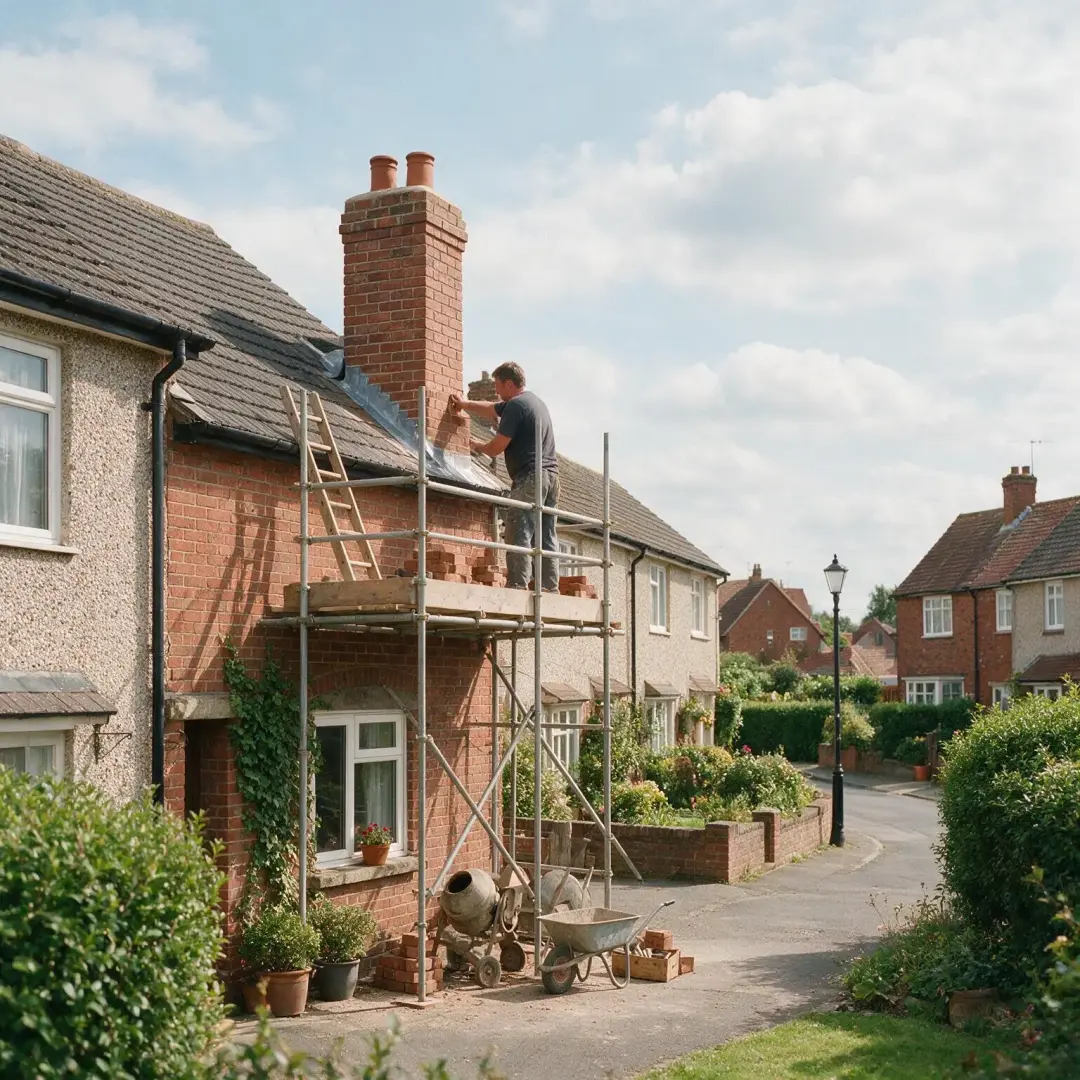
Ask about experience with similar chimneys and properties. The contractor should have suitable insurance and safe access equipment for the proposed work.
A detailed quotation should identify the problem, repair method, materials, access costs, waste removal and any testing required after completion.
Be cautious about quotations based only on a brief ground-level inspection when the full chimney cannot be seen.
Photographs taken before, during and after the repair can help confirm what work has been completed.
A chimney maintenance quotation should normally cover:
- Inspection: The visible faults and any further checks required
- Access: Scaffolding, towers, roof ladders and safety equipment
- Brickwork: Repointing, brick replacement or rebuilding
- Chimney pot: Resetting, replacement, cowls or bird guards
- Weather protection: Flashing, mortar flaunching and roof junctions
- Flue work: Sweeping, testing, inspection or relining
- Waste: Removal and lawful disposal of old materials
- Guarantees: Written terms for materials and workmanship
Can You Maintain a Chimney Yourself?
Property owners can complete basic checks from ground level, test alarms and look for visible damp or debris. Most chimney work should not be treated as a household task.
Working at roof height creates a serious fall risk. Loose pots, bricks and damaged sections of a chimney may also move without warning.
Do not attempt to test a blocked chimney by lighting a fire. Do not climb onto the roof without suitable training, access equipment and protection.
Flue repairs and appliance connections must be suitable for the fuel and appliance. Incorrect work could allow smoke or carbon monoxide to enter the property.
Current Chimney Fire and Construction Statistics
Official figures show that fire and rescue services in England attended 2,019 chimney fires in the year ending March 2025.
This was 5.5% lower than the 2,136 chimney fires recorded in the previous year. It was also 61% below the 5,190 incidents recorded ten years earlier.
Across all fire types, services attended 142,494 fires during the year ending March 2025. This was an increase of 2.5% compared with the previous year.
Office for National Statistics figures show that repair and maintenance construction output in Great Britain grew by 2.1% in the three months to May 2026. Total construction output grew by 1.6% over the same period.
These wider construction figures do not measure the price of chimney repairs. The cost of an individual project will depend on access, labour, materials and the extent of the damage.
Chimney Maintenance Checklist
A simple maintenance routine can help property owners identify problems before major repairs are required.
- Arrange sweeping at a frequency suited to the fuel, appliance and amount of use
- Have the appliance serviced as recommended by its manufacturer
- Check the chimney after storms, frost and other severe weather
- Repair loose mortar, cracked bricks and damaged pots promptly
- Investigate damp marks before redecorating
- Keep ventilation openings clear
- Use only suitable, dry fuel
- Fit and regularly test smoke and carbon monoxide alarms
- Keep unused chimneys protected from rain but suitably ventilated
- Keep written records and photographs of inspections and repairs
When Is a Chimney Problem an Emergency?
Call the emergency services if flames or sparks are coming from the chimney, there is a loud roaring sound inside the flue or a chimney fire is suspected.
Leave the property immediately if a carbon monoxide alarm sounds or carbon monoxide poisoning may have occurred.
Stop using the fireplace or appliance if smoke repeatedly enters the room. Move away from the affected area and arrange an urgent inspection.
Keep people away from the building if the chimney is leaning or if bricks, pots and mortar appear likely to fall.
Water leaks may not always require an emergency response, but they should be assessed promptly to prevent further damage.
Frequently Asked Questions
```How Often Should a Chimney Be Inspected?
The right schedule depends on the chimney, appliance, fuel and amount of use. A professional can recommend an inspection and sweeping routine after assessing the system.
What Is the Best Way to Prevent Chimney Damp?
Keep the flashing, brickwork, mortar, chimney pot and flaunching in good condition. Unused flues should also be protected from rain while retaining suitable ventilation.
Does a Chimney Need Sweeping if It Is Rarely Used?
It should be checked before use, particularly when it has been unused for a long period. Nests, debris, old deposits and damaged liner sections may be present.
Can Minor Mortar Cracks Be Ignored?
Small cracks can allow water into the stack and may grow during freezing weather. Early repointing is usually simpler than repairing widespread brick damage later.
Should an Unused Chimney Be Completely Sealed?
Complete sealing can trap moisture and cause condensation. Unused chimneys normally need rain protection and controlled ventilation.
Can a Chimney Be Used After a Chimney Fire?
It should not be used until it has been swept, inspected and confirmed as safe. Heat may damage the liner, mortar and surrounding materials.
Who Should Inspect a Damaged Chimney?
The correct professional depends on the fault. The work may involve a chimney sweep, roofer, builder, heating installer or structural specialist.
How Can You Keep Chimney Repair Costs Under Control?
The most effective approach is to deal with faults while they are still limited. Regular sweeping and inspections can reveal deposits, damaged mortar and water entry before they affect a large part of the chimney.
Use suitable fuel, keep the appliance serviced and maintain the required room ventilation. Check the outside of the stack after severe weather and act when damp, cracks or loose materials first appear.
Any repair should address the cause rather than only covering the visible symptom. Compatible materials and proper access equipment should be used throughout the work.
Keeping records of inspections, sweeping and repairs can also help professionals understand the chimney’s history and identify recurring problems.
Prompt, suitable maintenance will not prevent every fault, but it can greatly reduce the risk of a small defect becoming an expensive structural repair.
Have you noticed damp, loose brickwork, smoke or another warning sign around your chimney? Colmore Roofing Contractors can inspect the stack, flashing, pots and visible flue before providing a clear repair quotation. Contact the team to arrange a professional chimney assessment for Birmingham, Dudley and Wolverhampton.