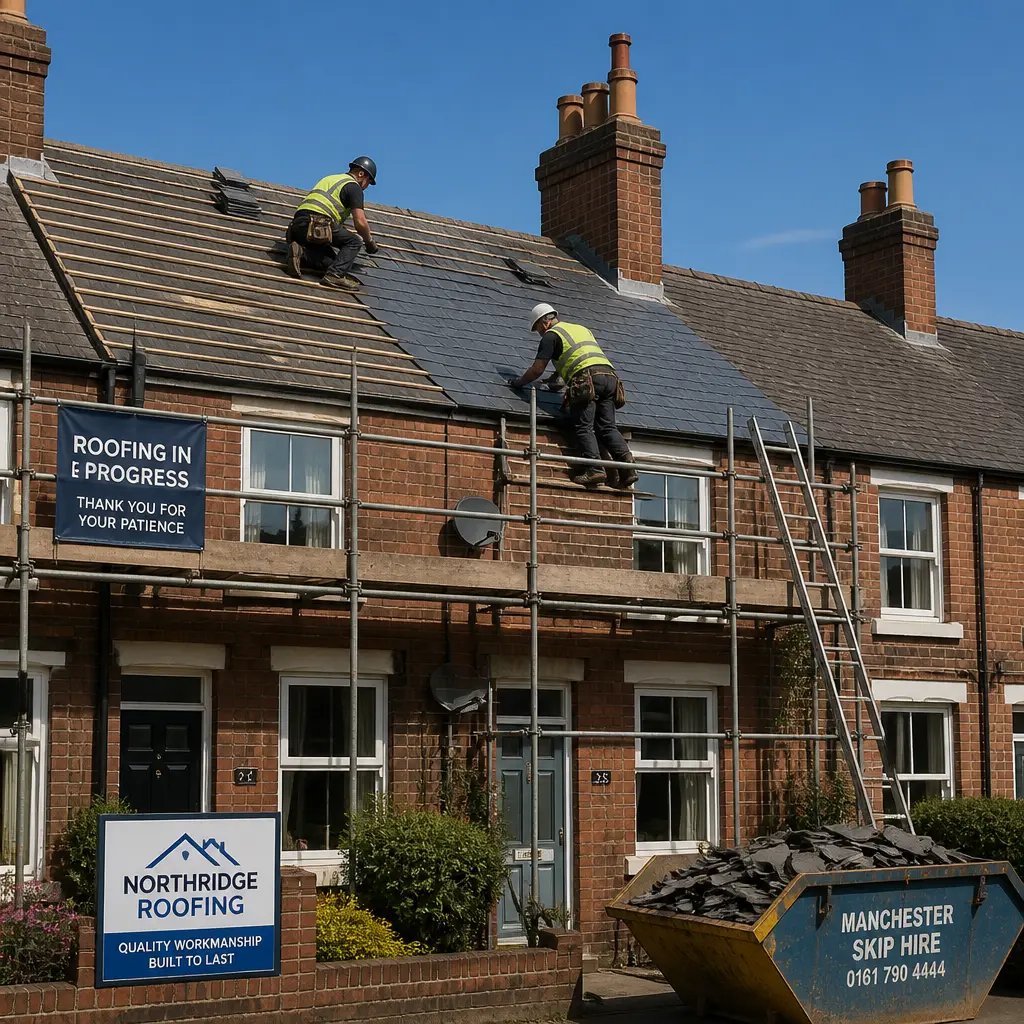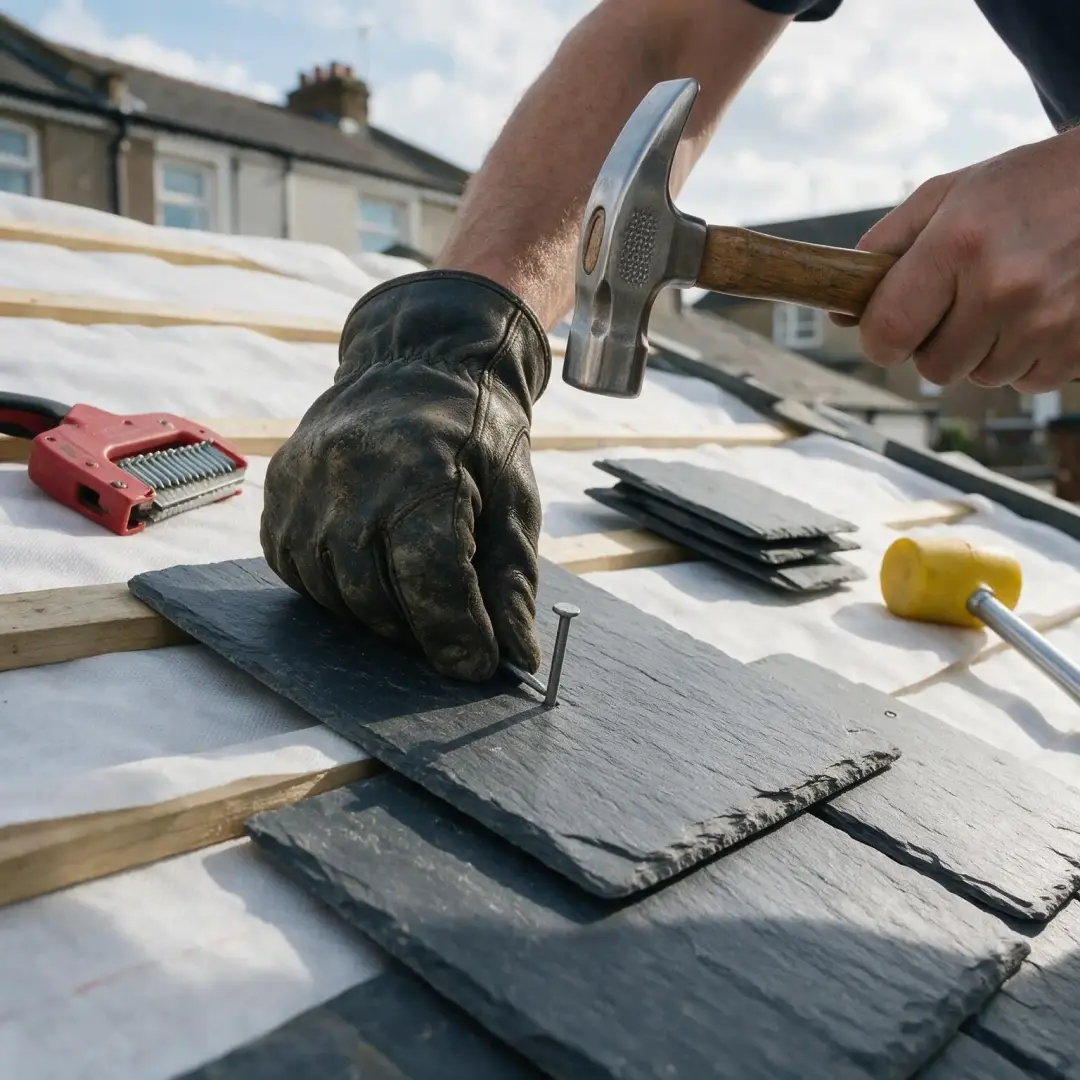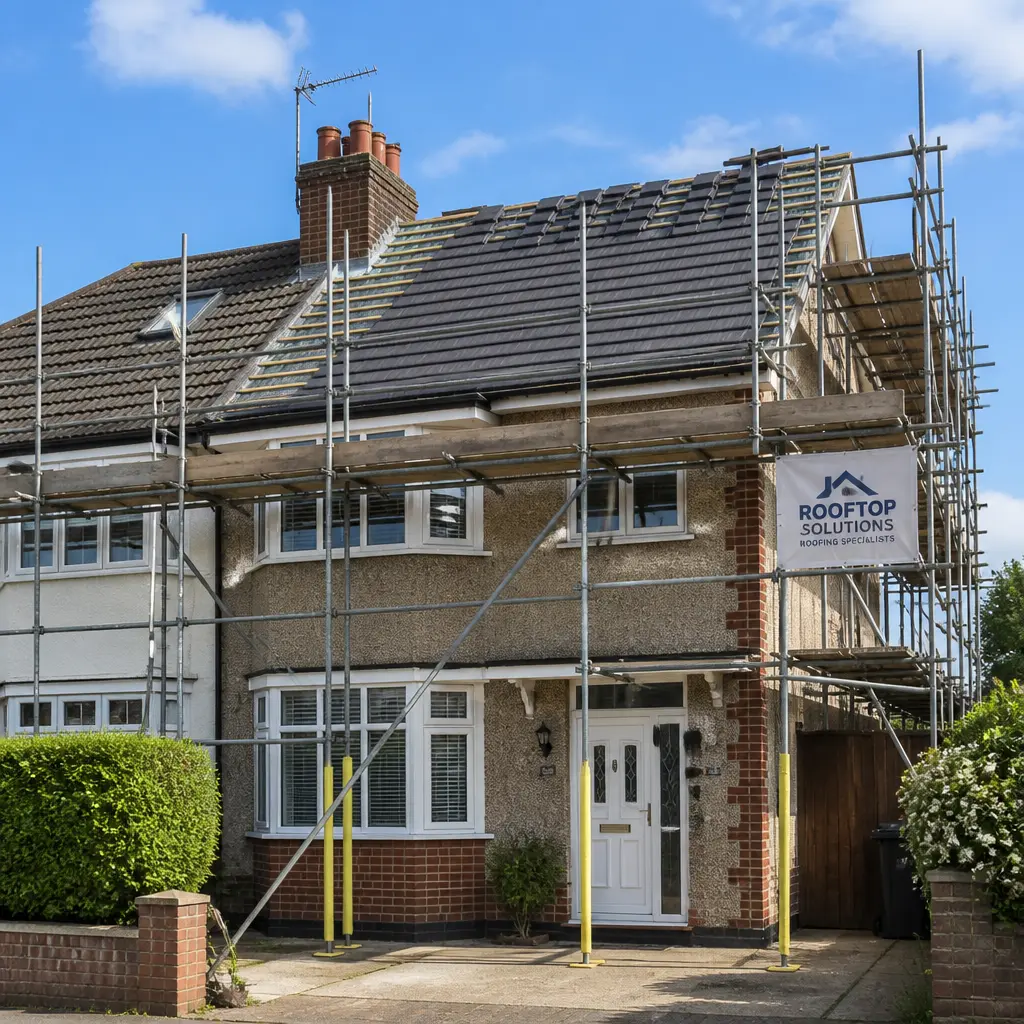
Are you asking: How often should a roof be replaced? There is no single replacement schedule that applies to every roof. Some coverings may need replacing after around 20 years, while well-maintained slate roofs can remain serviceable for many decades.
The right time to replace a roof depends on its material, age, condition, installation quality, exposure to weather and repair history. Regular inspections can identify problems early and help you avoid replacing a roof before it is necessary.
How Often Should You Replace a Roof?
Most roofs do not need to be replaced according to a fixed calendar. Their useful life depends on the roofing system and the conditions it has faced since installation.
Some flat-roof coverings may last around 20 to 30 years. Concrete and clay tiles may remain serviceable for several decades, while natural slate can often last much longer when it has been installed and maintained correctly.
However, the visible covering is only one part of the roof. Underlay, battens, fixings, flashing, insulation and structural timber can deteriorate at different rates. A roof may therefore need major work even when many of its tiles or slates still appear usable.
Age should be treated as a guide rather than an automatic reason for replacement. An older roof in sound condition may continue to protect the property, while a newer roof may fail early because of poor installation, unsuitable materials or severe storm damage.
- Flat-roof systems commonly require replacement sooner than pitched tile or slate roofs
- Installation quality can have a major effect on the working life of a roof
- Regular maintenance may prevent small defects from causing widespread damage
- Underlay, battens and fixings may fail before the main covering
- Repeated leaks can suggest that a roof is becoming unreliable
- In 2024, 4.2 million homes in England experienced new moisture damage after a storm
- 38% of homes with roof disrepair experienced storm-related moisture damage
- Only 17% of homes without roof disrepair experienced the same type of damage
A professional inspection is the best way to estimate how much useful life remains. The inspection should cover the outside surface, loft space, underlay, flashing, valleys, gutters and roof structure where these areas can be reached safely. The findings should explain whether the roof needs maintenance, a local repair, partial replacement or full replacement.
| Roof material | Typical replacement range | Important considerations |
|---|---|---|
| Bitumen felt flat roof | Around 15 to 30 years | Joints, edges, standing water and installation quality can affect its life |
| Single-ply or rubber flat roof | Around 20 to 40 years | The exact product, drainage and quality of the seams are important |
| Concrete tiles | Around 40 to 60 years | Underlay, battens and fixings may need attention before the tiles |
| Clay tiles | Around 50 to 100 years | Individual tiles can crack or slip while the wider covering remains sound |
| Natural slate | Around 75 to 150 years or longer | Slate quality, fixings and exposure can lead to wide differences |
| Fibre cement slate | Around 30 to 60 years | Product quality, fixing methods and weather exposure affect performance |
How Long Does a Flat Roof Usually Last?
A flat roof may need replacing more often than a well-maintained pitched roof. Its useful life depends on the type of covering, the roof deck, drainage and the standard of installation.
Traditional felt coverings may provide around 15 to 30 years of service. Modern rubber, single-ply and liquid-applied systems may last longer when installed according to the manufacturer's requirements.
Flat roofs are particularly affected by standing water. Poor falls, blocked outlets or low areas can allow water to remain on the surface and place added pressure on joints and weak points.
Warning signs include splits, blisters, open seams, soft areas, damaged edges and recurring leaks. Water trapped beneath the surface may also damage insulation or the supporting deck.
A local repair may be suitable when one small area has failed. Replacement may offer better value when defects are widespread, the covering has become brittle or earlier repairs have not stopped the leaks.
How Long Do Tiled Roofs Last?
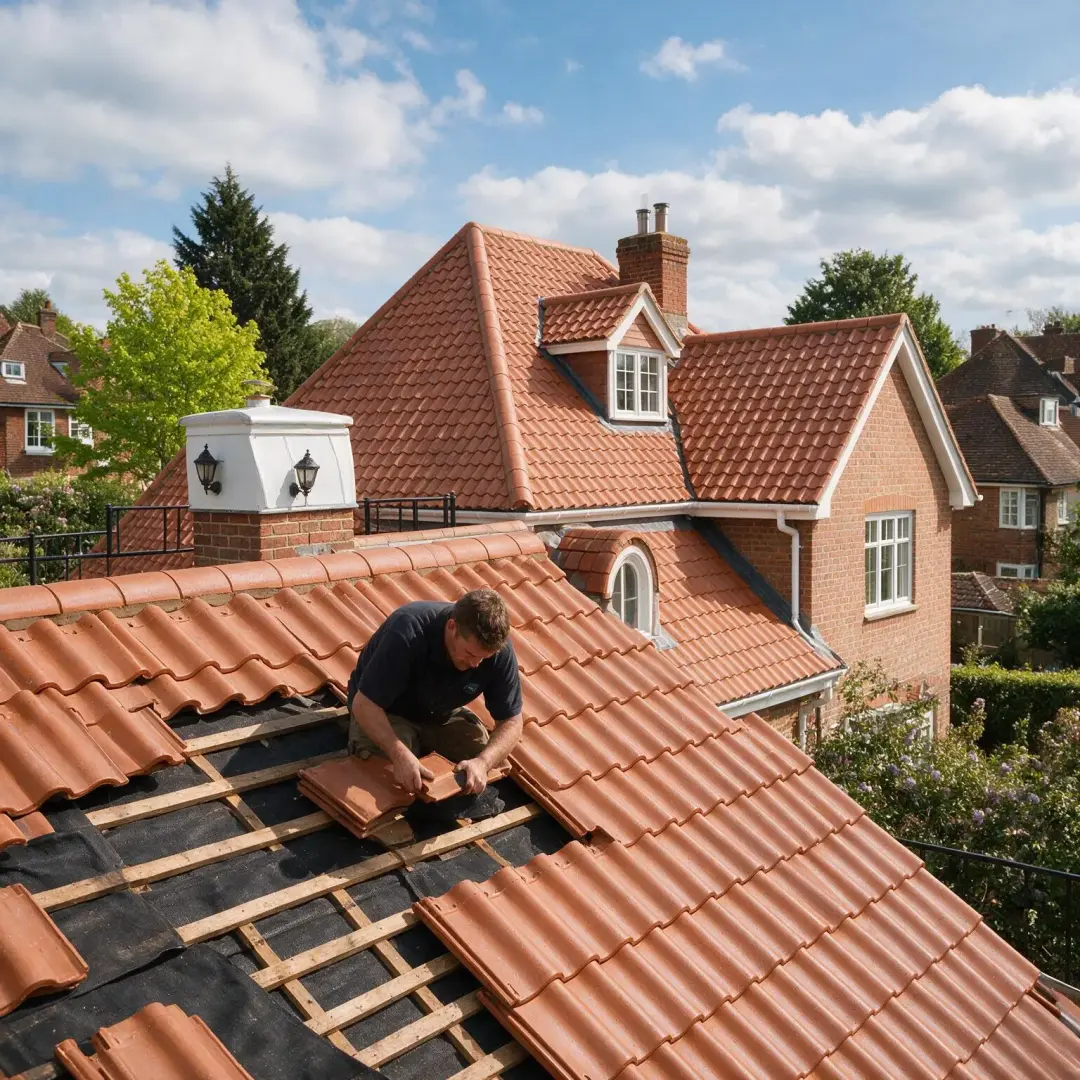
Concrete and clay tiles can provide a long working life. Concrete tiles may commonly last for around 40 to 60 years, while good-quality clay tiles can remain serviceable for much longer.
A tiled roof does not normally need full replacement because of one or two broken tiles. Damaged tiles can often be removed and replaced if the surrounding covering, underlay and battens remain sound.
Problems become more serious when tiles are cracked or loose across several roof slopes. Widespread movement may point to failing fixings, damaged battens or an unsuitable installation.
Older tiles may also become difficult to match. A contractor should explain whether suitable replacements can be obtained and whether the existing tiles can be safely disturbed.
The condition beneath the tiles is important. Underlay may become brittle, battens may decay and metal fixings may corrode before the tiles reach the end of their own useful life.
How Long Does a Slate Roof Last?
A natural slate roof can remain serviceable for 75 to 150 years, and some good-quality slate coverings last even longer. The expected life varies according to the type of slate, its thickness, the fixings and the standard of the original work.
The slate itself may outlast the materials holding it in position. Iron nails can corrode, while timber battens and underlay may deteriorate because of age or moisture.
When several slates begin to slip, the problem may be known as nail sickness. Replacing individual slates may provide a temporary answer, but continued movement across the roof can make wider work necessary.
Some slate roofs can be stripped and renewed using a large proportion of the original slates. This may preserve the appearance of the property while allowing new battens, underlay and fixings to be installed.
A specialist should assess whether the existing slate is strong enough to be reused before this approach is included in a quotation.
What Can Shorten the Life of a Roof?
A roof may fail much sooner than expected when materials are installed poorly or important details are left unfinished.
Incorrectly fixed tiles, poorly formed valleys, unsuitable flashing and weak seals around roof windows or chimneys can allow water to enter. Inadequate ventilation may also lead to condensation within the roof space.
Weather exposure is another factor. Properties in wet, windy or coastal areas may place greater demands on coverings and metal fixings. Nearby trees can damage the roof, block gutters and encourage the build-up of moss.
Failure to maintain gutters and outlets can cause water to overflow onto walls, roof edges or flat-roof surfaces. Small defects may then develop into damage affecting timber, insulation and internal finishes.
Foot traffic and unsuitable cleaning can also damage tiles, slate or flat-roof membranes. Pressure washing may disturb coverings or force water into places that were not designed to receive it.
What Are the Signs That a Roof Needs Replacing?
A roof may need replacing when faults are widespread, hidden materials have failed or local repairs no longer provide reliable protection.
Common warning signs include several leaks, large numbers of cracked or slipping tiles, extensive damage to underlay, rotting battens, sagging areas and daylight entering the loft.
Water stains, mould, wet insulation and damaged ceilings can also point to a roofing problem. However, moisture may come from plumbing, walls or condensation, so the cause should be confirmed before replacement begins.
Repeated repairs within a short period can suggest that the covering is reaching the end of its useful life. The cost of continued visits, access equipment and internal repairs may eventually exceed the value of full replacement.
Visible age alone is not enough. Some old roofs remain sound, while a recently installed roof may require major correction if it was not fitted properly.
- Leaks are appearing in several areas
- Tiles or slates continue to slip after earlier repairs
- The roof covering is cracked or damaged across large sections
- Underlay is torn, brittle or no longer directing water correctly
- Battens or roof timbers show signs of rot
- The roof surface is sagging or uneven
- Flat-roof coverings have widespread splits, blisters or soft areas
- The cost of repeated repairs is becoming difficult to justify
Should You Replace a Roof Based on Its Age?
Roof age can help you plan, but it should not be used as the only test. A roof reaching the lower end of its expected life does not automatically require replacement.
The covering may have many useful years remaining if it was installed correctly and has received regular care. By contrast, severe weather or poor workmanship may shorten the life of a much newer roof.
Ask a contractor to assess both the visible surface and the hidden parts of the system. The report should consider the condition of the covering, underlay, battens, flashing, insulation and structural timber.
The contractor should also estimate the roof's remaining serviceable life. This estimate will not be exact, but it can help you compare the cost of maintenance with the likely need for future replacement.
Homeowners who know that their roof is approaching the end of its expected life can begin planning the work before an emergency leak occurs.
How Often Should a Roof Be Inspected?
A roof should normally be checked at least once a year from a safe position. An additional inspection may be sensible after strong winds, intense rain, falling branches or other severe weather.
You can look for slipped coverings, damaged ridges, loose flashing, blocked gutters and signs of movement from ground level. The loft can also be checked for damp patches, stains, damaged insulation and daylight entering through gaps.
Do not climb onto the roof unless you are trained and have suitable safety equipment. Roofing materials can be fragile, and wet or moss-covered surfaces may be extremely slippery.
A professional inspection may be needed when visible defects appear, when the roof has an unknown history or when the property is being purchased.
Regular checks do not prevent ageing, but they can identify small defects before they cause damage to the roof structure or the inside of the property.
Can Regular Maintenance Delay Roof Replacement?
Regular maintenance can extend the useful life of many roofs. It will not make materials last forever, but it can reduce avoidable damage and allow defects to be corrected early.
Maintenance may include replacing broken tiles, securing loose flashing, clearing gutters, removing blocked debris and correcting small defects around roof windows or chimneys.
Moss should be assessed carefully rather than removed automatically. Heavy growth may hold moisture or block drainage, but unsuitable removal methods can damage the roof covering.
Flat-roof outlets should be kept clear so water can drain correctly. Standing water should be investigated because it may indicate blocked drainage, poor falls or movement in the roof deck.
Keep photographs, inspection notes and invoices for completed work. A clear maintenance record can help a contractor understand earlier problems and may also be useful when selling the property.
What Are the Risks of Delaying Roof Replacement?
Delaying necessary replacement can allow water to spread beyond the original defect. Wet insulation may become less effective, timber can decay and ceilings or walls may require repair.
The latest English Housing Survey figures show that 4.2 million homes experienced new moisture damage following a storm during 2024. Homes with roof disrepair were more than twice as likely to experience this damage as homes without roof disrepair.
Surveyors also recorded a damp problem in 1.4 million homes in England during 2024. Not all damp begins at the roof, but damaged coverings, failed flashing and blocked rainwater systems can contribute to penetrating moisture.
A small repairable problem may become a larger project when action is delayed. Hidden damage can continue even when the visible leak appears to stop during dry weather.
Temporary covering may reduce immediate water entry, but it should not replace a proper inspection and lasting repair.
Can Roof Replacement Improve Energy Efficiency?
Roof replacement provides an opportunity to inspect insulation, ventilation and air leakage within the roof space.
The English Housing Survey found that 42% of dwellings had at least 200 millimetres of loft insulation in 2024. More than 2.7 million households were living in homes with less than 100 millimetres of loft insulation.
Improving suitable insulation can reduce heat loss, but the work must match the roof design. Covering ventilation openings or using unsuitable materials may increase the risk of condensation.
A roofing quotation should state whether insulation is included and what standard is proposed. It should also explain how ventilation and moisture control will be maintained.
Insulation may need to be upgraded when a large part of the roof covering is replaced. The exact requirements depend on the property, location and scope of the work.
Does Roof Replacement Need Building Regulations Approval?
Some roof replacement work is covered by building regulations. Approval may be required when a large part of the covering is renewed, when insulation is affected or when structural alterations are included.
Requirements may also apply when the replacement material significantly changes the weight of the roof or its fire performance.
Planning permission and building regulations are separate. Planning controls may be relevant when the work changes the height or shape of the roof, affects a listed building or takes place in a conservation area.
Rules are not identical across England, Wales, Scotland and Northern Ireland. The homeowner or contractor should check the requirements that apply in the property's location before work begins.
Keep copies of any approvals, notices, guarantees and completion documents. Missing records may cause delays or questions during a future sale.
| Question to ask | Why it matters |
|---|---|
| How old is the roof covering? | This helps compare its age with the expected life of the material |
| What parts of the roof have failed? | The covering, underlay, battens and structure may require different work |
| Can the roof still be repaired? | A local repair may be better value when the wider roof remains sound |
| How much serviceable life remains? | This helps you plan replacement before an emergency develops |
| What is included in the quotation? | Access, waste, insulation, ventilation and timber repairs can affect the cost |
| Will approval be required? | The work may need building control involvement or other permission |
How Should You Compare Roof Replacement Quotations?
Compare the full scope of each quotation rather than choosing based only on the total price. Two contractors may be offering different materials or levels of work.
The quotation should describe the covering, underlay, battens, fixings, flashing, ventilation, insulation, gutters and waste removal. It should also state whether access equipment and protection for the property are included.
Ask how unexpected timber damage will be handled. Some defects cannot be seen until the old covering is removed, so the quotation should explain how additional work will be priced and approved.
Check the proposed start date, expected working period, payment terms and guarantee. The contractor should explain whether the guarantee covers materials, workmanship or both.
A very low price may leave out important work. A high price does not automatically provide better quality. Clear information and evidence supporting the recommendation are more useful than price alone.
How Can a Professional Roof Inspection Help?
A professional inspection can help establish whether the roof needs maintenance, repair or replacement.
The contractor should examine the roof slopes, ridges, valleys, flashing, gutters and edges. The loft should also be checked for water entry, damaged insulation, ventilation problems and signs of timber decay.
Photographs can show problems that are difficult to see from ground level. They can also help you understand why particular work has been recommended.
The inspection should separate urgent defects from areas that can be monitored. It should also explain which parts of the roof remain sound and whether any existing materials can be reused.
Some hidden damage cannot be confirmed until the covering is removed. The contractor should explain this risk before work starts and describe how any additional repairs will be agreed.
Frequently Asked Questions
```How Do I Know When My Roof Needs Replacing?
Your roof may need replacing when damage is widespread, leaks repeatedly return or important materials beneath the covering have failed. An inspection should confirm whether repair remains practical.
Should a 20-Year-Old Roof Be Replaced?
Not automatically. Twenty years may be a normal working life for some flat-roof systems, but it is relatively young for many clay, concrete or natural slate roofs. Condition is more important than age alone.
Should a 50-Year-Old Roof Be Replaced?
A 50-year-old roof should be inspected, but it may not require replacement. Some tiled and slate roofs can remain serviceable beyond this age when their covering, fixings and supporting materials are sound.
Can You Replace Only Part of a Roof?
Yes. Partial replacement may be possible when damage is limited to one area. The connection between the new and existing materials must provide reliable weather protection.
How Often Should Roof Tiles Be Replaced?
Individual damaged tiles should be replaced when needed. The full tiled covering normally requires replacement only when faults are widespread or the supporting materials have failed.
Can a Roof Last 100 Years?
Yes. Some natural slate and good-quality clay tile roofs can last for 100 years or longer. They may still need repairs to fixings, flashing, battens or other parts during that period.
Does Moss Mean a Roof Needs Replacing?
Not by itself. Moss can block drainage or hide defects, but its presence does not automatically mean the covering has failed. The condition of the materials beneath it should be checked.
Is It Better to Repair or Replace an Old Roof?
Repair may be better when damage is limited and the wider roof remains sound. Replacement may offer better value when leaks return, defects are widespread or the roof has little serviceable life remaining.
Should a Roof Be Replaced Before Selling a House?
Replacement may be sensible when the roof has active leaks or serious defects. A sound roof with one minor problem may only require repair. Keep records of all inspections and completed work.
What Time of Year Is Best for Roof Replacement?
Roofing can be completed during different seasons when conditions are safe and suitable. Drier weather may reduce delays, but necessary work should not be postponed solely to wait for a particular month.
How Often Should You Replace Your Roof?
A roof should be replaced when its condition shows that repair can no longer provide reliable or reasonable long-term protection. It should not be replaced simply because it has reached a particular age.
Flat-roof coverings may need replacement after around 15 to 40 years, depending on the system. Concrete and clay tiles can often last for several decades, while natural slate may remain serviceable for 75 to 150 years or longer.
Regular inspections and maintenance can identify defects before water damages underlay, insulation or structural timber. Pay particular attention after storms and when leaks, slipping materials or damp patches appear.
Ask a professional to estimate the remaining life of the whole roof and explain whether repair, partial replacement or full replacement is appropriate.
A clear inspection, detailed quotation and realistic assessment of future repairs will help you replace the roof at the right time without paying for unnecessary work.
We hope you found this article useful: How Often Should a Roof Be Replaced? Are you considering roof replacement services in Birmingham, Dudley or Wolverhampton? Colmore Roofing Contractors can inspect your roof, identify signs of deterioration and explain whether repair or replacement is suitable. Contact the team to arrange a professional roofing assessment and clear quotation.