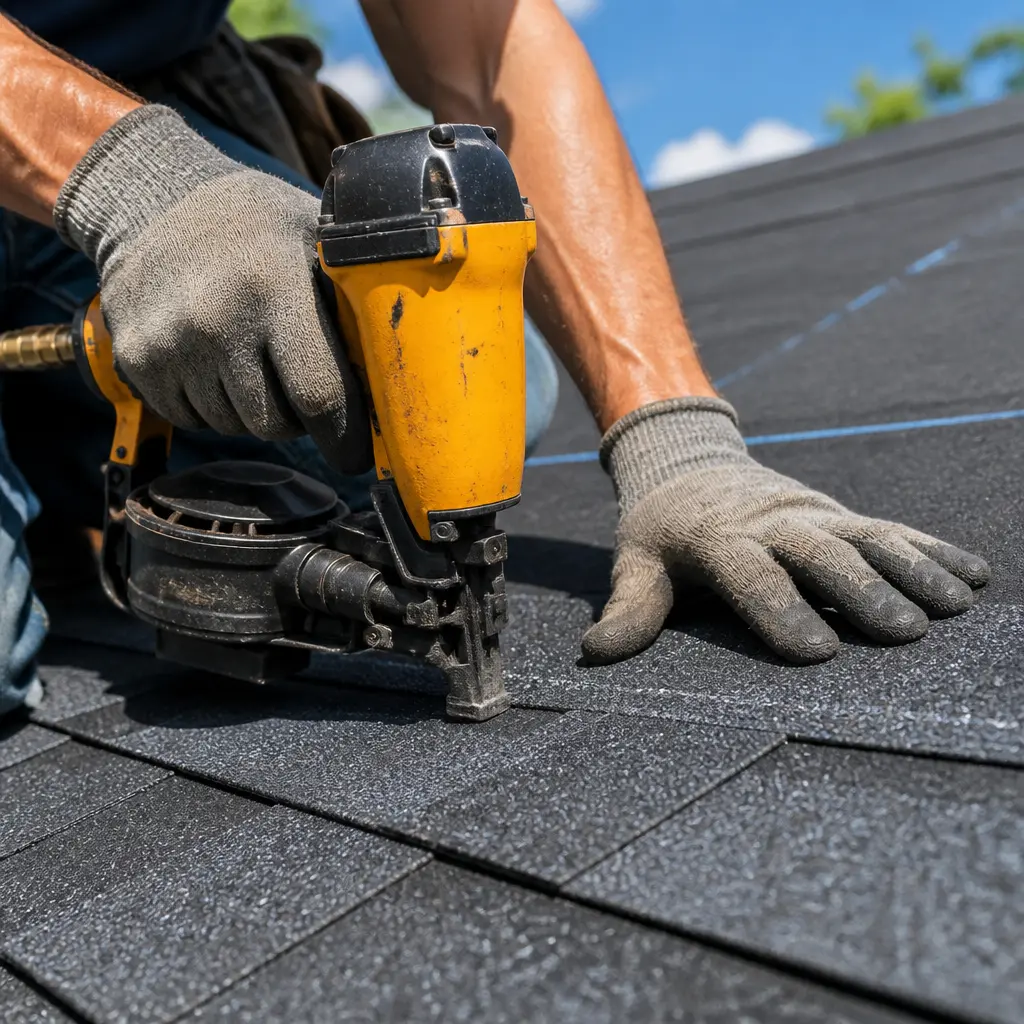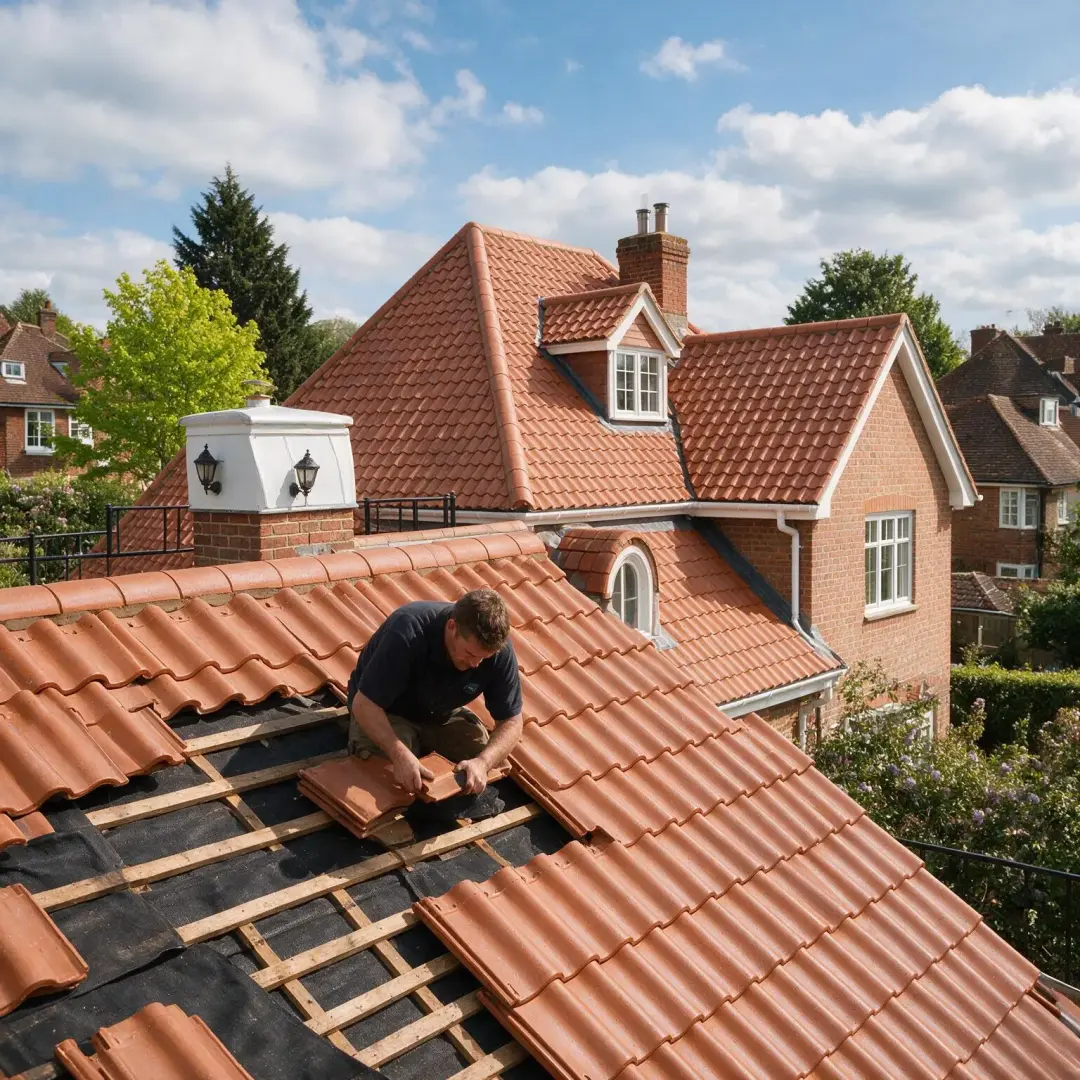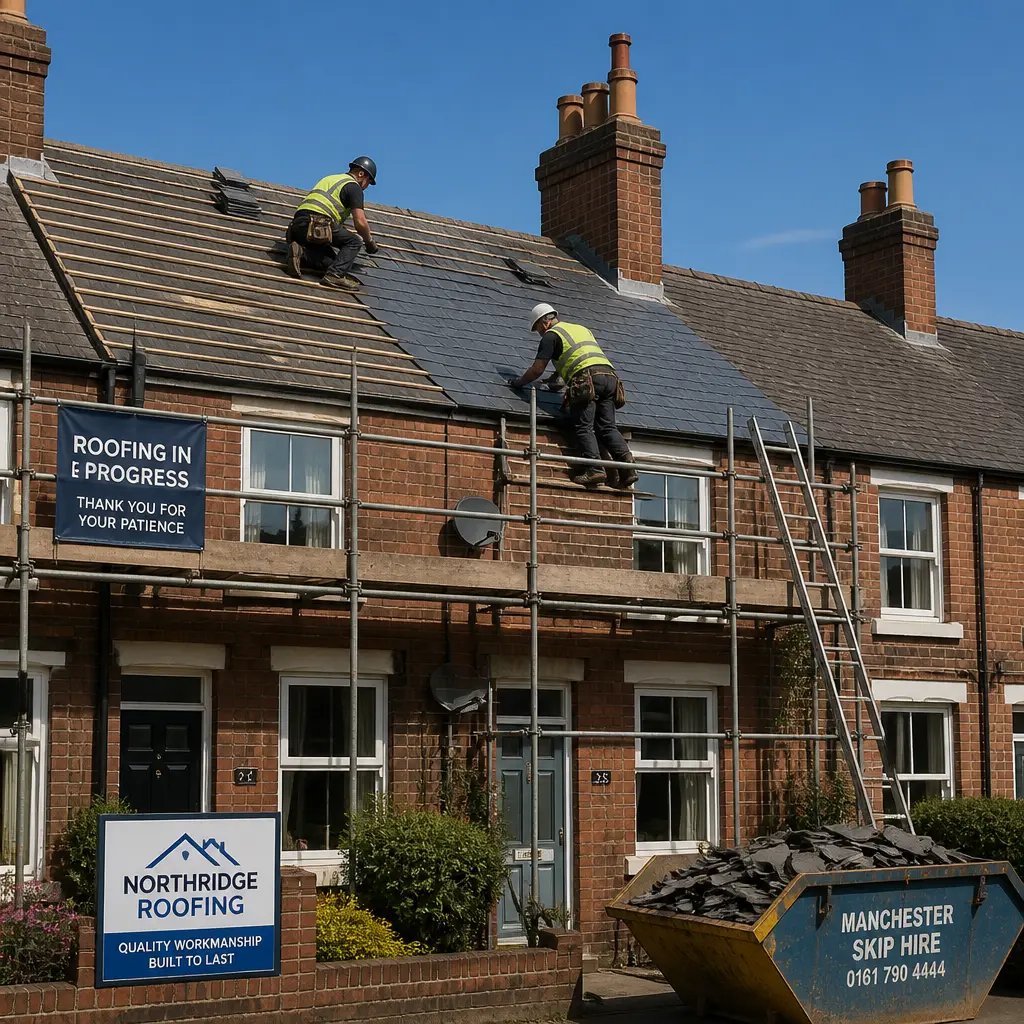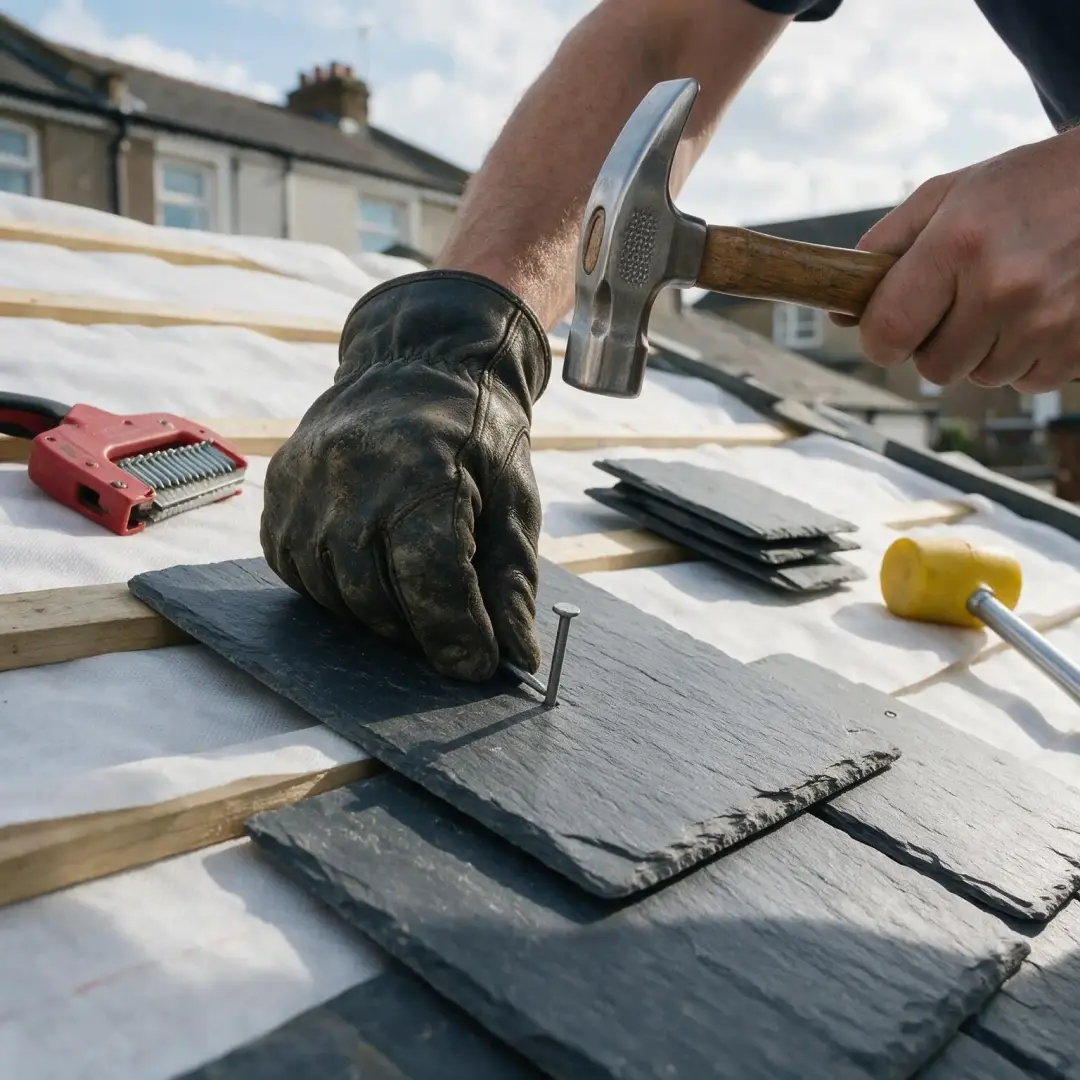
A full roof replacement in the UK commonly costs between £4,000 and £19,000, with an average cost of around £8,000. A standard gable roof may cost between £7,000 and £16,250, while a more complex hip roof may cost between £9,250 and £18,000.
The final cost depends on the roof size, shape, material, access, location and condition of the supporting structure. Scaffolding, waste removal, insulation and hidden timber damage can also increase the total price.
How Much Does a Roof Replacement Cost in the UK?
The average cost of replacing a roof in the UK is around £8,000. Most projects cost between £4,000 and £19,000, although a small and straightforward flat roof may cost less.
A typical gable roof replacement costs between £7,000 and £16,250. A hip roof usually costs between £9,250 and £18,000 because it has more slopes, edges and junctions to complete.
Flat roof replacement commonly costs between £2,800 and £7,500. The price will depend on the roof area and whether felt, rubber, fibreglass or another covering is used.
These estimates may not include VAT, scaffolding, skips, structural repairs or work to gutters and chimneys. Property owners should ask for a written quotation showing exactly what is included.
A contractor will normally need to inspect the roof before providing an accurate price. Photographs and measurements can help with an early estimate, but they may not reveal damage beneath the tiles or covering.
- The UK average roof replacement cost is around £8,000
- Most complete roof replacements cost between £4,000 and £19,000
- A gable roof may cost between £7,000 and £16,250
- A hip roof may cost between £9,250 and £18,000
- A flat roof replacement may cost between £2,800 and £7,500
- Removing the old roof covering may add between £1,000 and £2,500
- Construction material prices increased by 5.4% in the year to May 2026
- Repair and maintenance construction output grew by 2.1% in the three months to May 2026
Roofing prices are general estimates rather than fixed charges. Two properties with a similar floor area can have very different roof sizes and designs. The number of slopes, valleys, chimneys, roof windows and difficult access points can make one project much more costly than another.
| Type of roof replacement | Typical cost | Estimated cost per square metre |
|---|---|---|
| Gable roof | £7,000 to £16,250 | £110 to £260 |
| Hip roof | £9,250 to £18,000 | £145 to £285 |
| Flat roof | £2,800 to £7,500 | £45 to £120 |
| Natural slate roof | Depends on size and design | £160 to £275 |
| Clay tile roof | Depends on size and design | £160 to £275 |
| Plain concrete tile roof | Depends on size and design | £120 to £230 |
| Rubber flat roof | Depends on roof area | £80 to £100 |
| New structural roof | £6,500 to more than £20,000 | Price after inspection |
What Affects the Cost of Replacing a Roof?
The roof area is one of the main cost factors. A larger roof needs more tiles, battens, membrane, fixings and labour. Contractors normally measure the sloping surface rather than using the internal floor area of the property.
The shape also matters. A basic roof with two slopes is normally easier to replace than a hip roof with four slopes. Valleys, dormers, roof windows and several chimneys add more cutting, sealing and leadwork.
Access can increase the price. A tall property, narrow passage, conservatory or neighbouring building may require a larger or more complex scaffold.
The condition beneath the covering cannot always be confirmed until the tiles or felt have been removed. Rotten battens, damaged rafters, damp insulation and weak roof boards will add labour and material costs.
Prices also vary between regions. Labour and access costs are often higher in London and other areas where wages, parking and waste disposal are more expensive.
How Much Does a Tiled Roof Replacement Cost?
A replacement tiled roof commonly costs between £7,000 and £18,000. The final price depends on the roof shape, tile material and total surface area.
Concrete tiles are normally among the more affordable choices. Supply and installation may cost between £120 and £230 per square metre for plain concrete tiles.
Clay tiles generally cost more, with supply and installation estimates between £160 and £275 per square metre. They may be selected for their appearance, colour and long service life.
The contractor will normally remove the old covering before checking the membrane, battens and visible timber. A new breathable membrane and treated battens are commonly installed before the replacement tiles are fixed.
Ridge and hip tiles must also be secured. A dry-fix system may cost more than a basic mortar installation, but it can reduce future mortar maintenance.
The quotation should state whether new tiles will be used throughout or whether suitable existing tiles will be cleaned and reused.
How Much Does a Slate Roof Replacement Cost?
Natural slate is normally one of the more expensive roofing materials. Supply and installation may cost between £160 and £275 per square metre, depending on the slate, roof pitch and fixing method.
A complete natural slate roof can cost considerably more than a concrete tiled roof. Each slate must be positioned and fixed correctly, and more pieces may be needed because slates are usually smaller than modern interlocking tiles.
Artificial slate can offer a similar appearance at a lower price. However, the product weight, expected service life, fixing requirements and manufacturer guarantee should be checked before a decision is made.
Some existing natural slates may be suitable for reuse. The contractor must sort them carefully and replace cracked, thin or damaged pieces. Reuse may reduce material costs, but the extra sorting and handling can add labour.
Listed buildings and properties in protected areas may need matching materials. The property owner should check local requirements before ordering a different type or colour of slate.
How Much Does a Flat Roof Replacement Cost?
A standard flat roof replacement commonly costs between £2,800 and £7,500. Smaller garage, porch and extension roofs may cost less, while a large roof with damaged timber may cost more.
Basic flat roof prices can range from around £45 to £120 per square metre. The material selected will have an important effect on the final cost.
Traditional felt is often one of the least expensive options. Rubber roofing may cost between £80 and £100 per square metre, while fibreglass and other liquid systems may have a higher initial price.
The existing covering must normally be removed so that the boards and supporting timber can be inspected. Wet or rotten boards should be replaced before the new covering is installed.
Insulation may need to be improved as part of the replacement. A warm roof design places insulation above the roof deck and can change the height of edges, outlets and nearby details.
The quotation should include the roof covering, trims, outlets, flashing, insulation, boards and waste disposal where required.
How Much Does Scaffolding Cost for a Roof Replacement?
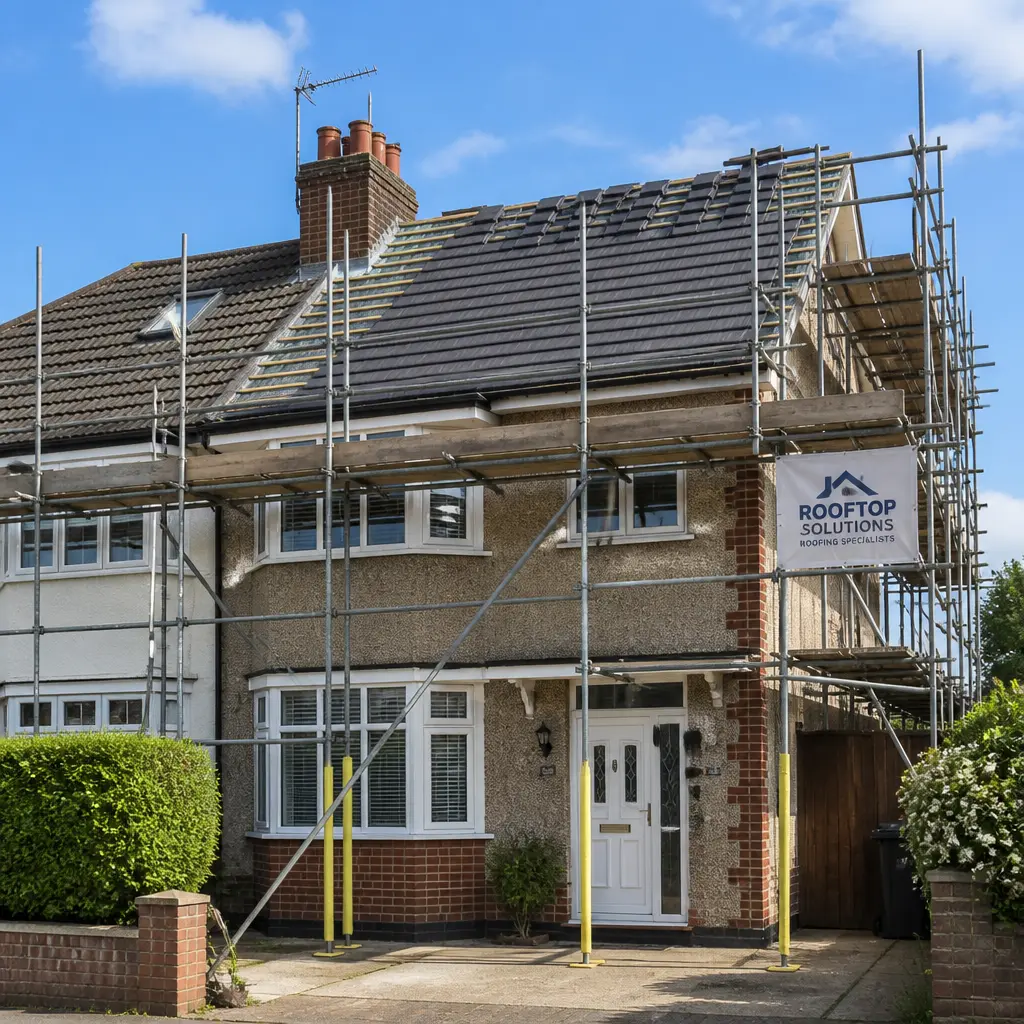
Scaffolding is often charged separately from the main roof replacement. A scaffold for a two-storey semi-detached house may cost between £650 and £1,100 per week, with an average estimate of around £875.
Basic scaffolding hire may cost between £20 and £25 per square metre. The price increases when the scaffold must bridge a conservatory, cross uneven ground or provide access to several sides of the property.
A temporary roof covering may be needed when the building must remain protected during major work or poor weather. This is sometimes described as a roof cover or tin hat scaffold and can cost considerably more than a standard platform.
Scaffolding on a pavement or public road may require permission from the local authority. The scaffolding company may include the application in its price, but this should be confirmed.
Ask whether the quotation includes scaffold delivery, installation, weekly hire, safety checks, adjustments and removal after the work is complete.
How Much Does Removing the Old Roof Cost?
Removing an existing roof covering may add between £1,000 and £2,500 to the project. The cost depends on the roof area, material, access and amount of waste.
Tiles and slates must be removed carefully and lowered safely. Suitable pieces may be kept for reuse, while damaged material must be placed in a skip or other approved waste container.
Removing several layers of old felt from a flat roof will take longer than lifting one surface layer. Heavy materials can also increase skip and transport costs.
Older garage and outbuilding roofs may contain asbestos cement sheets. These should not be broken or placed in a normal skip. A suitable inspection and controlled removal process may be needed.
The quotation should explain whether removal, skips, loading, transport and disposal charges are included. It should also state who is responsible for keeping the site safe and tidy.
How Much Do Structural Roof Repairs Cost?
Structural repairs are difficult to price before the roof covering is removed. Small areas of damaged timber may add several hundred pounds, while widespread rafter or truss damage may add thousands of pounds.
Water entering through failed tiles or flashing can cause battens, boards and rafters to rot. Insect damage, long-term condensation and earlier alterations may also weaken the roof.
A roof that is sagging, spreading or moving may need an assessment by a structural professional. The repair could involve replacing rafters, strengthening joints, installing supports or rebuilding part of the structure.
Changes to the roof material can also affect the structure. A heavier covering should not be installed until the existing roof has been checked to confirm that it can carry the added weight.
A written quotation should state how extra structural work will be priced and approved. Contractors should not complete major unexpected repairs without first explaining the findings and updated cost.
Does Roof Insulation Increase the Replacement Cost?
Roof insulation can increase the initial project cost, but replacing a roof provides a useful opportunity to improve the energy performance of the property.
Building regulations may require thermal improvements when a large part of the roof covering is being renewed. The exact requirement depends on the type of roof, existing construction and amount of work.
Insulation may be installed at ceiling level, between rafters or as part of a warm roof system. Each method has different ventilation, moisture and space requirements.
The contractor should check that insulation does not block ventilation at the eaves. Poor ventilation can cause condensation, mould and timber decay inside the roof space.
The cost will depend on the insulation material, thickness and area. Extra work may also be needed around roof windows, pipes, water tanks and electrical cables.
Ask the contractor to show the insulation as a separate item in the quotation. This makes it easier to understand the cost and confirm the planned specification.
What Other Costs Should You Include?
A complete roof quotation may include more than tiles and labour. Chimney flashing, valleys, gutters, fascia boards, roof windows and ventilation products may all need attention.
Skip hire may cost several hundred pounds, depending on the size and local disposal charges. More than one skip may be needed for a large roof or heavy tile covering.
Leadwork around chimneys, walls and roof junctions should be checked. Failed flashing may need to be repaired or replaced while the surrounding tiles are already removed.
Gutters, fascia boards and soffits may be easier to replace while scaffolding is in place. Completing these items together may reduce the need for separate access costs later.
Roof windows can add a significant amount to the price, particularly when the opening or surrounding structure must be changed.
Building control charges, surveys, parking restrictions and local authority permits may also apply. The property owner should ask which fees are included and which must be paid separately.
| Possible additional cost | Why it may be needed | What to check |
|---|---|---|
| Scaffolding | Safe access to the roof | Hire period, permits and removal |
| Old roof removal | Existing tiles or covering must be taken off | Whether labour and disposal are included |
| Skip and waste disposal | Removal of tiles, felt, timber and packaging | Number of skips and any permit charges |
| Timber repairs | Rotten battens, boards or rafters | How unexpected repairs will be approved |
| Insulation | Energy and building regulation requirements | Material, thickness and ventilation |
| Leadwork | Weatherproofing around chimneys and walls | Repair or full replacement |
| Gutters and roof edges | Existing parts may be worn or damaged | Fascia, soffit and gutter specifications |
| Building control | Approval may be required for major work | Who will submit and pay the application |
Can Hidden Damage Increase the Roof Replacement Cost?
Hidden damage is one of the main reasons a roof replacement costs more than the first estimate. The tiles may appear worn while the timber beneath them has been affected by years of water entry.
Removing the covering can reveal rotten battens, damaged boards, split rafters, weak mortar or unsuitable earlier repairs. Damp insulation may also need to be removed and replaced.
A careful inspection from inside the roof space can reduce uncertainty, but it cannot show every concealed surface. Some parts are only visible after the existing roof has been opened.
The quotation should explain how additional work will be handled. A contractor may provide unit prices for replacement timber or include a limited allowance for likely repairs.
The property owner should receive photographs and a clear explanation before agreeing to a major increase. Any change should be recorded in writing so that both parties understand the new work and cost.
How Long Does a Roof Replacement Take?
A straightforward roof replacement on an average three-bedroom home may take between three days and one week. Larger or more complex projects can take two weeks or longer.
The work usually begins with scaffolding and delivery of materials. The old roof covering is then removed in sections so that the building can remain protected.
The contractor inspects the exposed timber before installing membrane, battens and the new covering. Ridge tiles, hips, valleys, flashing and ventilation are completed before the scaffold is removed.
Bad weather can delay the work. Strong winds and heavy rain may make roof access unsafe or prevent exposed areas from being opened.
Structural repairs, material shortages and detailed leadwork can also extend the project. A written schedule should separate the working period from the full period that scaffolding and equipment may remain at the property.
Should You Repair or Replace the Roof?
A repair may be suitable when damage is limited to a small area and the remaining roof is in reasonable condition. Replacing a few tiles or repairing a section of flashing will normally cost much less than replacing the full covering.
Replacement may provide better value when the covering has reached the end of its useful life, leaks appear in several areas or frequent repairs are becoming necessary.
A sagging roof, widespread tile failure, rotten timber or badly damaged underlay may also support the case for replacement.
Repairing one area will not correct faults across the rest of an ageing roof. However, a contractor should not recommend full replacement when a safe and lasting local repair is possible.
Ask for the condition, repair option and replacement option to be explained separately. The expected service life of each option can help the property owner compare the initial price with the likely long-term cost.

Do You Need Planning Permission for a Roof Replacement?
A like-for-like roof replacement will not usually need planning permission. This normally applies when the overall shape, height and appearance remain similar.
Planning permission may be needed when the project changes the roof height, shape or structure. Converting a flat roof into a pitched roof is a larger alteration and should be checked before work begins.
Extra restrictions can apply to listed buildings, properties in conservation areas and homes affected by earlier planning conditions. Different materials may not be accepted where the roof forms an important part of the local appearance.
Roof windows and other alterations must meet permitted development limits if they are to be completed without a full planning application.
The rules vary across the UK, so property owners should check with their local planning authority. The contractor can provide practical advice, but the property owner remains responsible for making sure that the correct permission is in place.
Do Building Regulations Apply to Roof Replacement?
Building regulations commonly apply when more than a quarter of the roof covering is being replaced. Requirements may cover insulation, structure, fire safety, ventilation and the type of covering installed.
The roof must be able to support the replacement material. This is particularly important when changing from a lightweight covering to heavier clay tiles, concrete tiles or natural slate.
Thermal standards may require insulation to be improved where practical. Ventilation must also be considered so that moisture does not become trapped inside the roof.
The project may be handled through the local authority building control service or another approved building control provider. Some roofing contractors can self-certify certain work through a suitable competent person scheme.
Ask who will arrange approval and provide the completion documents. These records may be important when the property is sold, insured or altered in the future.
How Can You Reduce Roof Replacement Costs?
Obtain at least three detailed quotations based on the same work. A low total price may not be good value if it excludes scaffolding, waste removal, insulation or important roof details.
Ask whether sound existing tiles or slates can be reused. This may reduce the amount of new material required, although sorting and cleaning will add labour.
Complete related work while the scaffold is in place. Gutter, fascia, chimney and roof window work may cost less when separate access is not required later.
Avoid changing the roof shape unless there is a clear reason. Dormers, new valleys and structural changes can add substantial labour and approval costs.
Book the work before a small leak causes widespread timber and internal damage. However, do not accept pressure to agree immediately or pay a large cash deposit.
Choose materials based on suitability and expected service life rather than price alone. A very cheap covering may cost more if it requires earlier replacement or frequent maintenance.
What Should a Roof Replacement Quote Include?
A written quotation should describe the roof area, covering material and main stages of the work. It should not rely on a single total with no explanation.
The quotation should state whether the old roof will be removed, whether existing materials will be reused and how waste will be disposed of.
It should include the membrane, battens, fixings, ridge system, valleys, flashing, ventilation and insulation where these form part of the work.
Scaffolding, skips and permits should be clearly included or excluded. VAT should also be shown so that the property owner understands the full amount payable.
The contractor should explain the deposit, payment stages, start date and expected completion period. The length and limits of any workmanship or material guarantee should be provided in writing.
The quote should also explain how hidden damage and requested changes will be priced. Extra work should be agreed before it is completed whenever possible.
- Roof area: The measured surface area and slopes included in the price
- Materials: The manufacturer, product, colour and quantity where known
- Removal: How the old roof covering and waste will be handled
- Timber: Whether battens, boards, rafters or other parts are included
- Weatherproofing: Membrane, flashing, valleys, ridges and roof junctions
- Insulation: The planned material, thickness and installation position
- Access: Scaffolding, towers, temporary covers and permits
- Waste: Skips, loading, transport and disposal
- Price: Labour, materials, VAT and possible extra charges
- Guarantees: Workmanship cover and product guarantees
Current Roofing and Construction Cost Statistics
Current UK cost estimates place the average complete roof replacement at around £8,000. Most projects fall between £4,000 and £19,000, depending on the roof type, size and complexity.
Government figures show that the construction material price index for all work increased by 5.4% in the year to May 2026. This wider increase can affect the cost of roofing products, timber, insulation and other supplies.
Office for National Statistics figures show that total construction output in Great Britain grew by 1.6% in the three months to May 2026.
Repair and maintenance output grew by 2.1% during the same three-month period. However, monthly private housing repair and maintenance output fell by 5.0% in May 2026.
These statistics describe the wider construction market. They do not provide a fixed price for an individual roof. A property inspection and current written quotation are still required.
How Should You Compare Roofing Quotes?
Compare the work included rather than looking only at the final price. One contractor may include scaffolding, insulation and new leadwork while another may charge for these items later.
Check that each contractor has based the quotation on a proper inspection. A price given without checking the roof space, access and visible damage may change significantly once work begins.
Ask for details of similar completed projects and recent customer references. Confirm that suitable public liability insurance is in place.
The payment plan should be reasonable. A deposit may be needed for materials and scheduling, but property owners should be cautious about paying the whole amount before work begins.
Confirm who will supervise the project, who will complete the work and how concerns will be handled. Guarantees should explain what is covered, how long the cover lasts and who will respond if a fault appears.
Can You Replace a Roof Yourself?
A complete roof replacement should not normally be treated as a household project. Working at height creates a serious risk of falls, while falling tiles and tools can injure people below.
The roof must remain weatherproof throughout the project. Incorrect membrane, flashing, tile spacing or ventilation can cause leaks, condensation and early timber decay.
Roof coverings must also be fixed to resist wind and weather. Errors may not become visible until a storm or period of heavy rain.
Building regulation duties may apply, and some materials require specialist handling. Asbestos cement sheets should never be broken or removed without suitable controls.
Property owners can inspect the roof from ground level and look inside the loft for damp or daylight. They should not climb onto the roof without suitable training and access equipment.
Using an experienced roofing contractor will usually be safer and provides a clearer route for guarantees, inspections and future repairs.
Frequently Asked Questions
```What Is the Average Cost of a New Roof?
The average UK roof replacement cost is around £8,000. Most projects cost between £4,000 and £19,000, depending on size, material and complexity.
How Much Does a New Roof Cost on a Three-Bedroom House?
A replacement roof on a three-bedroom house may cost between £7,000 and £16,000. A hip roof, natural slate or extensive timber damage can increase the price.
How Much Does a Roof Replacement Cost per Square Metre?
Typical prices range from around £45 to £285 per square metre. Flat roof systems are usually at the lower end, while natural slate and complex pitched roofs are at the higher end.
Does a Roof Replacement Include Scaffolding?
Not always. Scaffolding may be included in the main quote or charged separately. Ask for the hire period, installation, permits and removal to be shown clearly.
Can I Stay in My Home During a Roof Replacement?
Most people can remain in the property. There will be noise, vibration and temporary access limits, but the contractor should keep the building protected from the weather.
Will Home Insurance Pay for a New Roof?
Insurance may cover sudden damage caused by an insured event, such as a storm. It will not normally cover ordinary wear, poor maintenance or a roof that has reached the end of its life.
Is a Roof Replacement Worth the Cost?
A new roof can stop leaks, protect the structure and improve insulation. It may provide better long-term value when an old roof needs frequent repairs.
How Many Quotes Should I Get?
Obtain at least three written quotations where possible. Compare the materials, work, scaffolding, waste disposal, guarantees and payment terms.
How Should You Budget for a Roof Replacement?
Begin with a detailed roof inspection. The contractor should examine the covering, roof space, flashing, gutters, visible timber and access arrangements before confirming the price.
Allow between £4,000 and £19,000 for a typical full replacement, with an average estimate of around £8,000. Complex roofs, natural slate and major structural repairs can exceed this range.
Set aside a contingency for hidden damage. An allowance of around 10% to 15% may help cover rotten timber or other faults that only become visible after the old covering is removed.
Check whether VAT, scaffolding, skips, insulation, building control and related repairs are included. A quote that appears cheaper may exclude several necessary items.
Ask how long the price will remain valid. Building material prices increased during the year to May 2026, so a contractor may not be able to hold an estimate for an unlimited period.
A detailed quotation and clear payment schedule will make the project easier to manage and reduce the risk of unexpected charges.
Do you need a clear price for replacing your roof? Colmore Roofing Contractors can inspect the roof covering, timber, flashing, insulation and access before providing a detailed quotation. Contact the team to arrange a professional roof inspection and replacement service in Birmingham, Dudley and Wolverhampton.