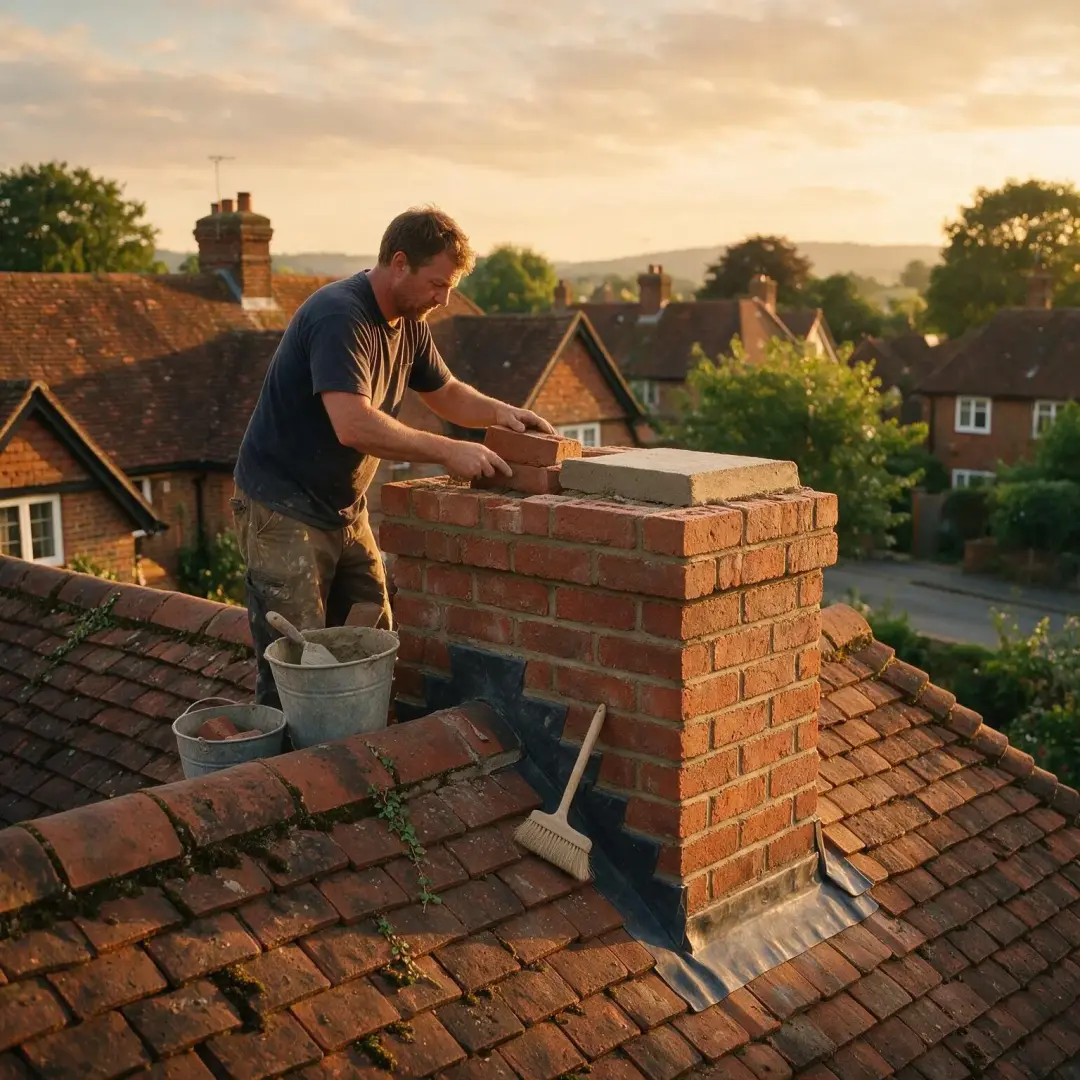
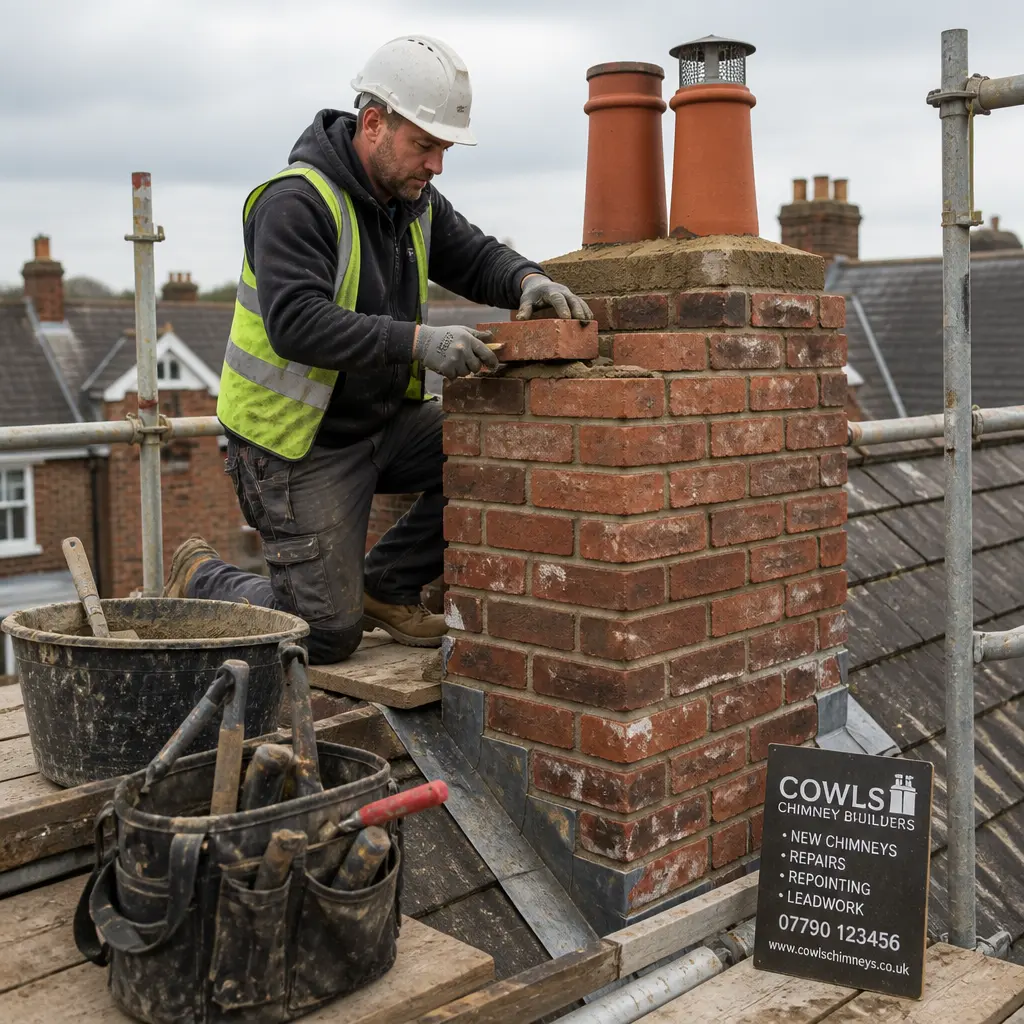
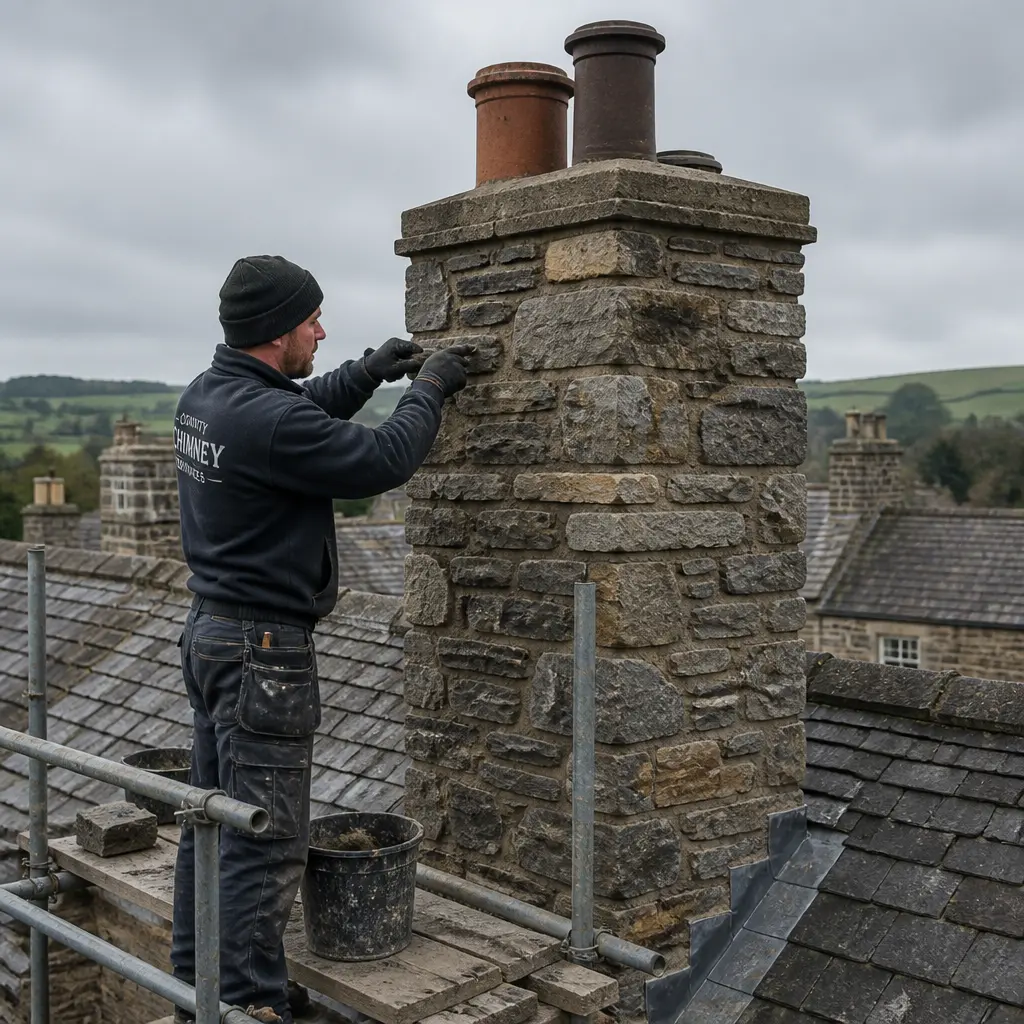
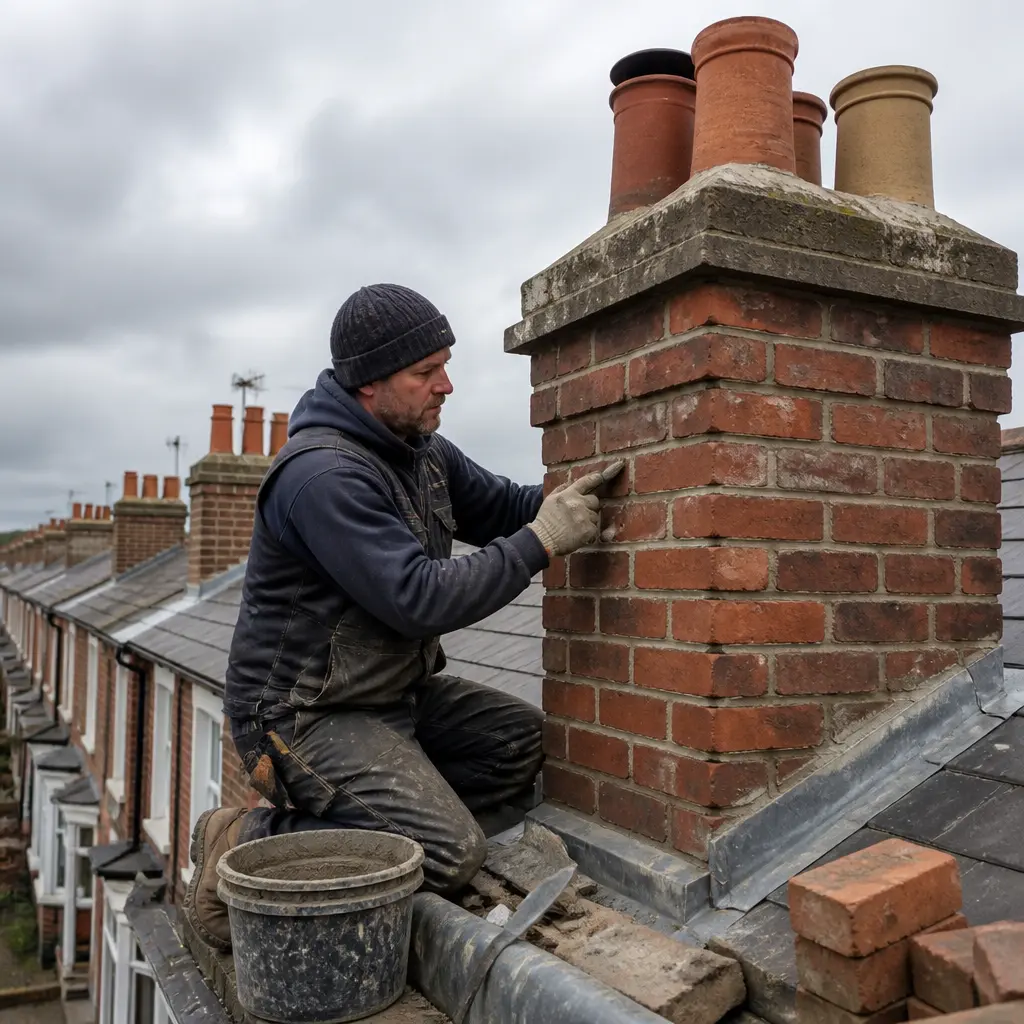
Most chimney repairs take between a few hours and several working days. A minor flashing repair or small area of repointing may be completed within one day, while rebuilding a damaged chimney stack can take a week or longer.
The full timescale depends on the type of damage, chimney height, access arrangements, weather, material drying times and whether further faults are found after work begins.
How Long Does a Chimney Repair Usually Take?
A straightforward chimney repair will often take between one and three working days. This may include local repointing, replacing a small number of bricks, repairing flashing or resetting a chimney pot.
Larger jobs can take between three days and two weeks. More time may be needed when the chimney must be partly rebuilt, a flue liner must be replaced or extensive water damage has affected the roof and internal walls.
The time spent working on the chimney is only one part of the process. A property owner may also need to allow time for an inspection, quotation, access equipment, materials and suitable weather.
Some repairs must be completed in stages because mortar, leadwork or other materials need time to set. The contractor should explain both the active working time and the expected overall project period.
- Minor chimney repairs can often be completed within half a day or one full day
- Repointing a typical chimney stack commonly takes between one and three days
- Replacing flashing will often take between one and two days
- Partial chimney rebuilding may take between three and seven working days
- A complete rebuild can take one to two weeks, depending on access and damage
- Fire and rescue services attended 2,019 chimney fires in England in the year ending March 2025
- Repair and maintenance construction output grew by 2.1% in the three months to May 2026
These times are general estimates rather than fixed promises. Two chimneys that appear similar from the ground may require very different repairs once the contractor reaches the roof. A close inspection is normally needed before an accurate schedule can be provided.
| Type of chimney work | Typical working time | Possible delays |
|---|---|---|
| Inspection and camera survey | One to three hours | Blocked access or the need for further tests |
| Small mortar repair | Half a day to one day | Rain, frost or hidden loose joints |
| Full chimney repointing | One to three days | Large stack, difficult access or damaged bricks |
| Flashing repair or replacement | One to two days | Damaged roof tiles, underlay or timber |
| Chimney pot replacement | Half a day to one day | Unstable flaunching or an unsuitable existing pot |
| Flue liner installation | One to three days | Bends, blockages or damaged internal masonry |
| Partial chimney rebuild | Three to seven days | Structural movement or extra brick replacement |
| Complete chimney rebuild | One to two weeks | Structural work, weather and material supply |
How Long Does a Chimney Inspection Take?
A basic visual chimney inspection may take between one and two hours. The contractor will normally examine the visible stack, mortar, bricks, chimney pots, flashing and nearby roof covering.
A more detailed inspection can take several hours. This may include checking the roof space, completing a smoke test or passing a camera through the flue.
The inspection may take longer when the chimney has several flues, access is difficult or debris must be removed before the internal condition can be seen.
A short inspection does not always mean a quick repair. It may identify the need for scaffolding, replacement materials or a structural assessment before work can begin.
Property owners should provide information about damp, smoke, smells, past chimney fires and previous repairs. This can help the contractor focus on the most likely causes.
How Long Does Chimney Repointing Take?
Repointing a typical domestic chimney stack will often take between one and three working days. Small areas of failed mortar may be repaired within half a day, provided safe access is already available.
The old mortar must be removed to a suitable depth before the joints are cleaned and filled. Covering damaged mortar with a thin surface layer may be quicker, but it is unlikely to provide a lasting repair.
A larger stack or badly worn brickwork will require more time. The contractor may also find that individual bricks need to be replaced after the loose mortar has been removed.
Fresh mortar needs protection from heavy rain, frost and very hot weather. The visible work may be completed in a few days, but the mortar will continue to strengthen after the contractor leaves.
Older properties may require a more suitable, breathable mortar. Matching and sourcing the correct material can add time before work starts.
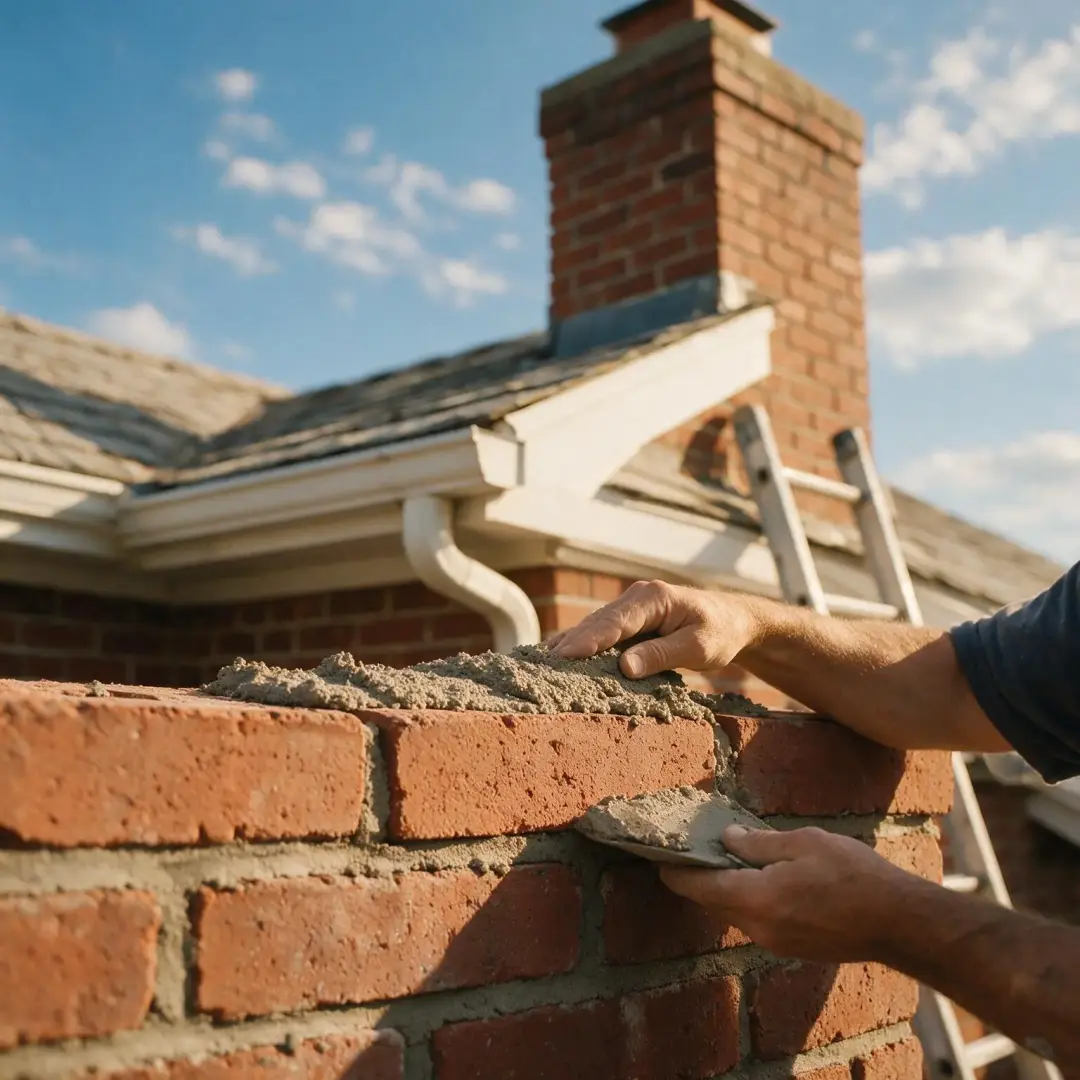
How Long Does Chimney Flashing Repair Take?
A small flashing repair may be completed in several hours. Full replacement around a typical chimney will normally take between one and two days.
The contractor must remove or lift nearby roof coverings, take out failed material and form a weatherproof joint between the roof and chimney. Tiles or slates must then be replaced carefully.
The job can take longer when rainwater has damaged the roof underlay, battens, timber or internal plaster. Water can travel through a roof before becoming visible, so the damp patch may not sit directly below the opening.
Sealant may sometimes be used as a temporary measure, but it should not be treated as a lasting replacement for correctly fitted flashing.
Wet or windy weather can delay the work because the roof covering may need to remain open while the new flashing is fitted.
How Long Does It Take to Replace a Chimney Pot?
Replacing or resetting a chimney pot will often take between half a day and one full day once suitable access has been installed.
The old pot may need to be removed, and the mortar base around it may need to be renewed. The replacement must be suitable for the chimney, flue, appliance and fuel.
More time may be required when several pots need attention or the surrounding flaunching is badly cracked. Flaunching is the sloping mortar around the base of the pots that directs water away from the chimney.
A damaged cowl or bird guard can usually be replaced during the same visit. However, the contractor should check that the new product provides enough airflow and is safe for the appliance.
The chimney should not be used until the contractor confirms that the mortar and fittings are ready.
How Long Does Flue Liner Replacement Take?
A straightforward flue liner installation may take one day. More difficult installations can take between two and three days.
The existing flue may first need to be swept and inspected. Any blockage, fallen masonry or damaged liner sections must be dealt with before the new liner is installed.
The job can take longer when the chimney has tight bends, several storeys or a narrow internal passage. Parts of the fireplace may also need to be opened to guide or connect the liner.
The liner must be correctly sized and suitable for the appliance and fuel. Connections, ventilation and the chimney terminal may also need attention.
Testing should be completed before the appliance is returned to use. Where a new fire or stove forms part of the project, the full installation may take longer than the chimney work alone.
How Long Does a Partial Chimney Rebuild Take?
A partial chimney rebuild will commonly take between three and seven working days. The unsafe upper section is carefully taken down before the sound lower brickwork is cleaned and rebuilt.
The exact time depends on the number of bricks being replaced, the height of the stack and whether chimney pots, flashing and flaunching must also be renewed.
Rebuilding may reveal deeper cracks or movement that could not be seen during the first inspection. The contractor may then need to remove more material than expected.
Work must sometimes pause while mortar sets before the pots or further courses of brick can be added. Weather can also affect the schedule.
A written quotation should state which section will be removed, which materials will be reused and how the roof will be protected.
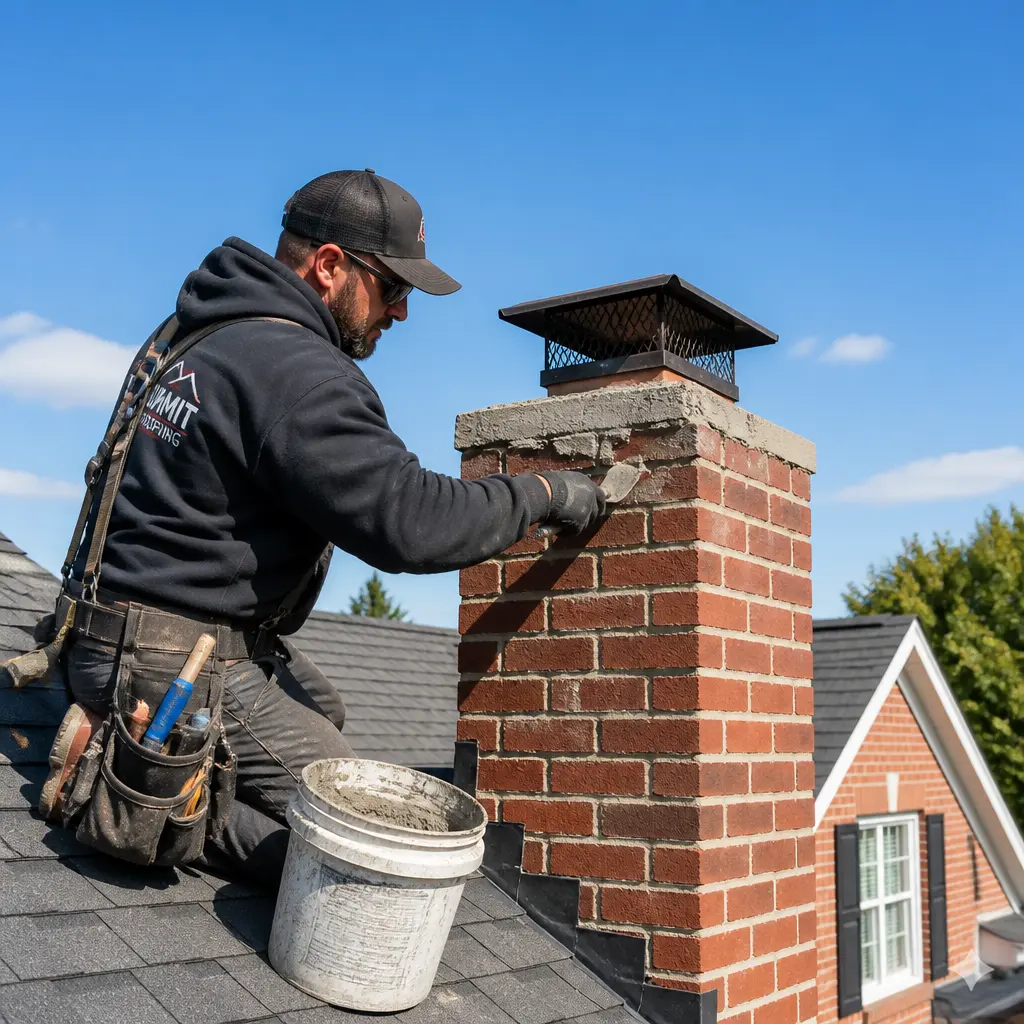
How Long Does a Complete Chimney Rebuild Take?
A complete rebuild above roof level may take between one and two weeks. A larger or more complex project may take longer.
The stack must be dismantled safely, and materials must be lowered without damaging the roof. The contractor then rebuilds the chimney, renews the flashing and installs suitable pots or terminals.
More time may be required when the chimney serves several properties, forms part of a shared wall or needs structural support inside the roof.
Planning controls may also apply to listed buildings or properties in protected areas. Approval should be checked before the work begins.
A rebuild is more affected by the weather than a small repair because the chimney and roof may remain exposed for longer. Temporary protection should be included in the work plan.
The contractor should also allow suitable setting time before a working chimney is used again.
Does Scaffolding Add Time to a Chimney Repair?
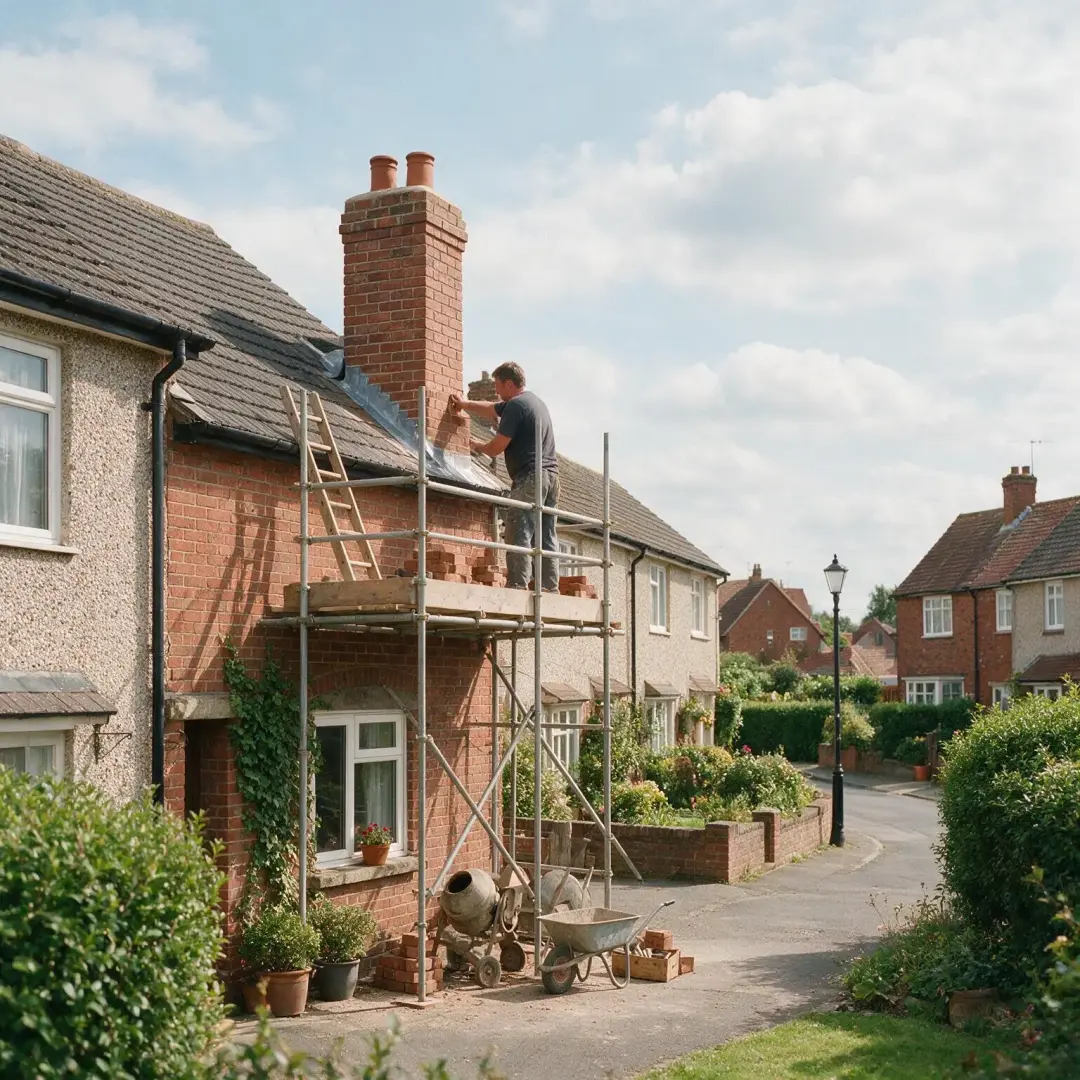
Scaffolding can add one or more days to the overall schedule, even when the chimney repair itself is brief.
A scaffold may be needed when the chimney is high, close to the roof edge or difficult to reach safely. It can also provide a stable working platform for materials and tools.
The scaffolding company may visit before the repair contractor. The structure will normally remain in place until the work has been checked and any mortar has had enough time to set.
A mobile access tower or another access system may be suitable for some lower chimneys. The correct option will depend on the building, ground conditions and amount of work.
Property owners should ask whether access installation and removal are included in the stated project time. They should also check whether permits are needed when equipment will stand on a pavement or public road.
How Does the Weather Affect Chimney Repair Times?
Rain, frost, strong winds and extreme heat can all delay chimney repairs. Roof work should not continue when conditions make access unsafe.
Heavy rain can wash fresh mortar out of the joints or prevent flashing work from forming a dry seal. Frost can damage new mortar before it has set properly.
Strong winds create a safety risk when materials, chimney pots or sheets are being handled at height. Very hot and dry weather may cause mortar to lose moisture too quickly.
A contractor may schedule work for a suitable weather period and use temporary covers where practical. However, covers cannot make every task safe during severe conditions.
Weather delays do not always mean that the job has been abandoned. Allowing materials to set under suitable conditions can prevent the repair from failing and needing to be repeated.
| Factor | How it can affect the schedule | What to ask the contractor |
|---|---|---|
| Scaffolding | Installation and removal may add several days | When will access equipment arrive and be removed? |
| Weather | Rain, frost and wind can stop roof work | How will weather delays be managed? |
| Hidden damage | More bricks, mortar or roof materials may need replacement | How will extra work be approved? |
| Material supply | Matching bricks, pots or specialist materials may need ordering | Are all materials available before the start date? |
| Drying and setting | Work may pause before the next stage can begin | When can the chimney or appliance be used again? |
Can Hidden Chimney Damage Extend the Repair?
Hidden damage is one of the main reasons a chimney repair takes longer than expected. The visible crack or damp patch may only be one part of the problem.
Removing loose mortar can reveal damaged bricks behind the surface. Lifting roof tiles may uncover rotten battens or worn underlay. A camera survey may find a collapsed flue liner or fallen masonry.
A responsible contractor should stop and explain any important change before completing extra work. Updated costs and times should be agreed where possible.
A quotation may include an allowance for likely faults, but it cannot predict every condition inside a closed chimney or roof.
Providing access to the loft and sharing details of earlier leaks, fires or repairs can help reduce uncertainty. Photographs taken during the work can also show why the schedule changed.
Can You Stay in the Property During Chimney Repairs?
Most property owners can remain at home during external chimney repairs. The contractor may need access to the loft, fireplace or rooms beside the chimney breast.
Noise, dust and falling particles may occur when mortar is removed or brickwork is dismantled. Fireplaces should be covered, and valuable or delicate items should be moved away from the work area.
The fire, stove or other connected appliance should not be used while the chimney is being repaired. It must remain unused until the contractor confirms that the flue is clear and safe.
Temporary accommodation may be sensible when major internal work is required, the roof cannot be kept weatherproof or a safety risk affects occupied rooms.
Children and animals should be kept away from scaffolding, stored materials and the area below the chimney. The contractor should explain any access restrictions before starting.
Can an Emergency Chimney Repair Be Completed in One Day?
Some emergency work can be completed in one day, but the first visit may only make the area safe.
A contractor may remove a loose chimney pot, secure unstable material or install temporary protection over a leak. Permanent repairs may follow when scaffolding, materials and suitable weather are available.
A leaning stack, major crack or falling brickwork may need a structural assessment before rebuilding begins. People should stay away from the area below until it has been made safe.
Smoke entering a room, a carbon monoxide alarm or a suspected chimney fire requires urgent action. Stop using the appliance and leave the affected area.
A chimney that has been involved in a fire should be swept and inspected before it is used again. Heat can damage the liner and mortar even when the outside appears unchanged.
Current Chimney Fire and Construction Statistics
Official figures show that fire and rescue services in England attended 2,019 chimney fires in the year ending March 2025.
This was 5.5% lower than the 2,136 chimney fires recorded during the previous year. It was also 61% below the 5,190 incidents recorded ten years earlier.
Fire and rescue services attended 142,494 fires of all types during the year ending March 2025. This was an increase of 2.5% from the previous year.
Office for National Statistics figures show that repair and maintenance construction output in Great Britain grew by 2.1% in the three months to May 2026. Total construction output grew by 1.6% during the same period.
These figures do not measure individual chimney repair times. They provide wider context about fire incidents and current repair and maintenance activity.
How Can You Prevent Delays?
A clear inspection and quotation can reduce avoidable delays. The contractor should know the type of chimney, visible damage and access conditions before setting a start date.
Move vehicles, garden furniture and other items away from the working area. Provide access to the loft, fireplace and any rooms where damp or cracking has appeared.
Check that the quotation includes scaffolding, waste removal, materials and testing. Confirm whether matching bricks, chimney pots or other special products must be ordered.
Tell the contractor about known leaks, previous chimney fires, blocked flues and earlier repairs. Hidden problems cannot always be predicted, but accurate information may help with planning.
Agree how weather delays and extra work will be handled. A small amount of planning before the start can prevent confusion once the chimney has been opened or dismantled.
What Should the Repair Schedule Include?
A written repair schedule should give more information than a single completion date. It should explain the main stages of the work and any factors that could change the timing.
The schedule should identify when scaffolding will be installed, when materials will arrive and how long the active repair is expected to take.
It should also state whether time has been allowed for mortar to set, testing to be completed and access equipment to be removed.
Where hidden damage is possible, the contractor should explain how the work and price may change after a closer inspection.
Ask when the fireplace or appliance can be used again. The date on which the builders leave may not be the same as the date on which fresh mortar, a flue liner or another repaired part is ready for use.
- Inspection: The checks needed before the final repair method is confirmed
- Access: The date scaffolding or another safe access system will be installed
- Materials: Whether bricks, pots, flashing and other products are already available
- Working days: The estimated number of days that contractors will be on site
- Weather: The conditions that could cause work to stop
- Setting time: Any period needed before further work or appliance use
- Testing: Smoke testing, camera inspection or other safety checks
- Completion: Waste removal, photographs and removal of access equipment
Should You Repair a Chimney Yourself to Save Time?
Most chimney repairs should not be treated as household maintenance. Working on a roof creates a serious fall risk, while loose pots and damaged brickwork can move without warning.
A rushed mortar or flashing repair may hide the fault without stopping water entry. Incorrect flue work may also allow smoke or carbon monoxide to enter the property.
Property owners can check for visible damp, falling mortar or obvious cracks from a safe position at ground level. They should not climb onto the roof or light a fire to test a suspected blockage.
The correct professional will depend on the fault. Work may require a chimney sweep, roofer, builder, heating installer or structural professional.
Using a trained contractor may take longer to arrange, but the repair should be safer and more likely to last.
Frequently Asked Questions
```Can a Chimney Be Repaired in One Day?
Yes. Small mortar repairs, chimney pot work and some flashing repairs may be completed in one day. Larger or hidden faults will require more time.
How Long Does Chimney Mortar Take to Set?
Mortar begins setting within the first few hours, but it continues to strengthen over several days. Weather, mortar type and joint depth will affect the setting period.
Does Rain Delay Chimney Repointing?
Heavy rain can delay repointing because it may wash out or weaken fresh mortar. The contractor may use temporary protection during light or changeable weather.
How Soon Can I Use a Fire After Chimney Repair?
Wait until the contractor confirms that the mortar, liner, pot and other repaired parts are ready. The correct waiting period will depend on the work completed.
Why Is My Chimney Repair Taking Longer Than Expected?
Common reasons include bad weather, hidden brick damage, rotten roof materials, blocked flues, delayed materials and extra setting time.
Does Scaffolding Stay Up After the Repair?
It may remain in place until the work has been checked and materials have set. Removal will depend on the contractor and scaffolding schedule.
How Long Does a Chimney Leak Repair Take?
A simple flashing or mortar repair may take one day. Damage to roof coverings, timber or internal plaster can extend the project.
Who Can Give an Accurate Chimney Repair Timescale?
A contractor with suitable chimney and roofing experience should inspect the property before giving a detailed timescale.
How Should You Plan for a Chimney Repair?
Begin with an inspection that covers both the visible stack and the internal flue where relevant. The repair time cannot be estimated accurately from a damp patch or distant photograph alone.
Small faults may be completed within several hours or one working day. Repointing, flashing replacement and flue work often require between one and three days.
Partial rebuilding can take up to a week, while a complete rebuild may take one to two weeks or longer. Scaffolding, weather and hidden damage can extend the full project period.
The quotation should explain the planned work, materials, access arrangements and possible extra repairs. It should also state when the chimney or connected appliance can be used again.
Allowing enough time for safe access, correct materials and suitable setting conditions can help produce a longer-lasting repair.
Do you need to know how long your chimney repair could take? Colmore Roofing Contractors can inspect the stack, flashing, pots and visible flue before providing a clear quotation and expected schedule. Contact the team to arrange a professional chimney repair service for Birmingham, Dudley and Wolverhampton.