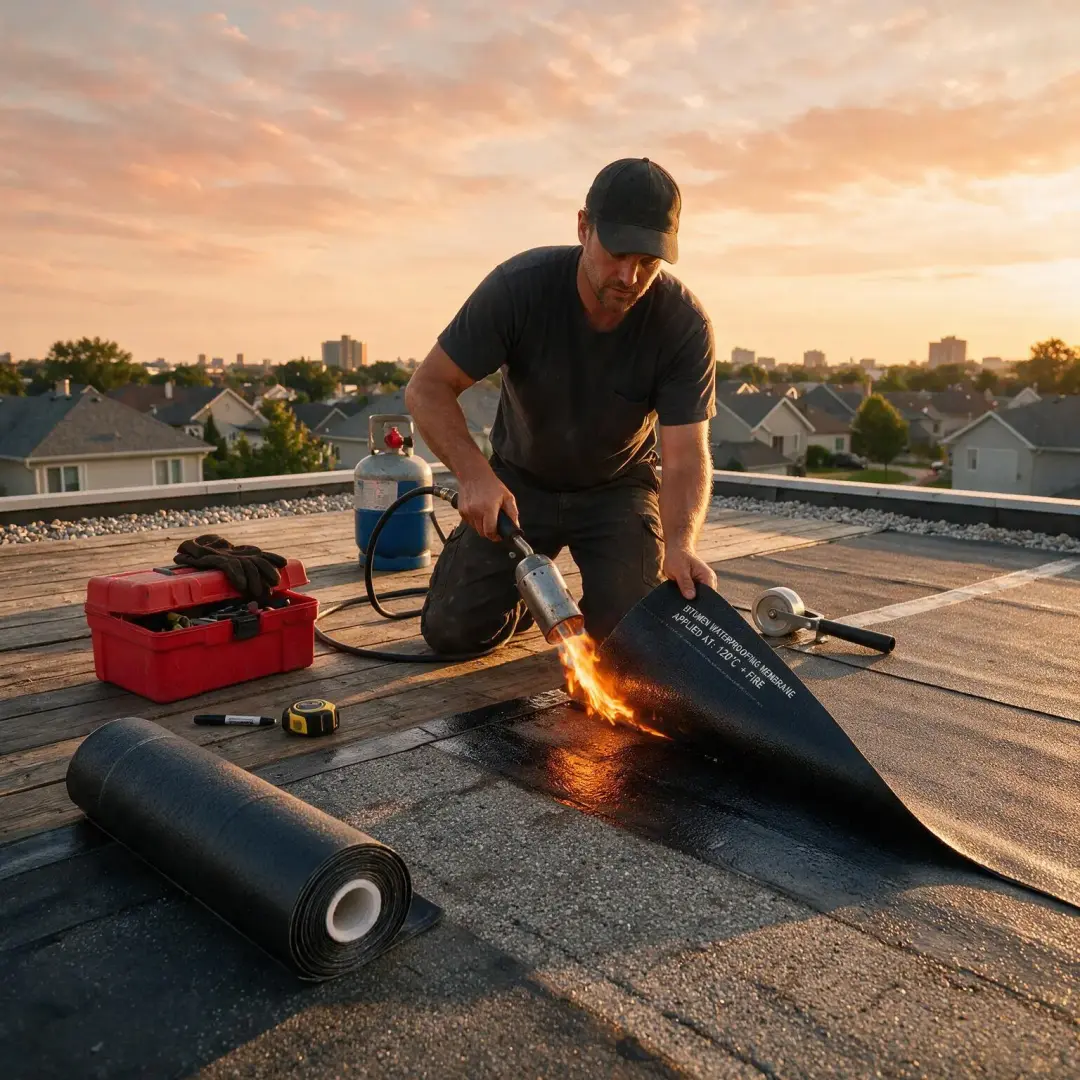
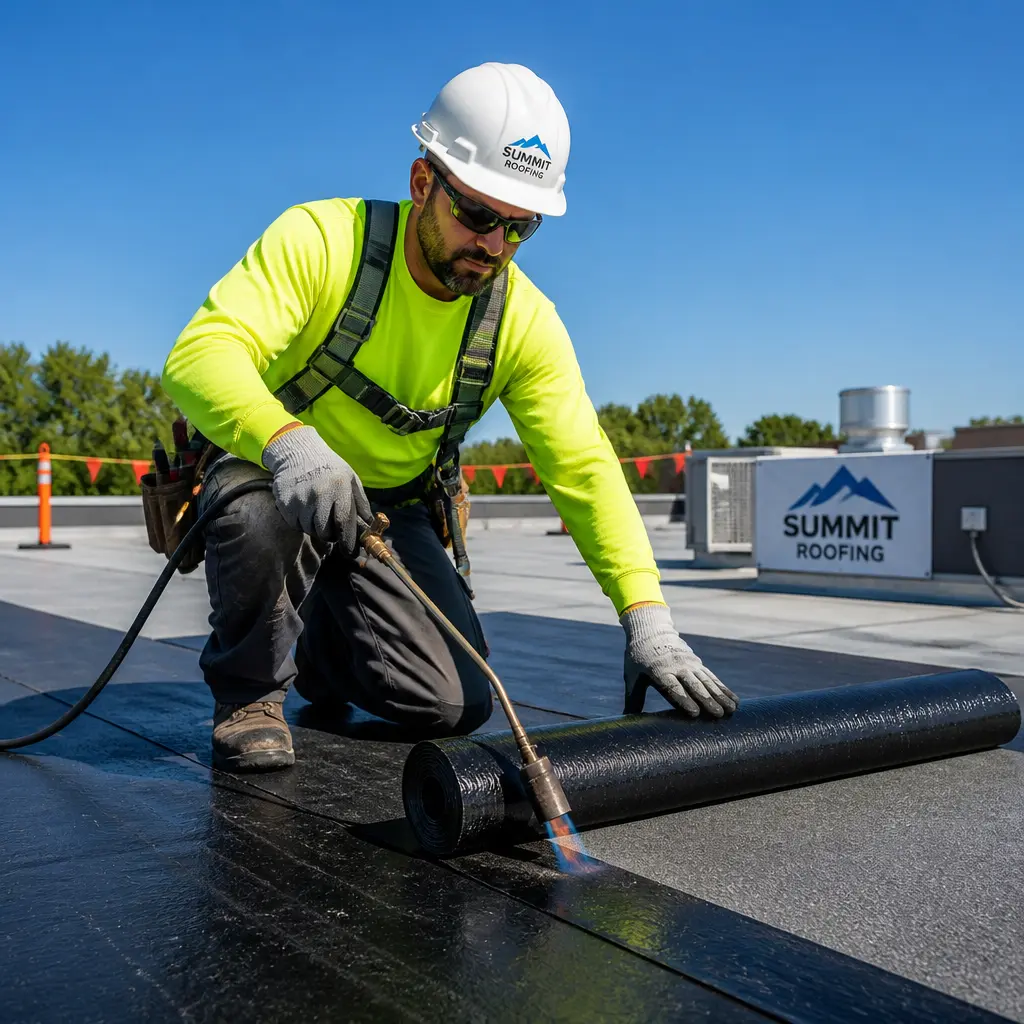
A modern flat roof can last from around 15 years to more than 50 years. Its actual lifespan depends on the roofing material, installation quality, drainage, weather exposure and maintenance.
Understanding these factors can help property owners decide whether an existing roof needs a small repair, a full refurbishment or complete replacement.
What Is the Average Lifespan of a Flat Roof?
Most professionally installed flat roofs have an expected service life of between 20 and 40 years. Some basic systems may last around 15 years, while high-quality synthetic rubber and reinforced membrane systems can remain effective for more than 50 years.
These figures are general estimates rather than guaranteed replacement dates. Two roofs made from the same material can age at different rates because of differences in installation, roof design, drainage and maintenance.
A roof may also need attention before its waterproof covering reaches the end of its expected life. Damaged decking, wet insulation, blocked outlets or poorly sealed roof edges can cause problems even when the main surface remains in reasonable condition.
- Many modern flat roofs have a service life of around 20 to 40 years
- Some certified liquid-applied systems have expected lifespans of 15 to more than 30 years
- Selected reinforced bitumen systems have stated service lives of more than 30 or 35 years
- Some synthetic rubber membranes have a life expectancy of more than 50 years
- Repair and maintenance construction output grew by 2.1% in the three months to May 2026
The material is only one part of the answer. A long-lasting roof must also have a sound structure, suitable insulation, reliable waterproofing and enough fall to direct rainwater towards the outlets.
How Long Do Different Flat Roofing Materials Last?
Flat roofing systems are made from different materials, each with its own expected service life. Product quality and installation methods can vary, so owners should check the technical information and guarantee for the exact system being offered.
A low-cost material does not always provide the lowest long-term cost. A system that lasts longer, needs fewer repairs and can be maintained easily may offer better value over the life of the building.
The following lifespan ranges provide a useful guide. They should not replace a professional inspection or the written information supplied by the roofing manufacturer.
Traditional Roofing Felt
Older felt roofs may last around 10 to 20 years, depending on the number of layers, the quality of the material and the condition of the roof deck.
Modern reinforced bitumen systems are usually more advanced than basic felt coverings. Some complete systems have stated service lives of more than 30 or 35 years when installed and maintained correctly.
Cracking, blistering, loose joints and worn mineral surfaces can indicate that an older felt roof needs attention.
Synthetic Rubber Roofing
Synthetic rubber roofing is supplied in large flexible sheets. The material resists sunlight, ozone and changes in temperature, which can support a long working life.
Selected synthetic rubber products have a stated life expectancy of more than 50 years. This figure assumes that the membrane is suitable for the building and has been fitted, protected and maintained correctly.
The main risks often occur at roof edges, outlets, wall connections and places where equipment passes through the covering. Careful detailing is therefore as important as the membrane itself.
Fibreglass Roofing
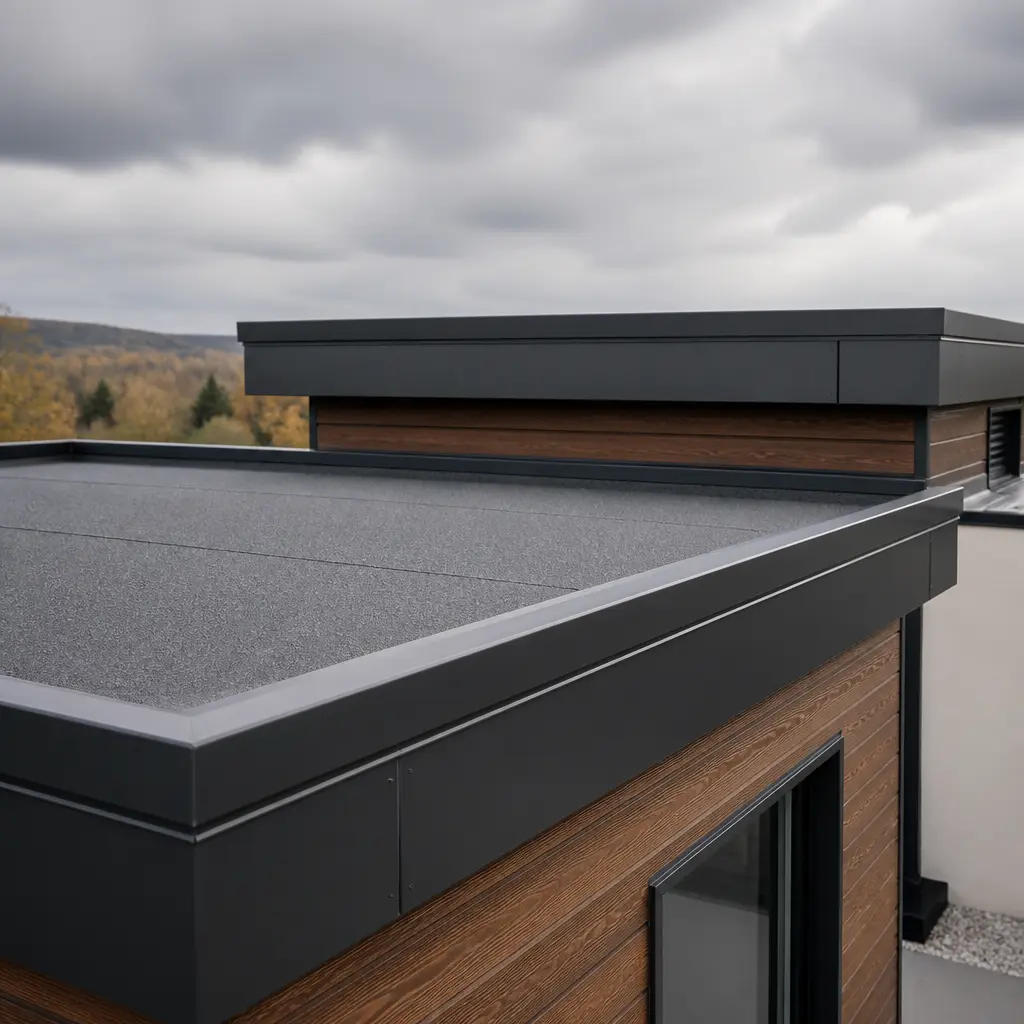
A properly installed fibreglass roof may last around 20 to 30 years. The rigid finish can create a smooth, joint-free surface that suits garages, extensions and other smaller roof areas.
Its performance depends heavily on the roof deck and installation conditions. Timber movement, poor mixing, incorrect application temperatures and badly formed corners can cause cracks or local failure.
A fibreglass covering should not be fitted over weak, wet or unstable decking. Any structural concerns should be corrected before the waterproof layer is installed.
Liquid-Applied Roofing
Liquid-applied systems form a continuous waterproof layer over the roof. They can be useful around detailed shapes, outlets, roof windows and equipment supports.
Certified products currently available include systems with stated service lives of at least 15, 20, 25 or 30 years. The expected lifespan depends on the product, number of coats, reinforcement and intended use.
The correct amount of material must be applied across the full area. Thin sections, poor surface preparation or unsuitable weather during installation may reduce performance.
Single-Layer Membranes
Single-layer membranes are flexible sheets joined with welded or bonded seams. Depending on the chosen product, complete systems may have stated service lives of more than 30 or 35 years.
The seams, fixings and perimeter details must resist wind forces as well as rain. Damage caused by tools, sharp objects or repeated walking can shorten the life of the covering.
Suitable walkways should be provided where regular access is needed for maintenance or building equipment.
What Factors Affect the Life of a Flat Roof?
The expected lifespan printed in product information normally assumes that the roof has been designed, installed and maintained correctly. Problems in any of these areas can lead to early failure.
The roof must cope with sunlight, rain, frost, wind, temperature changes and movement within the building. It may also need to support solar panels, ventilation equipment or occasional foot traffic.
Conditions vary across the roof. Areas close to walls may remain shaded and damp, while exposed edges may face stronger wind. Outlets and internal corners can also experience greater pressure during heavy rain.
Installation Quality
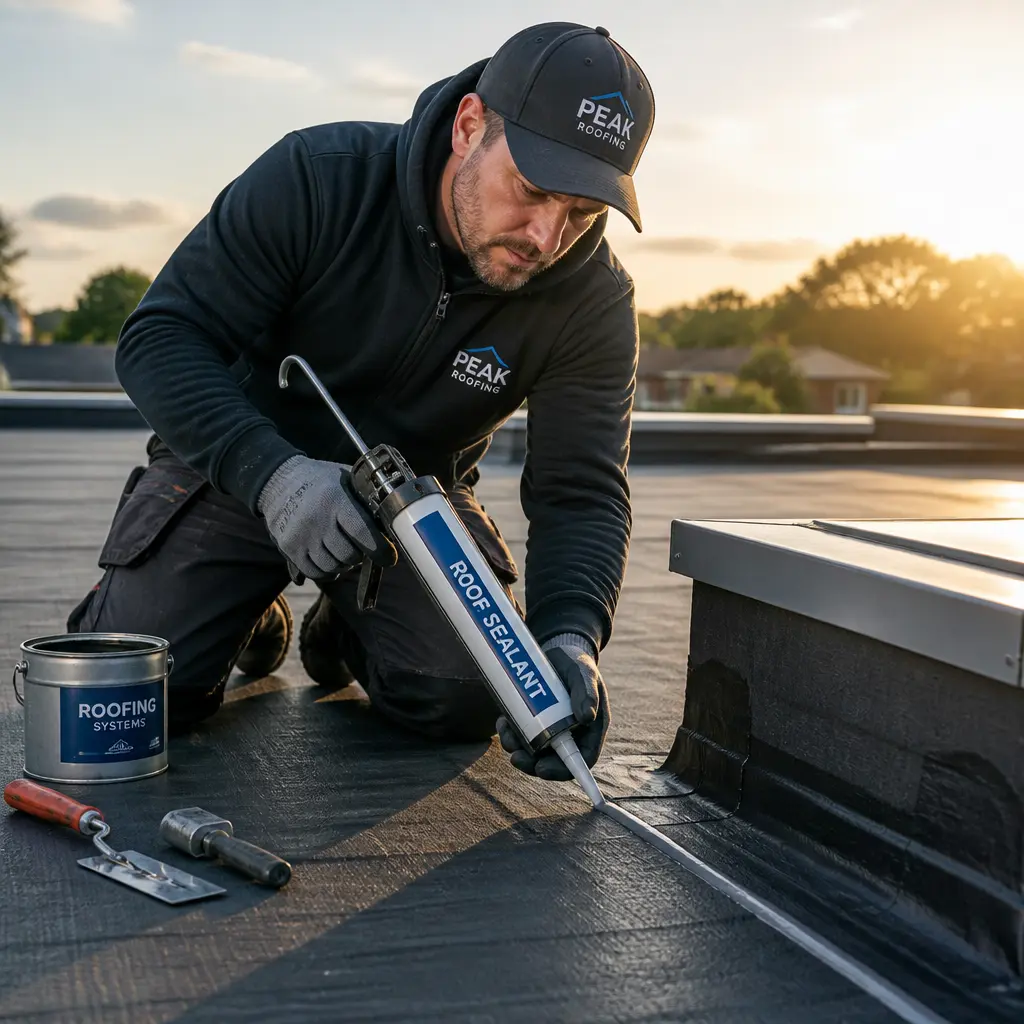
Good installation is one of the strongest influences on roof life. The covering must be fitted to the correct surface and joined according to the manufacturer’s instructions.
Edges, corners, outlets, roof windows and wall connections require particular care. A small gap in one of these areas may allow water to enter beneath a large section of otherwise sound roofing.
Using products from one compatible system can also reduce uncertainty. Mixing materials that were not designed to work together may affect adhesion, movement and any available guarantee.
Drainage and Standing Water
A flat roof is not normally completely level. It should include a slight fall that guides water towards an outlet, gutter or drainage channel.
Poor falls, blocked outlets and low areas can leave pools of water on the surface. Lasting pools add weight and may place extra pressure on seams, coatings and weak sections of the roof deck.
A small amount of water immediately after rain does not always indicate failure. Large pools that remain for long periods should be assessed, especially when they appear alongside sagging, leaks or surface damage.
Weather Exposure
Sunlight, frost and changes in temperature can cause roofing materials to expand, contract or become less flexible over time.
Roofs in open or elevated positions may also face stronger wind and driving rain. Coastal properties may experience additional exposure to salt and severe weather.
The chosen system should be suitable for the location. Stronger fixings, protected edges or a different surface finish may be needed where exposure is high.
Checks after storms can identify lifted edges, impact damage and blocked drainage before the problem spreads.
Foot Traffic and Roof Equipment
A standard flat roof should not be treated as a regular walking area unless it has been designed for that purpose.
Repeated access can wear the surface, damage insulation or puncture flexible membranes. Tools, ladders and equipment with sharp feet can also cause local damage.
Protected walkways should be installed where workers need to reach solar panels, ventilation systems or other equipment. Supports should spread weight correctly and avoid blocking drainage routes.
Can Regular Maintenance Make a Flat Roof Last Longer?
Regular maintenance can help a flat roof reach its expected service life. It may also extend the useful life of a roof by allowing small defects to be repaired before they affect the insulation or structure.
The roof should be checked at suitable intervals and after severe weather. Inspection frequency may depend on the material, surrounding trees, roof equipment and conditions of any guarantee.
Maintenance does not prevent normal ageing, but it can reduce avoidable damage. Records of inspections and repairs may also be required by the roofing manufacturer or installer.
- Remove leaves and other material from outlets and gutters
- Check joints, seals, edges and wall connections
- Look for cracks, blisters, punctures or loose sections
- Keep access routes and protective walkways in good condition
- Check supports beneath solar panels and other equipment
- Arrange prompt repairs when damage or water entry is found
What Are the Signs That a Flat Roof Is Reaching the End of Its Life?
An old roof does not always need immediate replacement, and a newer roof can sometimes fail early. Decisions should be based on its condition rather than age alone.
Common warning signs include repeated leaks, widespread cracking, loose seams, large blisters, exposed reinforcement and areas that feel soft under controlled professional inspection.
Water marks, mould or peeling finishes inside the building may also indicate a roof problem. However, similar signs can be caused by plumbing faults or condensation, so the source should be confirmed before repairs begin.
Repeated Leaks
One local leak may be repairable. Several leaks appearing in different parts of the roof can suggest wider failure or water moving beneath the covering.
Repeated patching may become poor value when the surrounding material is brittle or the insulation is already wet. At this stage, a full survey can compare the likely cost of continued repairs with refurbishment or replacement.
The visible leak inside the property may not sit directly below the place where water entered the roof.
Sagging or Soft Areas
Low areas may develop because the deck has weakened, supports have moved or insulation has been compressed.
A soft surface can indicate trapped water or decay beneath the waterproof layer. It should not be tested by walking over it because the deck may be unsafe.
A professional can take controlled samples or use suitable moisture checks to assess the layers below the surface.
Widespread Surface Damage
Small cracks or punctures can often be repaired. Widespread splitting, loss of surface material or failure across many joints may show that the covering is no longer dependable.
The condition of the surrounding material matters. A patch may not bond securely to a surface that is badly worn, dirty or breaking apart.
Surface coatings should not be used simply to hide damage. The cause must be identified, and the repair product must be compatible with the existing roof.
Should an Old Flat Roof Be Repaired or Replaced?
Repair may be suitable when damage is limited to a small area and the surrounding covering, insulation and deck remain sound.
Replacement may provide better value when leaks are widespread, the deck is damaged or the roof has already received many temporary repairs. It can also create an opportunity to improve insulation and drainage.
Some roofs can be refurbished by installing a compatible new system over the existing covering. This is only possible after checking moisture levels, structural condition, roof height and the strength of the existing layers.
A survey should explain why the recommended option is suitable rather than relying only on the age of the roof.
Does a Flat Roof Guarantee Cover Its Full Lifespan?
A guarantee period is not always the same as the expected service life. A roof may continue to perform after the guarantee ends, while poor care or unauthorised alterations may limit the available cover.
Owners should check whether the guarantee covers materials, installation or both. They should also review exclusions, inspection duties and rules for adding equipment or making repairs.
Some guarantees require work to be completed by an approved installer. Maintenance records, photographs and invoices should be kept in case a claim is needed later.
How Can You Choose a Long-Lasting Flat Roof?
The longest stated lifespan will not always identify the most suitable roof. The system must match the building, roof shape, drainage, weather exposure and expected use.
A small garage roof may have different needs from a large commercial building carrying solar panels and ventilation equipment.
Ask for the full system specification, expected service life, guarantee terms and maintenance requirements. The quotation should also explain whether insulation, decking, outlets, edge details and waste removal are included.
Installation should follow the manufacturer’s instructions and any relevant building requirements.
Questions to Ask Before Accepting a Quotation
- What is the stated service life of the complete roof system?
- What parts of the roof are covered by the guarantee?
- Will the existing deck and insulation be inspected?
- How will rainwater reach the outlets?
- Is the roof designed for any planned foot traffic or equipment?
- What inspections and maintenance will be needed?
- Are all materials designed to work together?
What Do Current Construction Figures Show?
Office for National Statistics figures released in July 2026 show that total construction output in Great Britain grew by 1.6% in the three months to May 2026.
Repair and maintenance work increased by 2.1% during the same period. Non-housing repair and maintenance grew by 3.0% and was the largest positive contributor.
These figures cover many forms of building work rather than flat roofing alone. However, they show that maintaining and improving existing properties remains an important part of construction activity.
Property owners should base roofing decisions on a survey of their own building rather than wider market trends.
Frequently Asked Questions
```Can a Flat Roof Last 50 Years?
Yes. Some high-quality synthetic rubber membranes have a stated life expectancy of more than 50 years. Correct design, professional installation and suitable maintenance remain essential.
How Often Should a Flat Roof Be Inspected?
It should be checked regularly and after severe weather. Some manufacturers recommend an annual inspection, while roofs with heavy tree cover, frequent access or valuable equipment may need more frequent checks.
Is a 20-Year-Old Flat Roof Too Old?
Not necessarily. Some systems may be approaching the end of their expected life at 20 years, while others may have many years of useful service remaining. Its condition is more important than age alone.
Can a Flat Roof Be Repaired Without Replacement?
Yes. Local cracks, punctures, loose edges and damaged seals can often be repaired when the surrounding roof and deck are sound.
Does Standing Water Mean the Roof Has Failed?
Not always. Small amounts may remain for a short period after rain. Large or lasting pools, sagging and repeated leaks should be investigated.
Will New Insulation Make the Roof Last Longer?
Insulation does not directly waterproof the roof, but a correctly designed roof build-up can improve temperature control and reduce condensation risks. Wet or unsuitable insulation can contribute to early problems.
How Long Should Your Flat Roof Last?
A flat roof can last from around 15 years to more than 50 years. Modern liquid-applied, reinforced bitumen, fibreglass, single-layer and synthetic rubber systems all offer different levels of durability.
The best results come from choosing a complete system that suits the property and having it installed by skilled professionals. Good drainage, controlled access and regular inspections can then protect the roof throughout its working life.
Age should be considered alongside condition. A professional assessment can identify whether a roof needs cleaning, local repair, refurbishment or complete replacement.
Are you concerned about the age or condition of a flat roof? Colmore Roofing Contractors can assess the waterproof covering, drainage, insulation and supporting structure before recommending a suitable repair or replacement. Contact the team to arrange a professional flat roof installation in Birmingham, Dudley or Wolverhampton.