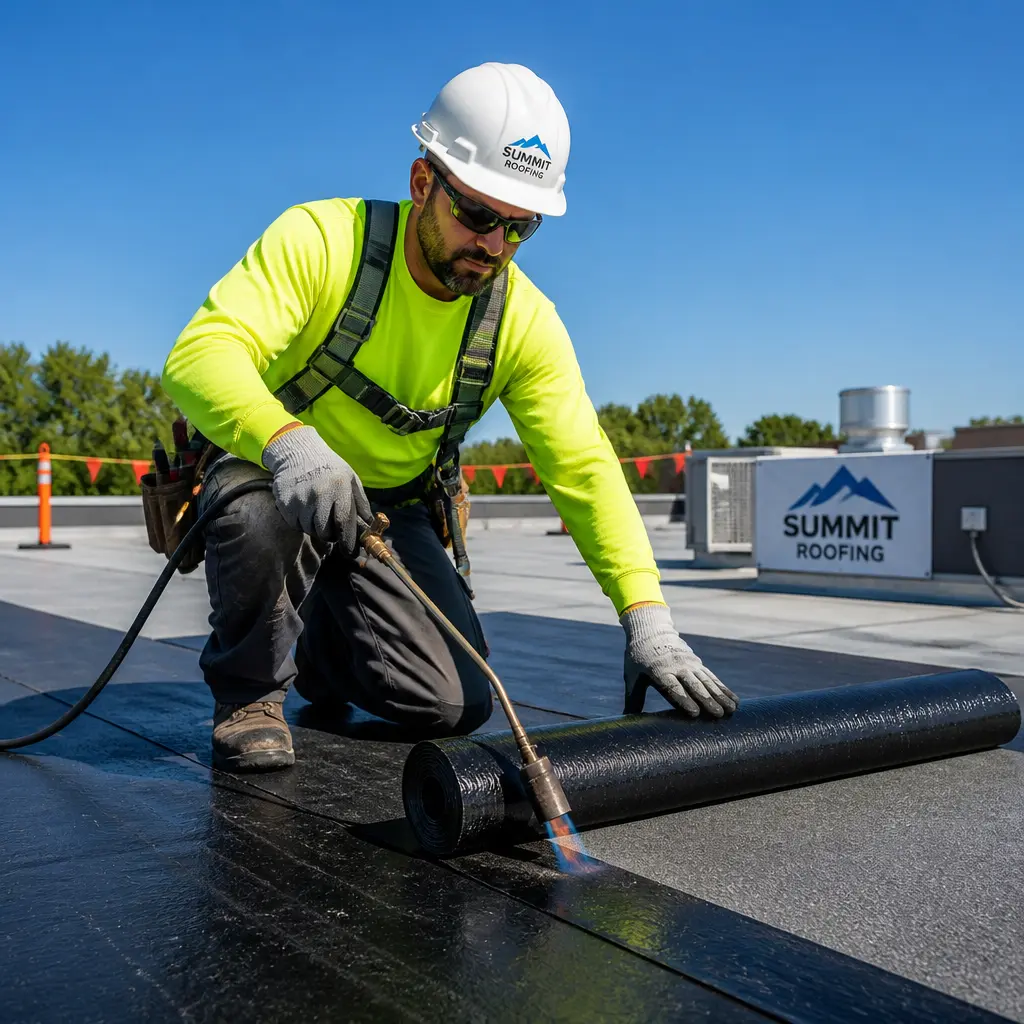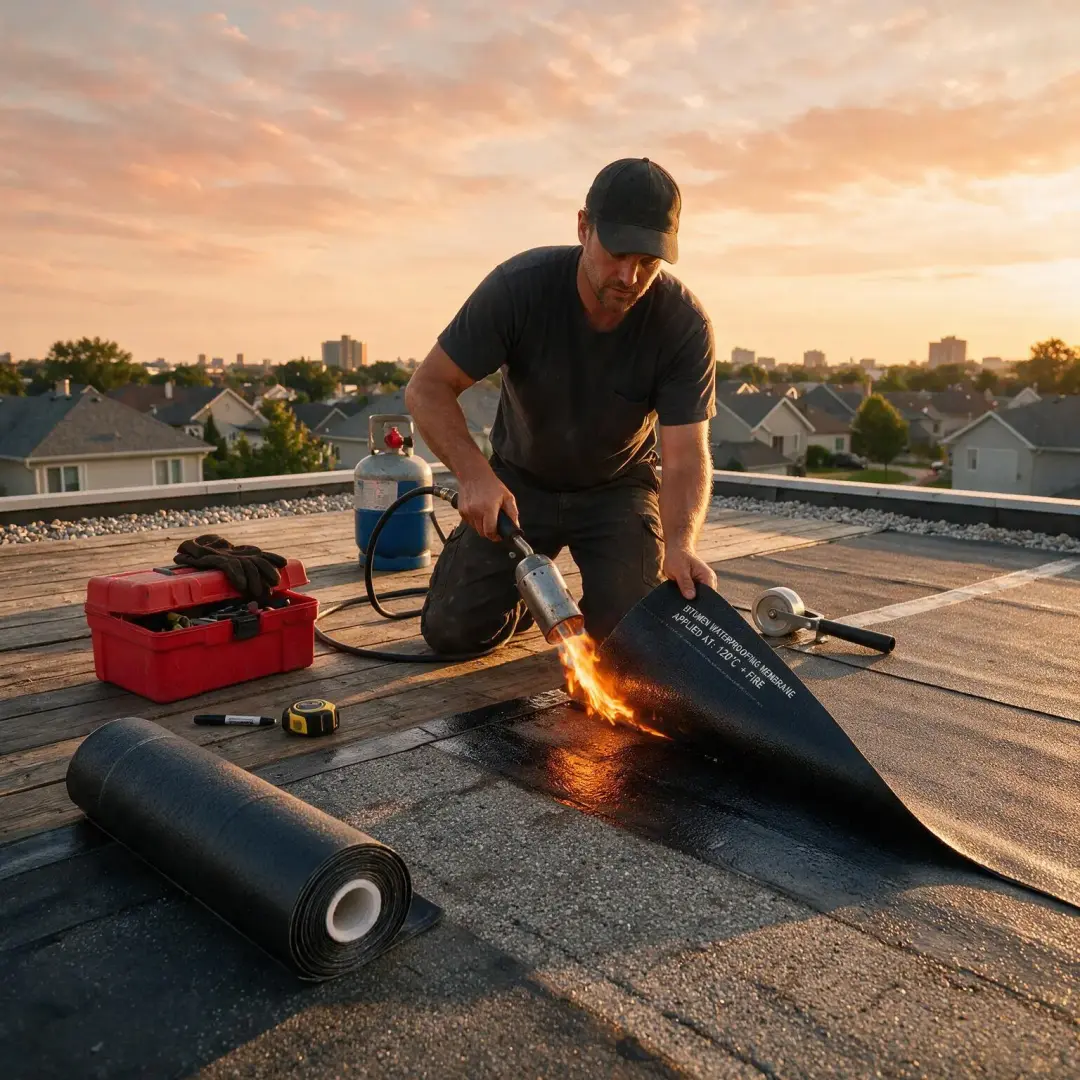
Flat roofs provide reliable protection for homes, extensions, garages and commercial buildings when they are designed, installed and maintained correctly.
However, blocked drainage, damaged coverings, poor joints and trapped moisture can lead to leaks and structural damage. Understanding the warning signs can help property owners arrange repairs before a small defect becomes a serious problem.
Why Do Flat Roof Problems Develop?
Flat roofs face constant exposure to rain, wind, sunlight, frost and changing temperatures. The surface must remain waterproof while also allowing rainwater to move towards an outlet, gutter or drainage channel.
A flat roof is not normally completely level. It should have a slight fall that guides water away from the main roof area. Problems can develop when the fall is too shallow, the outlets become blocked or part of the structure begins to move.
Installation quality is also important. Weak joints, unsuitable materials and poor details around walls, roof lights or pipes can allow water beneath the covering.
Regular inspections and suitable maintenance can reduce these risks and help the roof reach its expected service life.
- Homes can lose around 25% of their heat through an uninsulated roof
- Construction output grew by 1.6% in the three months to May 2026
- Repair and maintenance output grew by 2.1% over the same period
- Non-housing repair and maintenance output grew by 3.0%
- Annual construction output increased by 1.8% during 2025
The condition of a flat roof can change gradually. Water marks, surface bubbles, loose edges and repeated pools of water should not be ignored, even when the building has not yet developed an active leak.
Standing Water and Poor Drainage
Standing water, sometimes called ponding, is one of the most common concerns on a flat roof. It happens when rainwater remains on the surface instead of reaching the drainage system.
Small wet areas immediately after rain may not always indicate a serious defect. However, deep pools or water that remains for a long period should be investigated.
Common causes include blocked outlets, damaged gutters, an unsuitable roof slope or movement within the supporting deck. Leaves, moss, soil and other material can also prevent water from draining correctly.
Standing water adds weight to the roof and places continued pressure on joints and weak areas. It may also encourage plant growth and speed up the wear of some roof coverings.
The problem should be corrected at its source rather than covered with a temporary coating.
How Can Standing Water Be Prevented?
Drainage points should be checked and cleaned regularly, particularly during autumn and after severe weather. Leaf guards may help, but they must also be kept clear.
The roof should have suitable falls leading towards correctly positioned outlets. Larger or divided roofs may need several drainage points and emergency overflow routes.
Where the roof deck has dropped or moved, a professional may need to improve the structure or create new falls before the waterproof covering is repaired.
Leaks and Water Entering the Building
A visible leak is often the first sign that leads a property owner to inspect a flat roof. Water may appear as a ceiling stain, damp wall, peeling paint or dripping during heavy rain.
The point where water becomes visible inside the building may not be directly below the roof defect. Water can travel along the deck, insulation, pipes or supporting timbers before reaching the room below.
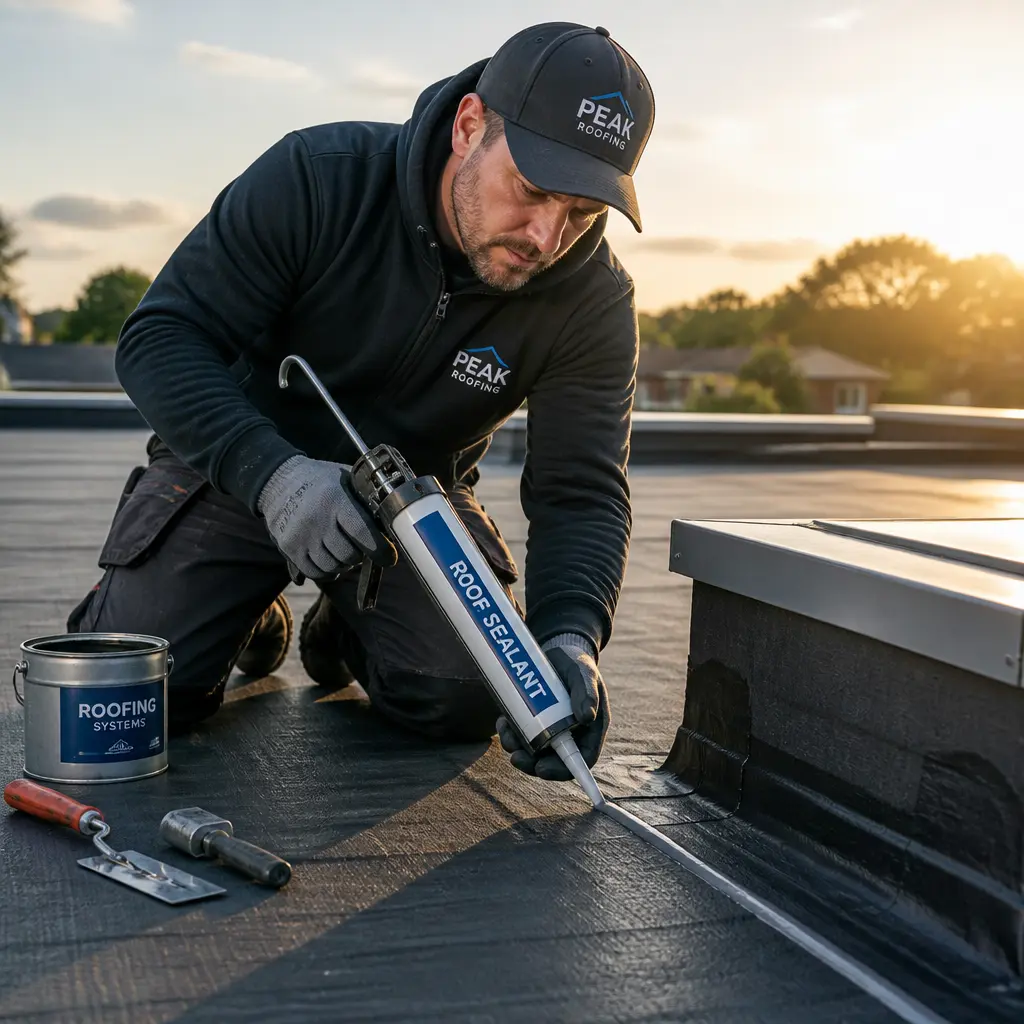
Common entry points include open joints, damaged seams, cracked surfaces and failed seals around roof lights, vents and pipes. Water may also enter where the roof meets a wall or raised edge.
A leak should be assessed promptly. Continued moisture can damage insulation, timber and internal finishes. It may also create conditions that support mould growth.
The full affected area should be checked rather than repairing only the visible internal mark.
How Can Flat Roof Leaks Be Prevented?
The surface, joints, edges and drainage points should be inspected regularly. Any loose material or damaged seal should be assessed before water reaches the layers below.
Repairs must use products that are suitable for the existing roof system. Mixing materials that do not bond correctly may create another weak point.
Roof equipment should be fixed to suitable supports rather than attached directly through the waterproof layer without proper sealing.
After any repair, the surrounding area should be checked for hidden moisture and deck damage.
Cracks, Splits and Open Seams
Flat roof coverings expand and contract as temperatures change. Over time, this movement can place pressure on the material, joints and points where the roof meets another surface.
Cracks may appear in older coverings that have become hard or brittle. Splits can also develop above joints in the roof deck or in areas where the structure moves.
Sheet-based systems can develop open seams when joints were not formed correctly or have weakened with age. Even a narrow opening may allow rainwater beneath the surface.
Small cracks may be repairable when the surrounding covering remains sound. Wider or repeated splits can indicate movement, poor support or failure across a larger section.
A professional inspection should identify whether a local repair is suitable or whether part of the roof needs to be replaced.
How Can Cracking Be Reduced?
The roof system should be designed to allow normal movement without opening the waterproof layer. Suitable materials, movement joints and edge details should be included where needed.
The deck must be firm, dry and suitable for the chosen covering. Loose boards or uneven joints can place extra pressure on the surface above.
Regular checks can identify fine cracks before they become wider. Repairs should extend across sound material rather than covering only the visible line.
Blistering and Bubbling
Blisters appear as raised bubbles beneath a roof covering. They can form when air or moisture becomes trapped between layers and expands during warm weather.
A blister does not always leak immediately, but it creates a raised area that may be more easily damaged by foot traffic, tools or changing temperatures.
The cause may be moisture within the deck, wet insulation, poor bonding between layers or installation during unsuitable weather. Covering a damp surface can trap water inside the finished roof.
Blisters should not normally be cut open without professional advice. Opening the surface can create a direct route for rainwater and may spread the damage.
A roofer can check whether the blister is stable, whether moisture is present and whether the surrounding material remains firmly attached.
How Can Blistering Be Prevented?
The roof deck and insulation should be dry before the waterproof covering is installed. Work should also take place under suitable weather conditions.
Each part of the system should be installed in line with the product requirements. Adhesives, primers and drying times should not be changed simply to complete the work more quickly.
Moisture control must be included within the roof design. A suitable control layer can reduce the movement of warm, moist air into colder parts of the roof.
Damage Around Roof Edges and Wall Connections
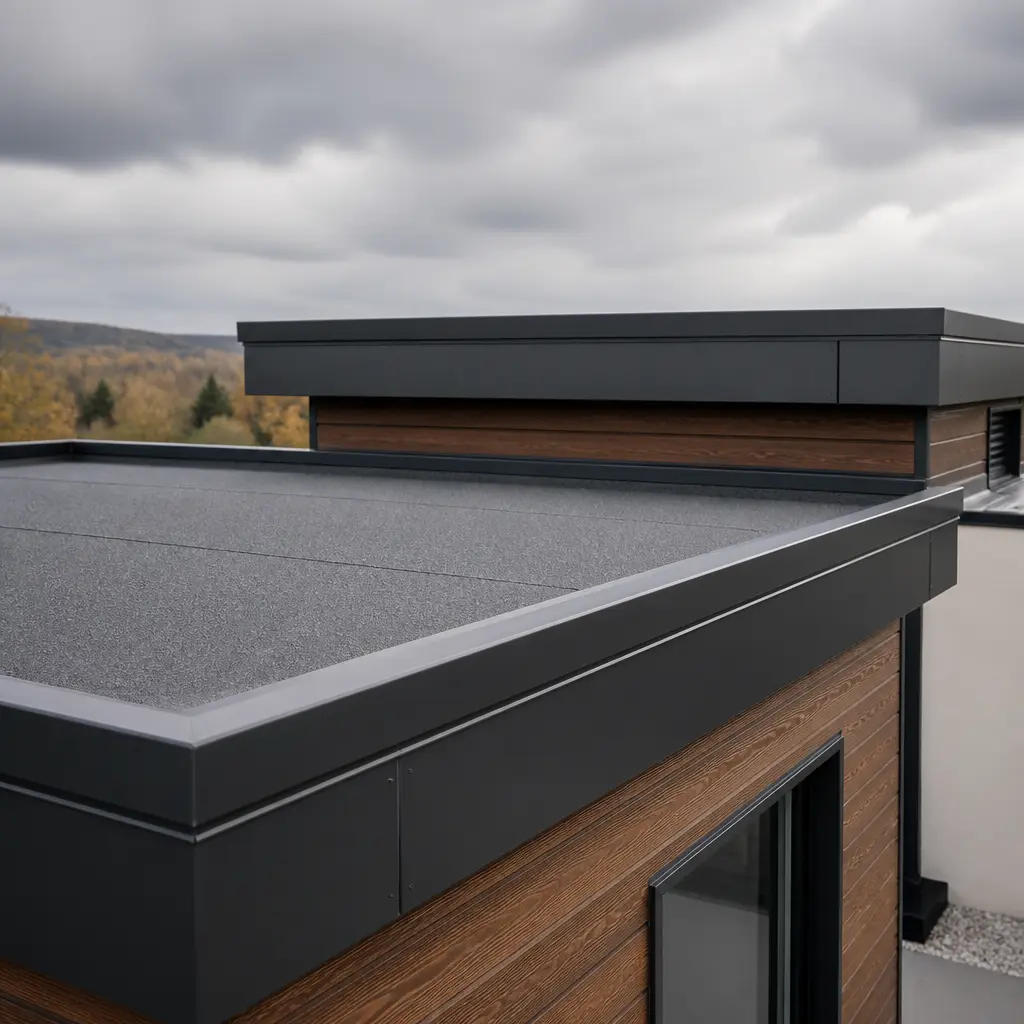
The points where a flat roof meets walls, raised edges and neighbouring roof areas require careful waterproof detailing. These locations often include changes in direction and can receive large amounts of rainwater.
Coverings may become loose, split or pull away from vertical surfaces. Metal edge trims can also move or become damaged in strong winds.
Wall coverings and seals should extend high enough to protect the joint from rain, snow and water running down the wall. Poorly formed details may allow moisture behind the roof surface even when the main covering is in good condition.
Signs of a problem include damp patches near the edge of a room, loose surface material, gaps below trims and cracked seals.
Edge repairs should restore a continuous waterproof connection rather than relying on a thin line of sealant alone.
Failed Seals Around Roof Lights, Pipes and Vents
Roof lights, vents, pipes, cables and equipment supports all interrupt the main roof surface. Each opening needs a raised and waterproof connection to the surrounding covering.
Seals can crack or pull away as materials move at different rates. Water may then enter around the base of the fitting.
Repeated repairs with general-purpose sealant can hide the defect without providing a long-term solution. The material may not be suitable for constant outdoor exposure or compatible with the roof covering.
New equipment should be planned carefully. Cutting through an existing roof without checking the structure, insulation and waterproof layers may affect both roof performance and any guarantee.
Existing fittings should be included in each roof inspection, with particular attention given to corners, joints and signs of movement.
Trapped Moisture and Condensation
Not every damp problem is caused by rain entering from outside. Condensation can form when warm, moist indoor air moves into a colder part of the roof and turns into water.
This moisture may affect insulation, timber and the underside of the roof deck. Possible signs include damp ceilings, mould, staining, musty smells and reduced insulation performance.
The arrangement of the deck, insulation, moisture control layer and waterproof covering must be suitable for the building. Gaps or poorly sealed sections can allow moist air into the roof construction.
Energy Saving Trust states that a home can lose around 25% of its heat through an uninsulated roof. A roof repair or replacement can therefore be a suitable time to review both insulation and moisture control.
Flat roof insulation should normally be designed by a professional because each layer must work as part of one complete system.
How Can Condensation Be Prevented?
A warm flat roof normally places insulation above the main roof deck and below the waterproof covering. When designed correctly, this helps keep the deck closer to the indoor temperature.
The roof may also need a suitable moisture control layer beneath the insulation. Joints, edges and openings in this layer should be sealed carefully.
Indoor moisture should also be managed through suitable heating and ventilation. Bathrooms, kitchens and other humid rooms may need effective extraction.
Wet insulation should be replaced rather than sealed inside a repaired roof.
Damage Caused by Foot Traffic
A standard flat roof should not be treated as a regular walking area unless it has been designed and protected for that purpose.
Repeated foot traffic can press sharp material into the covering, weaken joints and damage insulation below the surface. Tools, ladders and heavy equipment may also cause cuts or dents.
Maintenance workers need safe routes to reach drainage points, solar panels, ventilation units and other roof equipment. These routes may require protective boards, paving supports or a separate walkway system.
Roof terraces need additional structural strength, safe edge protection and a walking surface that protects the waterproof layer. A normal flat roof is not automatically suitable for use as a terrace.
Anyone accessing the roof must also consider fragile roof lights, wet surfaces and unprotected edges.
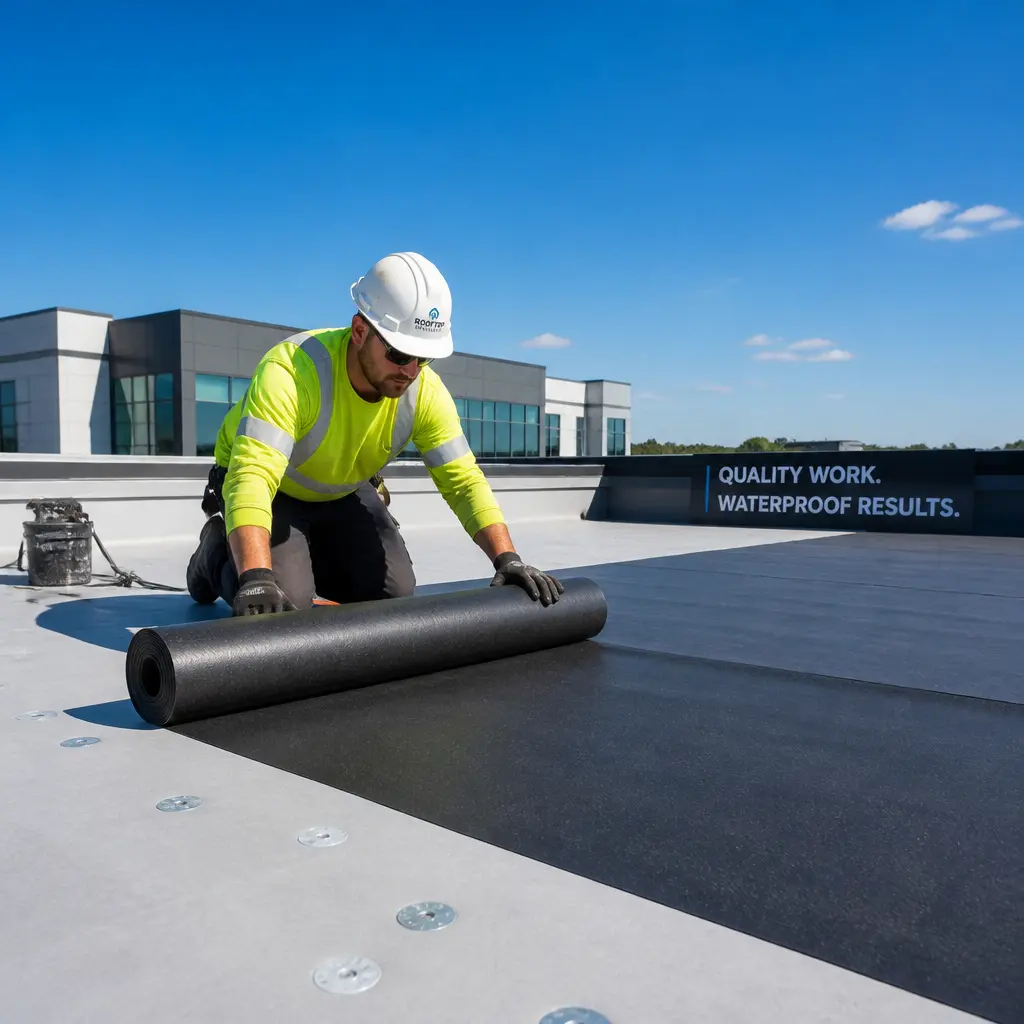
Storm, Wind and Falling Material Damage
Strong winds can lift loose edges, trims and poorly secured sheets. Branches, broken tiles and other falling material may puncture the roof surface.
Wind-driven rain can also reach weak joints that do not normally leak during lighter weather. The resulting damage may not be visible from ground level.
A roof should be inspected after severe weather when it is safe to do so. Checks should include edges, outlets, joints, fittings and any equipment mounted on the roof.
Loose items should be removed by a trained person. Temporary repairs may be needed to reduce further water entry, but they should be followed by a suitable permanent repair.
Nearby trees may need regular care where branches hang above the roof or large amounts of leaves repeatedly block the drainage system.
Surface Wear from Sunlight and Temperature Changes
Flat roof surfaces receive direct sunlight for long periods. Heat, ultraviolet light and repeated temperature changes can gradually affect the waterproof covering.
Some older materials may become hard, faded or brittle. Protective finishes can also wear away, leaving the surface below more exposed.
Dark roof coverings can become very warm during sunny weather and then cool quickly at night. This repeated movement places pressure on joints, trims and detailed areas.
The level of wear depends on the material, roof position, weather exposure and quality of the original installation. A suitable roof system should be selected for the building rather than chosen on price alone.
Approved protective finishes may extend the life of some roofs. However, a coating should not be applied over wet insulation, loose material or an active structural defect.
Moss, Weeds and Unwanted Plant Growth
Moss and weeds can grow where soil, leaves and standing water collect on a flat roof. Roots may enter small cracks, while plant material can block outlets and slow drainage.
The growth itself may also hide damaged areas and make inspection more difficult. Removing only the visible plant may not correct the drainage or surface problem that allowed it to grow.
Loose organic material should be cleared during routine maintenance. Chemicals should not be used unless they are approved for the existing roof covering and can be controlled safely.
A planned green roof is different from unwanted plant growth. Green roofs include designed drainage, protection, growing material and vegetation. The structure must be able to support the additional weight.
Unplanned plants should not be allowed to turn a normal waterproof roof into an unmanaged growing area.
Roof Deck Movement and Structural Sagging
The roof deck supports the waterproof covering and transfers loads to the building structure. Timber decay, wet insulation, weak boards and excessive weight can cause part of the roof to move or sag.
A low area may collect water and place extra pressure on the structure. Movement can also create repeated cracks in the covering above.
Possible warning signs include a soft surface, uneven roof line, new ceiling cracks, repeated ponding and defects that return soon after repair.
Structural concerns require a full assessment. Applying another waterproof layer will not correct weak or damaged support below it.
The affected covering may need to be lifted so the deck, insulation and supporting structure can be examined. Any rotten timber or unsuitable boarding should be replaced before the surface is restored.
Problems Caused by Poor Installation
Even a high-quality roof material may fail early when it is installed incorrectly. Common concerns include weak joints, poor bonding, unsuitable fixings and incomplete details around edges or openings.
The roof may also lack enough slope or have outlets in positions that do not drain the full surface. Incompatible products can prevent proper bonding and may affect the available guarantee.
A suitable installer should assess the building before recommending a system. The roof size, deck, insulation, expected foot traffic, equipment and surrounding walls should all be considered.
A written quotation should state the proposed materials, preparation work, insulation, drainage changes and repairs to the structure.
Installation records, product information and guarantees should be kept with the property documents.
Why Regular Flat Roof Maintenance Matters
Office for National Statistics figures show that construction output in Great Britain grew by 1.6% in the three months to May 2026. Repair and maintenance output grew by 2.1%, while non-housing repair and maintenance grew by 3.0%.
These figures reflect continued work to maintain and improve existing buildings. Planned maintenance can be less disruptive than waiting for a roof to fail and damage the rooms below.
A maintenance visit can identify blocked drainage, open joints, loose trims and early surface damage. These defects may be easier to correct before moisture reaches the insulation or deck.
The inspection schedule should reflect the roof material, age, location and surrounding environment. Roofs below trees or beside taller buildings may need more frequent checks.
How Often Should a Flat Roof Be Inspected?
A flat roof should normally be checked regularly and after severe weather. The exact schedule will depend on the material, roof age, building use and terms of any guarantee.
Many owners arrange checks during spring and autumn. An autumn visit can remove leaves before winter, while a spring inspection can identify damage caused by frost, wind and heavy rain.
Additional inspections may be needed after building work, solar panel installation or maintenance of equipment positioned on the roof.
Checks should cover the main surface, joints, edges, wall connections, outlets, gutters, roof lights and equipment supports.
Only trained people with suitable access and safety equipment should inspect areas that cannot be viewed safely from the ground.
A planned flat roof maintenance visit should normally include:
- Removing leaves and loose material from outlets and gutters
- Checking for standing water and low areas
- Inspecting joints, seams, edges and wall connections
- Looking for cracks, blisters, loose material and punctures
- Checking seals around roof lights, vents and pipes
- Examining equipment supports and protected access routes
- Recording defects and completed repair work
Should a Flat Roof Be Repaired or Replaced?
A local repair may be suitable when the damage is limited and the surrounding roof remains dry, firmly attached and structurally sound.
Replacement may be more suitable when the roof has widespread cracking, repeated leaks, wet insulation or major deck damage. A roof that has received many temporary patches may also be reaching the end of its practical service life.
The age of the roof is only one factor. Installation quality, material type, maintenance and weather exposure can all affect its condition.
A professional survey may include moisture checks and limited opening of the roof to inspect hidden layers. This helps identify whether the problem is restricted to the surface or affects the full construction.
The proposed work should correct the cause of the failure, including drainage, movement or condensation concerns.
What Should Be Checked Before a Flat Roof Repair?
The roofer should identify the roof material and inspect the condition of the surrounding surface. The proposed repair product must be compatible with the existing system.
Drainage should be checked even when the visible defect is not near an outlet. Standing water may have contributed to the problem elsewhere on the roof.
The deck and insulation should be assessed for moisture or movement. Sealing wet materials inside the roof can lead to further damage.
Nearby fittings, wall connections and previous repairs should also be examined. Several small defects may point to a wider installation or age-related problem.
The repair method, affected area and any limits to the guarantee should be explained clearly before work begins.
Frequently Asked Questions
```Is Standing Water Normal on a Flat Roof?
A small amount of water may remain for a short time after rain. Deep pools or water that does not drain should be investigated because it may indicate blocked outlets, poor falls or movement in the roof deck.
Can a Small Flat Roof Leak Be Ignored?
No. Even a small leak can wet insulation, damage timber and affect internal finishes. Early assessment may limit the amount of repair work required.
Can Sealant Repair Every Flat Roof Leak?
No. Sealant may be suitable for certain details, but it will not correct poor drainage, wet insulation, structural movement or widespread failure of the covering.
Can I Walk on My Flat Roof to Inspect It?
Only when the roof has been designed or protected for foot traffic and safe access is available. Standard coverings may be damaged, and unprotected edges or fragile roof lights can create serious risks.
Why Does My Flat Roof Keep Leaking After Repairs?
Repeated leaks can occur when a repair treats only the visible opening rather than the cause. Poor drainage, trapped moisture, movement or another nearby defect may still be present.
Does a Flat Roof Need Insulation?
Modern flat roofs normally include insulation suited to the building and roof design. The insulation and moisture control layers must be positioned correctly to limit heat loss and condensation.
How Can Common Flat Roof Problems Be Prevented?
The most effective form of prevention begins with suitable design and professional installation. The roof needs a firm deck, correct falls, enough drainage and a waterproof system that suits the building.
Regular inspections can then identify blocked outlets, open joints and surface damage before they develop into active leaks. Records should be kept of inspections, repairs and any work involving roof equipment.
Foot traffic should be limited to protected routes, and new fittings should not be installed without checking their effect on the waterproof covering and structure.
Small defects should be repaired with materials designed for the existing roof. Temporary coatings should not be used to cover wet insulation, weak decking or poor drainage.
Prompt action can protect the roof structure, internal rooms and insulation while reducing the risk of a more costly replacement.
Have you noticed standing water, damaged joints or signs of a flat roof leak? Colmore Roofing Contractors can inspect the roof surface, drainage, insulation and supporting structure before recommending a suitable repair or replacement. Contact the team to arrange a professional EPDM Rubber Roofing in Birmingham, Dudley or Wolverhampton.